
UN financial crisis impacting peacekeeping missions, warns Pakistan
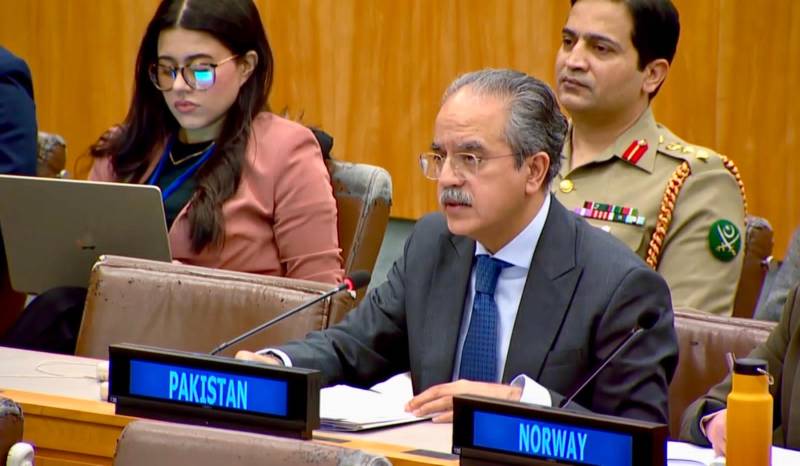

The inaugural meeting of the United Nations Special Committee on Peacekeeping Operations was held at the UN headquarters, where Pakistan raised serious concerns over the financial crisis facing UN peacekeeping missions.
According to the spokesperson for the Permanent Mission of Pakistan to the United Nations, Pakistan’s Permanent Representative to the UN, Asim Iftikhar Ahmad, addressed the meeting and warned that the financial challenges facing the United Nations are directly affecting peacekeeping operations on the ground.
He noted that the crisis is resulting in reduced patrols, mobility and field presence, which has serious implications for the implementation of mandates, protection of civilians, prevention of violence, as well as the safety and security of peacekeepers.
Asim Iftikhar Ahmad emphasized that UN peacekeeping missions remain an indispensable tool for the establishment of international peace and security but are currently facing increasing political, operational and financial pressures, calling for collective reflection and effective action to address the issue.
Highlighting Pakistan’s longstanding contribution, he stated that the country has been one of the largest and most consistent troop contributors to UN peacekeeping missions for over six decades, with more than 250,000 Pakistani peacekeepers having served in 48 missions across four continents.
He also paid tribute to 182 Pakistani peacekeepers who laid down their lives while serving under the UN flag.
The Pakistani envoy pointed out that despite growing global uncertainty and the highest level of conflict since World War II, no new UN peacekeeping mission has been established for over a decade. He said the increasing reliance on non-UN and ad hoc missions reflects the continued need for peacekeeping operations.
He stressed that the legitimacy of UN peacekeeping missions stems from universal participation, a regular and predictable financial system, effective command and control, logistics and accountability mechanisms. However, predictable financial resources, once considered a major strength, have now become a significant challenge.
The envoy underlined the need for a serious and systematic review of the financial structure of peacekeeping missions to ensure funding becomes sustainable, predictable and aligned with mandates.
He warned that continued weakening of financial commitments and the limitation of missions without a clear strategy could adversely affect the readiness of troop-contributing countries for peacekeeping operations, including standby arrangements, rapid deployment capabilities and specialized units.
Calling reforms imperative, Asim Iftikhar Ahmad said peacekeeping missions must become more proactive, focused and better equipped to deal with evolving threats, including through effective use of technology and stronger partnerships.
He added that protecting civilians, preventing violations, and monitoring and verifying ceasefires are core responsibilities of peacekeeping missions, and lack of political progress should not be used as a justification for ending them.