
Pakistan's diplomatic ascent: Tracing the threads of strategic statecraft
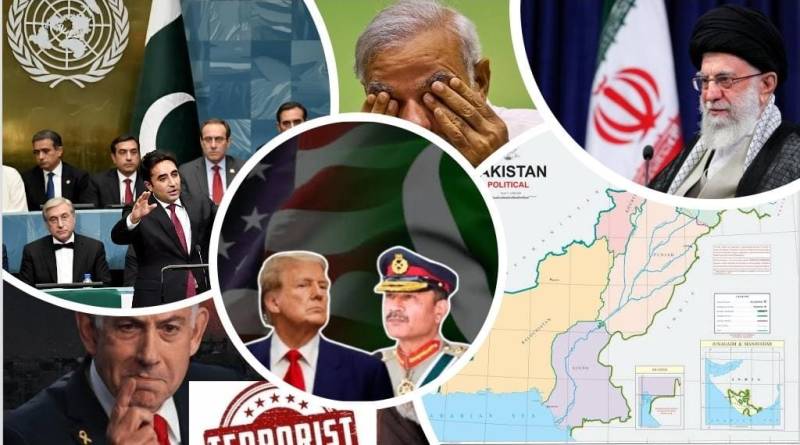

Pakistan’s elevation as Chair of the UN Security Council Counterterrorism Committee is more than symbolic—it marks a quiet shift in how global powers now engage with Islamabad. It’s not just diplomatic rehabilitation; it reflects a deliberate recalibration of Pakistan’s strategic posture. After years of navigating FATF scrutiny and defusing the 2025 Indo-Pak standoff, Islamabad emerged not as a risk to manage, but as a stakeholder to consult. The clincher? Field Marshal Asim Munir’s reception at the White House — a rare honor. That President Donald Trump hosted him not at the Pentagon but in the Cabinet Room sent a clear message: Pakistan isn’t a liability—it’s leverage.
Trump’s blunt praise, crediting Islamabad’s “restraint” for averting a nuclear escalation and acknowledging its “unique leverage with Iran,” offered rare public recognition. The implications went further: Pakistan's mediation potential was suddenly central to regional war-and-peace decisions. In fact, insiders suggest that Trump’s abrupt U-turn on military strikes against Iran—a move reportedly on the table after escalations in the Gulf—came within 48 hours of his meeting with Field Marshal Munir. What emerged from that encounter was not just diplomatic optics, but a measurable change in the US tone: restraint over reaction.
This moment was not conjured overnight. It is the result of Bilawal Bhutto Zardari’s sharp-edged diplomacy, blending rhetorical boldness with pragmatic gains. His controversial rebukes—calling Modi the "butcher of Gujarat" and a "Temu Netanyahu"—sparked diplomatic backlash, but also reframed India’s regional image. Crucially, Bilawal’s travels during this period helped return the Kashmir dispute to the international agenda, raising it not just in multilateral forums but also in bilateral meetings where it had long been sidelined. The revival of global focus on Kashmir—particularly among Global South leaders—was no accident; it was tactical narrative disruption.
Simultaneously, his shuttle diplomacy during the PDM coalition’s tenure helped revive the critical IMF package. By arguing that economic stability underpins regional security, Bilawal recast financial solvency as a geopolitical imperative. His warnings over India’s alleged Indus Water Treaty violations reframed resource disputes as global flashpoints, not bilateral irritants.
Behind Bilawal’s posture is a longer arc of realpolitik: Asif Ali Zardari’s doctrine of defiant pragmatism. As President, Zardari greenlit the Iran-Pakistan pipeline despite US threats and held firm during the six-month NATO supply blockade in 2011—decisions that cost the US over $100 million a day. These were not just standoffs, but strategic signals that Pakistan could act on sovereign terms. Yet Zardari also secured the Kerry-Lugar-Berman Act’s $7.5 billion and accelerated CPEC—showcasing his belief that alliances are conditional, rivalries negotiable. His quiet shuttle diplomacy between Riyadh and Tehran showed how Pakistan could use tension to broker influence.
This legacy stretches further. Benazir Bhutto, in the 1990s, cast Pakistan as a moral compass in the Muslim world—backing Bosnia while defending the nuclear program under the veil of principled deterrence. Her father, Zulfikar Ali Bhutto, orchestrated the 1974 Islamic Summit and planted the seeds of Pakistan’s nuclear doctrine with his infamous vow: “We will eat grass, but we will build the bomb.” The message across generations has been consistent: sovereignty is earned, not granted.
Yet this legacy is not without critique. Detractors argue that both Zardari and Bilawal often prioritized global optics over domestic reform. The PPP’s diminished electoral footprint outside Sindh raises valid questions about the disconnect between international acclaim and local credibility. But where some see inconsistency, others see coherence—a doctrine that turns crisis into currency, and diplomacy into deterrence.
From the NATO blockade to the IMF revival, the thread is clear: strategic gains emerge when Pakistan acts from a position of principle, not panic. The Bhutto-Zardari school of statecraft, for all its controversy, has demonstrated how moral clarity and diplomatic calculation can coexist.
Whether it’s Trump seeking Islamabad’s help with Iran, or the UN trusting Pakistan with counterterrorism leadership, these are not isolated wins—they reflect an institutionalized strategic approach. One where dignity, deterrence, and deal-making are not contradictions, but tools of sovereign statecraft.
Final Thought:
Pakistan’s recent global re-entry owes less to episodic victories and more to an evolving doctrine—rooted in the Bhutto-Zardari tradition—that sees every crisis as a pivot point, not a setback. In an era of transactional alliances, this brand of statecraft reminds us: Principles don’t limit power—they anchor it. And in this rare moment, Pakistan appears to be reaping that dividend.
The writer is an early career journalist working with 24 News Pakistan and has expertise in contemporary politics.