
Australia, Canada and UK formally recognise Palestine state in landmark foreign policy shift
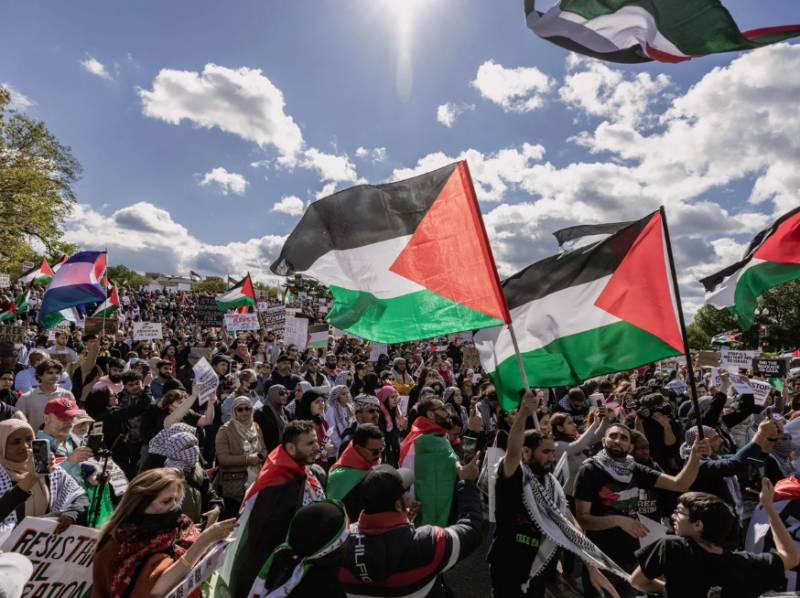

In a landmark move that signals a profound shift in global diplomacy, the UK, Canada, and Australia formally recognised Palestine as a sovereign state on Sunday, breaking with decades of policy that conditioned such recognition on a permanent settlement of the conflict with Israel.
The coordinated decision, taken just ahead of the United Nations General Assembly, represented the most significant wave of recognition from major Western powers to date and reflected mounting alarm over Israel’s ongoing war in Gaza.
The three countries are now the largest states to acknowledge Palestinian sovereignty, joining a growing bloc of nations pressing for renewed international momentum toward a two-state solution.
France is expected to follow with a similar declaration at the United Nations on Monday, further strengthening the push.
Portugal was also to recognise Palestinian statehood later Sunday, as Israel came under huge international pressure over the war in Gaza triggered almost two years ago by the October 7, 2023 Hamas attack.
The move is especially significant given that Britain, Canada and France — all members of the G7 — have historically been among Israel’s closest allies.
Their recognition of Palestine marked a dramatic break not only with their own past positions but also with the stance of the United States, which has resisted formal recognition and continues to tie Palestinian statehood to future peace negotiations with Israel.
The joint action underscores a broader re-evaluation of policies in Western capitals, where Israel’s prolonged military campaign in Gaza and the rising humanitarian toll have triggered unprecedented levels of concern.
For leaders in London, Ottawa and Canberra, recognising Palestine is seen as both a moral imperative and a diplomatic tool to revive the possibility of peace.
While the recognition is largely symbolic in the immediate term, it sends a strong message to Israel’s government, which is increasingly isolated on the global stage over its military operations in Gaza and settlement expansion in the West Bank.
The coordinated step also intensifies pressure on Washington to recalibrate its Middle East policy as international calls for a ceasefire and negotiations grow louder.
With France poised to join this shift, momentum for Palestinian statehood within the Western world appears stronger than ever, even as the path toward a two-state solution remains fraught with obstacles and deep political divisions.
Earlier, Prime Minister Keir Starmer announced that the UK now formally recognises a Palestinian state.
"Today, to revive the hope of peace and a two-state solution, I state clearly - as prime minister of this great country - that the United Kingdom formally recognises the state of Palestine," he said in a video statement.
Earlier, Canada became the first G7 nation to make the move, closely followed by Australia.
Australia has officially recognised Palestine as a sovereign and independent state, marking a historic change in its foreign policy amid the continuing Israel-Gaza war.
The decision, effective from Sunday, was announced by Prime Minister Anthony Albanese in New York, where he is attending the United Nations General Assembly and a high-level conference on advancing a two-state solution.
Together, the countries hope to reignite momentum for a two-state solution that includes a permanent ceasefire in Gaza and the release of hostages taken during the October 7, 2023, Hamas-led attacks on Israel.
Albanese said the recognition reflected Australia’s acknowledgment of “the legitimate and long-held aspirations of the people of Palestine to a state of their own.”
Governments that have recognised Palestine also maintain that Hamas must play no role in any future Palestinian state.
The announcement has provoked sharp criticism from Israel’s Prime Minister Benjamin Netanyahu, who branded Albanese “weak” and accused him of appeasement, comparing the decision to Adolf Hitler’s 1938 invasion of Czechoslovakia.
Netanyahu argued that Hamas continues to commit “monstrous crimes” and should not be rewarded with recognition. Meanwhile, Australia’s opposition leader Sussan Ley echoed concerns, warning that recognition was premature while Hamas remains in power and hostages are still held in Gaza.
The United States response has been mixed. President Donald Trump, who has already threatened Canada with retaliation, signaled possible punitive measures against Australia.
A group of 25 of Trump’s Republican allies, including Senator Ted Cruz and Congresswoman Elise Stefanik, wrote to Albanese and other leaders urging them to reverse their decisions.
At the same time, Albanese and Foreign Minister Penny Wong insisted that Trump’s leadership was still vital to securing “a credible peace plan” in the Middle East, and pledged to work with the White House and Arab League on Gaza reconstruction and Israel’s security.
Internationally, Israel is finding itself increasingly isolated.
Its ongoing offensive in Gaza, the expansion of settlements in the West Bank, and a recent UN commission of inquiry accusing its leaders of genocide have intensified global criticism.
Israel has rejected the genocide findings, calling them politically motivated.
AFP adds: Britain, Australia and Canada on Sunday recognised a Palestinian state in a seismic shift in decades of western foreign policy, triggering swift Israeli anger.
Portugal was also to recognise Palestinian statehood later Sunday, as Israel came under huge international pressure over the war in Gaza triggered almost two years ago by the October 7, 2023 Hamas attack.
"Today, to revive the hope of peace for the Palestinians and Israelis, and a two-state solution, the United Kingdom formally recognises the State of Palestine," UK Prime Minister Keir Starmer said in a message on X.
Britain and Canada became the first G7 countries to take the step, with France and other nations expected to follow at the annual UN General Assembly which opens Monday in New York.
"Canada recognizes the State of Palestine and offers our partnership in building the promise of a peaceful future for both the State of Palestine and the State of Israel," Canadian Prime Minister Mark Carney wrote on X.
It is a watershed moment for Palestinians and their decades-long ambitions for statehood, with the most powerful western nations having long argued it should only come as part of a negotiated peace deal with Israel.
But the move puts those countries at odds with the United States and Israel, with Israeli Prime Minister Benjamin Netanyahu reacting angrily and vowing to oppose it at the UN talks.
Calls for a Palestinian state "would endanger our existence and serve as absurd reward for terrorism," Netanyahu said Sunday.
A growing number of longtime allies have shifted positions, as Israel has intensified its Gaza offensive, vowing to eliminate the Hamas Palestinian militants.
The Gaza Strip has suffered vast destruction, a spiralling death toll and a lack of food that has sparked a major humanitarian crisis since the start of the conflict which has drawn an international outcry.
'Special burden'
The UK government has come under increasing public pressure to act, with thousands rallying every month on the streets. A poll released by YouGov on Friday showed two-thirds of young Britons aged 18-25 supported Palestinian statehood.
Deputy Prime Minister David Lammy acknowledged at the UN in July that "Britain bears a special burden of responsibility to support the two-state solution".
Over a century ago, the UK was pivotal in laying the groundwork for the creation of the state of Israel through the 1917 Balfour Declaration.
Three-quarters of UN members already recognise Palestinian statehood, with over 140 of the 193 having taken the step.
Starmer said in July that his Labour government intended to recognise a Palestinian State unless Israel took "substantive" steps including reaching a ceasefire in Gaza, getting more aid into the territory and confirming it would not annex the West Bank.
Starmer has also repeatedly called on Hamas to release the remaining hostages they captured in the 2023 attack, and is expected to set out new sanctions on the Palestinian militants.
Lammy told the BBC on Sunday that the Palestinian Authority -- the civilian body that governs in areas of the West Bank -- had been calling for the move for some time "and I think a lot of that is wrapped up in hope".
"Will this feed children? No it won't, that's down to humanitarian aid. Will this free hostages? That must be down to a ceasefire."
But he said it was an attempt to "hold out for" a two-state solution.
Palestinian foreign minister Varsen Aghabekian Shahin told AFP last week: "Recognition is not symbolic."
"It sends a very clear message to the Israelis on their illusions on continuing their occupation forever," she added.
'Worrying evolution'
Hamas's 2023 attack on southern Israel resulted in the deaths of 1,219 people, most of them civilians, according to an AFP tally of official figures.
Israel's retaliatory campaign has killed at least 65,208 people, also mostly civilians, according to figures from the Gazan health ministry that the United Nations considers reliable.
Portugal said that it would also formally declare its recognition in New York on Sunday.
"By acting now, as the Portuguese government has decided, we’re keeping alive the possibility of having two states," Portuguese President Marcelo Rebelo de Sousa said.