
696 more Pakistanis return amid escalating Iran-Israel conflict
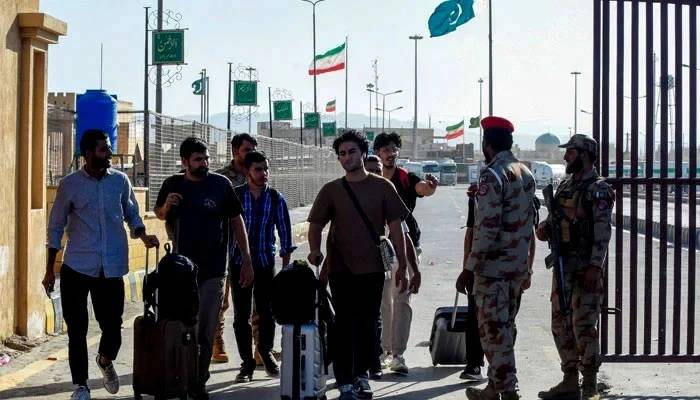

As tensions continue to rise between Iran and Israel, an additional 696 Pakistani nationals — including 59 students — returned home on Saturday via the Gabd-Rimdan border crossing, immigration officials confirmed.
Since June 12, a total of 7,519 Pakistanis have re-entered the country through the Gabd crossing, including 1,103 students, according to official figures. Authorities also reported that 342 Iranian nationals have crossed back into Iran over the past three days.
All returnees have been transported to their respective hometowns, with more arrivals anticipated in the coming days.
According to the Chagai district administration, 1,814 individuals entered Pakistan from Iran on Friday alone. The influx included pilgrims, students, tourists, deportees, and a small number of foreign nationals, all of whom crossed through the Taftan border.
Deputy Commissioner of Chagai, Atta-ul-Munim Baloch, stated that among the returnees were 428 pilgrims, 655 students, 566 tourists, 160 deportees, and five foreigners. The district administration provided essential services, including food and shelter, to assist the returnees.
Fallout from Iran-Israel Military Escalation
The repatriation efforts began after military hostilities erupted between Israel and Iran last week. Since June 13, Israel has launched large-scale airstrikes on Iran, targeting military installations, nuclear facilities, and residential areas. These attacks have resulted in at least 430 deaths, including senior military officials, nuclear scientists, and civilians.
In retaliation, Iran has launched a series of drone and missile strikes that have reportedly killed at least 24 people in Israel, according to figures released by the Israeli Prime Minister’s Office.
Iran, which does not recognize Israel, has long accused it of carrying out sabotage operations against its nuclear program and assassinating its scientists.
Impact on Balochistan: Border Closures and Fuel Shortages
The conflict is already affecting life in Pakistan’s Balochistan province. Border closures between Pakistan and Iran have disrupted trade routes and daily life in the region, particularly in areas historically reliant on cross-border movement.
Smuggling routes for Iranian petrol — a vital source of informal energy supply in Balochistan — have come to a standstill. As a result, widespread fuel shortages have forced the closure of numerous mini petrol stations in Quetta and surrounding areas.
Public transport costs have surged, with rickshaw drivers and other transport workers raising fares, putting additional pressure on daily commuters.
Additionally, a potential shortage of LPG (liquefied petroleum gas) is looming, which may further inflate energy costs. Iranian goods in local markets have also become scarce, causing prices to double in many cases.
Citizens are calling on both federal and provincial governments to take swift and effective action to stabilize prices, ensure the availability of essential goods, and manage the fallout from the regional conflict.