
BMP urges govt to address Pakistan’s deep-rooted challenges
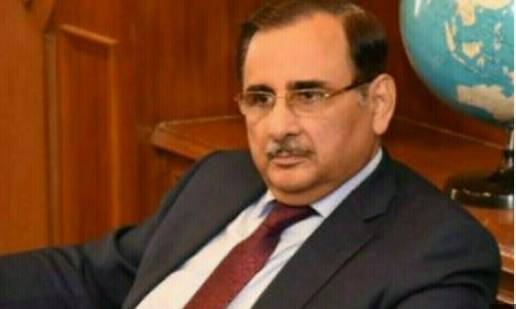

Federation of Pakistan Chambers of Commerce and Industry’s Businessmen Panel (BMP) has raised strong concerns over the Federal Budget 2025–26, calling it a document full of theoretical optimism but lacking the concrete execution strategy required to address Pakistan’s deep-rooted economic and industrial challenges.
In a press release, BMP Chairman and former FPCCI President Mian Anjum Nisar said the government missed a critical opportunity to push forward structural reforms and provide the private sector with practical relief to overcome prevailing financial hardships, rising production costs, and export stagnation.
BMP Chairman said the budget failed to outline any viable roadmap for industrial expansion, job creation, or meaningful growth in the manufacturing sector.
He regretted that instead of facilitating businesses, the budget has prioritized tax revenue goals without fixing fundamental issues affecting productivity and competitiveness. He stressed that Pakistan’s economic revival is not possible without the active engagement and support of the business community, which continues to feel sidelined despite repeated promises of stakeholder-driven policy.
Anjum Nisar criticized the government’s excessive reliance on indirect taxation and short-term fiscal tools, warning that such an approach will only widen inequality and hinder long-term economic planning. He pointed out that the government has introduced aggressive tax measures without corresponding reforms in documentation and enforcement, creating fears of harassment among already compliant businesses. He strongly opposed granting tax authorities unchecked powers, such as freezing business accounts without prior notice, terming them anti-business and contrary to the spirit of voluntary compliance and trust-building.
The BMP observed that while the budget acknowledges inflationary pressures and attempts to provide some relief to salaried individuals, it does little to address the burden on industry. No visible steps were taken to reduce electricity and gas tariffs, which continue to make Pakistani exports uncompetitive in international markets. The panel noted that energy remains the single biggest cost component for manufacturers, especially in the value-added textile and engineering sectors, and called the absence of any rationalisation in power tariffs a major policy failure.