
Iran-US war: Pakistan acts as mediator, talks likely to be held in Islamabad
Three countries Pakistan, Turkiye and Egypt trying to ensure ceasefire, Pakistani capital is among possible venues for Iran-US talks
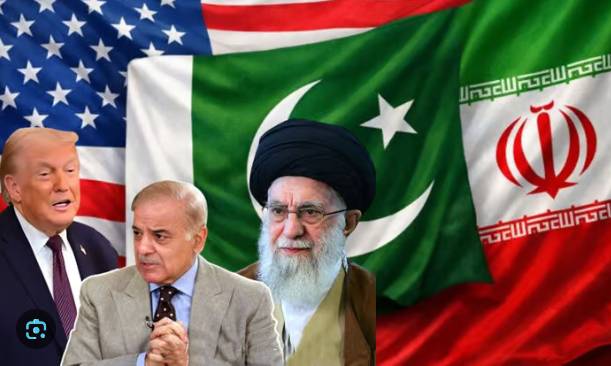

Pakistan facilitates backchannel contacts between US and Iran as global powers scramble to de-escalate tension in the Middle East as Islamabad is emerging as a key diplomatic player in efforts to ease tensions between the United States and Iran, reported 24NewsHD TV Channel.
Amid a deepening regional crisis, Islamabad is quietly working behind the scenes to broker dialogue and prevent further escalation.Deputy Prime Minister Ishaq Dar has played a key role in these efforts. Turkey and Egypt have supported Pakistan's move.
The sources said three countries comprising Pakistan, Türkiye and Egypt are trying to ensure a ceasefire by using their capabilities and diplomatic efforts. Pakistani capital Islamabad among possible venues for Iran-US talks. Islamabad has been suggested as one of the possible venues for talks between Iran and the US in the context of recent efforts to reduce tensions. These contacts are ongoing at various levels.
Pakistan is positioning itself as a leading mediator to help end the war involving the US and Israel against Iran, leveraging its strong ties with Tehran and its working relationship with Washington. The country’s strategic balance has enabled it to present itself as a neutral facilitator at a time when tensions remain high.
Pakistan has taken key initiative during recent US-Iran-Israeli tension particularly in the context of the threat of attacks on Iran's energy infrastructure. Sources said Pakistani efforts were of utmost importance and these efforts began with the Arab-Islamic Conference.
Pakistan’s military and political leadership have actively engaged both sides in recent days. Field Marshal Asim Munir held a conversation with US President Donald Trump, while Prime Minister Shehbaz Sharif spoke with Iranian President Masoud Pezeshkian.
These engagements coincided with Trump’s announcement to delay potential strikes on Iranian power plants following what he described as “productive” discussions.
According to reports, senior Pakistani officials have been arranging behind-the-scenes contacts between Iranian officials and key US figures, including Steve Witkoff and Jared Kushner.
These communications are understood to be in early stages, focusing on messaging rather than formal negotiations. Earlier, Reuters had also reported that talks between Iran and the US were taking place, though details remain unclear.
Despite reports of diplomatic engagement, Iranian state-affiliated media has denied any negotiations with the United States. A senior Iranian security official told Tasnim News Agency that no talks were underway, reflecting the complex and sensitive nature of the situation.
As part of its diplomatic push, Pakistan has proposed hosting a summit between senior US and Iranian officials in Islamabad. Officials believe Pakistan’s position -- having no US military bases and maintaining ties with both sides -- strengthens its credibility as a mediator.
Iran has warned it will respond to any attack on its infrastructure by targeting critical facilities across the region, including energy and water desalination plants.
Pakistan’s mediation role is shaped by its geopolitical and economic interests. The country maintains close ties with Gulf states, including a mutual defence pact with Saudi Arabia, and depends heavily on the region for oil and gas imports. It is also one of the few US allies in the region not targeted by Iranian strikes, reinforcing its position as a neutral intermediary.
Türkiye, Pakistan and Egypt passed messages between Washington and Tehran over the past two days, U.S.-based Axios reported Monday, citing an American source.
The report follows U.S. President Donald Trump’s announcement that he ordered a five-day suspension of planned strikes on Iran’s energy infrastructure. Trump has linked the suspension to “success” in talks with Iran, though Iran denied any negotiations.
The Axios report said that the foreign ministers of the three countries held separate talks with White House envoy Steve Witkoff and Iranian Foreign Minister Abbas Araghchi.
"The mediation is ongoing and making progress. The discussion is about ending the war and resolving all outstanding issues. We hope to have answers soon," a source familiar with the details told Axios.
The semi-official Mehr news agency, citing an Iranian source, said there is "no dialogue" between Tehran and Washington.
The source said Trump's comments were part of his efforts "to lower energy prices and buy time to implement military plans."
The Iranian source acknowledged that regional countries have put forward initiatives aimed at reducing tensions. "We are not the party that started this war, and all such demands should be directed to Washington," he added.
Türkiye, a neighbor of Iran and a NATO ally of the United States, has been keen on defusing the conflict.
Turkish Foreign Minister Hakan Fidan has repeatedly announced that they were ready to step in to mediate between the two countries, although he expressed concerns that Israel, also part of the conflict, would prefer prolonging the conflict.
Fidan held Monday phone calls with his Egyptian and Norwegian counterparts. Foreign ministry sources said Fidan, Norway’s Espen Barth Eide and Egypt’s Badr Abdelatty discussed efforts to stop the war.
Türkiye’s top diplomat was also engaged in phone diplomacy Sunday with his counterparts across the world, days after he joined a meeting of top diplomats of the Gulf countries on the conflict, which spilled over to the entire region.