
Trump postpones Iran power plant strikes after 'very good' peace talks
Iran says got messages from 'friendly countries' about US request for talks, Iran parliament speaker says 'no negotiations' held with US
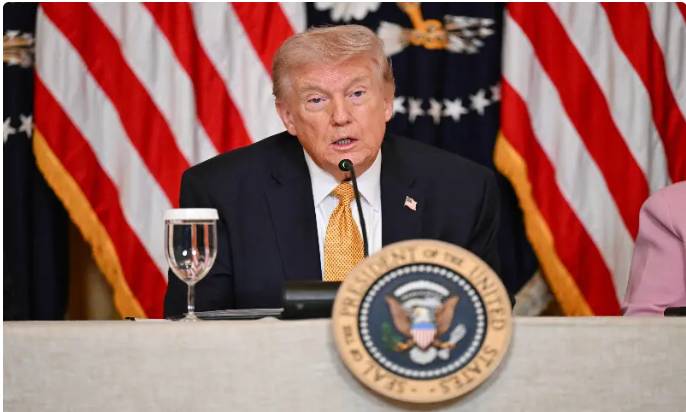

US President Donald Trump said Monday that he had ordered a halt to his threatened strikes on Iranian energy infrastructure after "very good and productive talks" with Tehran, and that negotiations are set to continue this week.
The United States and Iran "have had, over the last two days, very good and productive conversations regarding a complete and total resolution of our hostilities in the Middle East," Trump wrote, in all capitals, early Monday on his Truth Social platform. "Based on the tenor and tone" of the talks, "witch (sic) will continue throughout the week, I have instructed the Department of War to postpone any and all military strikes against Iranian power plants and energy infrastructure for a five day period, subject to the success of the ongoing meetings," he added.
US President Donald Trump told AFP on Monday that "things are going very well" with Iran, shortly after announcing talks with Tehran and a five-day pause on targeting the Islamic republic's power plants.
"Things are going very well," Trump said in brief comments by telephone to AFP when asked about Iran, following an earlier Truth Social post on the negotiations that immediately sent oil prices tumbling.
Iran says got messages from 'friendly countries' about US request for talks
Iran's foreign ministry said on Monday that it had received messages through "friendly countries" about a request from the United States for talks, but denied any such negotiations had taken place since the start of the war.
"Over the past few days, messages were received through some friendly countries indicating a US request for negotiations aimed at ending the war," said foreign ministry spokesman Esmaeil Baqaei, according to the official IRNA news agency.
However, he "denied any negotiations or talks with the United States during the past 24 days of the imposed war".
Iran parliament speaker says 'no negotiations' held with US
Iran's powerful parliament speaker Mohammad Bagher Ghalibaf said on Monday that "no negotiations" were held with the United States after US President Donald Trump announced talks were ongoing.
"No negotiations have been held with the US, and fakenews is used to manipulate the financial and oil markets and escape the quagmire in which the US and Israel are trapped," Ghalibaf said in a post on X.
US, Iran talks have major points of agreement: Trump
Trump said Monday that there are "major points of agreement" in US-Iran talks which he said must result in Tehran giving up its nuclear ambitions and enriched uranium stockpile.
Trump said the talks -- which Iran denies are taking place -- were being conducted with a "top person" but not the country's supreme leader.
"We've wiped out the leadership phase one, phase two, and largely phase three. But we're dealing with the man who I believe is the most respected and the leader," Trump told reporters. "We want no enrichment, but we also want the enriched uranium."
US President Donald Trump told AFP on Monday that "things are going very well" regarding Iran, shortly after announcing talks with Tehran and a five-day pause on targeting the Islamic Republic's power plants.
Trump's abrupt shift on Iran came hours before the expiration of a two-day ultimatum under which he threatened to attack Iranian power plants if Tehran did not reopen the strategic Strait of Hormuz.
"Things are going very well," Trump said in brief comments by telephone to AFP when asked about Iran, following his earlier Truth Social post on the negotiations that immediately sent oil prices tumbling.
In his post, Trump made the surprise announcement, backed by little detail, that diplomacy was underway. This came after he earlier shunned talks with Tehran in the fourth week of the joint US-Israeli military campaign.
Trump said in the post that Tehran and Washington "have had, over the last two days, very good and productive conversations regarding a complete and total resolution of our hostilities in the Middle East."
"Based on the tenor and tone" of the talks, "which will continue throughout the week, I have instructed the Department of War to postpone any military strikes against Iranian power plants and energy infrastructure for five days, subject to the success of the ongoing meetings and discussions," Trump wrote.
The US president did not give further details on the talks in his comments to AFP, which he made from his Mar-a-Lago residence in Palm Beach, Florida, where he spent the weekend.
Iran denies talks
Iranian media however, said on Monday that there were no negotiations underway towards ending the war.
"There are no talks between Tehran and Washington," said Mehr news agency, citing Iran's foreign ministry, adding that Trump's statements were part of a push "to reduce energy prices".
Trump's post came just hours before Wall Street was set to open after brutal selloffs on European and Asian markets and a further climb in the price of oil.
The oil price has posed an increasing political headache for Trump as Americans complain of higher prices at the pump, ahead of crucial midterm elections in November that will determine the makeup of Congress.
On Friday, Trump had said that he was considering "winding down" the war, leaving the responsibility for keeping the strait open to so far-reluctant NATO allies.
But on Saturday Trump then issued a deadline of 2344 GMT Monday -- early Tuesday in Tehran -- for Iran to reopen the Strait of Hormuz, the narrow passageway into the Gulf through which one-fifth of the world's oil transits.
Iran had partly closed the strait as part of its retaliation for US and Israeli attacks launched on February 28 that have killed top officials including the cleric-run nation's longtime supreme leader, Ayatollah Ali Khamenei.
Iran had remained defiant and threatened that if Trump went ahead, it would target vital infrastructure across the Gulf including energy sites and desalination plants critical in the parched region.
Russia, Iran FMs hold call after US-Iran war talks: Moscow
Iranian Foreign Minister Abbas Araghchi held a call with his Russian counterpart Sergei Lavrov on Monday, after US President Donald Trump revealed Washington and Tehran had held "very good and productive conversations regarding a complete and total resolution of our hostilities."
Russia's Lavrov called for an "immediate cessation of hostilities and a political settlement that takes into account the legitimate interests of all parties involved, above all Iran," the Russian foreign ministry said in a readout of the call, which it said was initiated by Tehran.
Earlier, Iran on Monday threatened to deploy "naval mines" in the Gulf if the United States and Israel were to attack any of its coasts or islands.
"Any attempt by the enemy to attack Iranian coasts or islands will naturally, and in accordance with established military practice, lead to all access routes and communication lines in the Persian Gulf and coastal areas being mined with various types of naval mines, including drifting mines deployable from the coasts," said the country's defence council in a statement carried by state media.
The defence council -- which operates under the Supreme National Security Council -- was formed after Iran's 12-day war with Israel in June 2025.
Earlier, Iran has laid out maps of power plants it threatened to target in the region, in response to US President Donald Trump's ultimatum for the Islamic republic to reopen the vital Strait of Hormuz.
Trump threatened to "obliterate" Iran's power plants if it did not reopen the strategic waterway within 48 hours, which were due to end late Monday. The waterway has remained effectively closed since the start of the war sparked on February 28 by US-Israeli bombardment of Iran.
Iran's armed forces have since vowed to "completely" close the strait and target power plants in Israel, as well as in countries in the Gulf which Iran says support US bases in the area.
State media, including the judiciary's Mizan Online website, on Monday showed infographics of potential targets in Israel, including Orot Rabin and Rutenberg, Israel's two largest power plants.
Another infographic on Mehr news agency was titled "Say goodbye to electricity!" and showed possible targets in Saudi Arabia, the United Arab Emirates, Qatar and Kuwait.
"In the event of the slightest attack on the electricity infrastructure of the Islamic republic, the entire region will be plunged into darkness," the graphic said.
Iran's powerful parliament speaker Mohammad Bagher Ghalibaf meanwhile vowed to "irreversibly" destroy vital infrastructure across the region if the United States and Israel attacked its own.
Traffic through the Strait of Hormuz -- through which 20 percent of the world's crude oil and liquefied natural gas normally passes -- has been brought to a near-standstill since the start of the war.
A relatively small number of vessels have been able to transit it -- around five percent of its pre-war volume, according to analytics firm Kpler.
Iranian forces have attacked multiple vessels, saying they failed to heed "warnings" against transiting the waterway.
In recent days, Iran has allowed some vessels from countries it considers friendly to pass, while warning it would block ships from countries it says have joined the "aggression" against it.
Energy crisis worse than 1970s
The world faces an energy crisis worse than both 1970s oil shocks combined if the Middle East war drags on, the head of the International Energy Agency warned Monday, as Israel launched fresh strikes on Tehran and threatened weeks more fighting.
As the war grinds into its fourth week, US President Donald Trump threatened to "obliterate" Iranian power plants if Iran failed to reopen the Strait of Hormuz within 48 hours -- setting an effective deadline of 23:44 GMT Monday.
Tehran has retaliated against US-Israeli assaults by throttling traffic in the vital waterway, conduit for a fifth of global crude oil, hitting energy sites and US embassies across the Gulf as well as firing missiles and drones at Israel.
The Islamic republic issued a firm response to the new ultimatum, with powerful parliament speaker Mohammad Bagher Ghalibaf vowing vital infrastructure across the region will be "irreversibly destroyed" if Trump acts on his threat.
In a stark warning over what lies ahead unless the fighting ends soon, IEA chief Fatih Birol said the world was losing more oil each day than the combined impact of both 1970s oil shocks and Russia's invasion of Ukraine.
"This crisis as things stand is now two oil crises and one gas crash put all together," Birol said.
"No country will be immune to the effects of this crisis if it continues to go in this direction."
At least 40 energy assets across the oil- and gas-exporting region have already been "severely or very severely damaged", Birol said, with oil prices driven above $100 a barrel over supply fears.
In recent days, Iran has allowed a handful of vessels from countries it considers friendly to pass through the Strait of Hormuz, but warned it would block ships from nations joining the "aggression" against it.
Oil prices rose again Monday while stocks tumbled after Trump and Iranian leaders traded threats -- and Israel said the Middle East war could last several more weeks.
Further sign of the real-world impact far beyond the region, a major Cambodian energy supplier said it would halt sales of liquefied petroleum gas due to war-linked supply disruptions.
- 'Weeks' more fighting -
Weighing in from Beijing, China's foreign ministry warned in response to Trump's latest threats that further fighting risks creating an "uncontrollable situation" in the Middle East.
But the US leader has offered varying timelines and objectives for the war, saying Friday he was considering "winding down" the operation -- only to later threaten Iran's power plants.
Israeli Prime Minister Benjamin Netanyahu has spoken of a long-term campaign against Iran's government, a state sponsor of Hamas, which launched the October 7, 2023 attack against Israel, triggering the war in Gaza.
Israel launched fresh strikes Monday at Iran on Monday, with an AFP journalist witnessing a thick column of black smoke rising above Tehran, while Israel's military urged people to take over as it worked to intercept missiles fired from Iran.
Israel has also expanded its ground campaign against Iran-backed Hezbollah in Lebanon, warning of a "weeks of fighting" in the country.
The violence in Lebanon has killed more than 1,000 people, according to the health ministry, with more than a million displaced.
Israeli forces were given orders to destroy bridges they said were used by Hezbollah to cross the key Litani river, 30 kilometres (20 miles) north of the border -- in what Lebanese President Joseph Aoun called "a dangerous escalation" seen as a prelude to a ground invasion.
- Iran takes toll in Israel -
Israel prides itself on its air defences, and Trump and Netanyahu both claim to have knocked out key Iranian military sites.
But Iranian missiles evaded the defences over the weekend to land in two southern towns, including Dimona, close to Israel's desert nuclear facility, injuring dozens on Saturday.
"We thought we were safe," Galit Amir, a 50-year-old care provider, told AFP in Dimona. "We didn't expect this."
According to rescuers, a missile landed about five kilometres from what is widely believed to be the Middle East's only nuclear arsenal -- although Israel has never admitted to possessing nuclear weapons, insisting the site is for research.
Iran said it was retaliating against a hit on its own nuclear site at Natanz, but Israel's military said it was "not aware of a strike".
In Iran, at least 3,230 people have died in the war, including 1,406 civilians, according to the US-based Human Rights Activists News Agency. AFP is not able to access the sites of strikes nor independently verify tolls in Iran.
- Israel interceptions -
Israel's military said defensive systems were working to intercept the latest salvo of missiles fired from Iran and urged people to take cover.
On Saturday Iranian missiles evaded defences and injured dozens when they hit two southern towns close to Israel's desert nuclear facility.
- Economic 'crisis' -
International Energy Agency chief Fatih Birol said "the global economy is facing a major, major threat" and compared the current energy crisis to those of the 1970s and the impact of Russia's 2022 invasion of Ukraine.
"This crisis as things stand is now two oil crises and one gas crash put all together," Birol said, adding that no country will be immune to its effects.
- Gulf nations attacks -
Saudi Arabia and the United Arab Emirates repelled fresh attacks, while sirens sounded in Bahrain.
Abu Dhabi authorities said an Indian national had been wounded by falling debris from an intercepted ballistic missile.
- 'Wide-scale' strikes -
Israel's military said it launched "a wide-scale wave of strikes" on Tehran.
Iranian media reported explosions ringing out over the capital, while an AFP journalist saw a thick column of black smoke rising at least an hour later.
- France 'solidarity' -
French President Emmanuel Macron wrote on X that he spoke with Saudi Crown Prince Mohammed bin Salman to express "solidarity" with the kingdom and reiterate France's commitment to contributing to air defences against Iranian missiles and drones.
- US embassy attacks pause -
Kataeb Hezbollah -- an Iran-backed armed group in Iraq -- says it will extend its five-day pause on attacking the US embassy in Baghdad, announced Thursday.
Since the start of the war in the Middle East, pro-Iran armed groups have claimed responsibility for near-daily attacks on US interests in Iraq and across the region, while strikes have also targeted these groups.
- Lebanon raps Hezbollah -
Lebanese Prime Minister Nawaf Salam said members of Iran's Revolutionary Guards are commanding Hezbollah's operations in the group's war against Israel.
In an interview with the Al Hadath network, Salam once again lashed out at Hezbollah for dragging Lebanon into the Middle East war by firing rockets at Israel.
- Lebanon ground ops -
Israel's military will expand its ground operations in Lebanon against Iran-backed militant group Hezbollah, its army chief said, warning that the offensive "has only (just) begun".
"We are now preparing to advance the targeted ground operations and strikes according to an organised plan," Lieutenant General Eyal Zamir said in a statement.
- 'Weeks' more -
Israeli military spokesman Brigadier General Effie Defrin said in a televised briefing that the country faces "weeks" more fighting against both Iran and Hezbollah.
- Iraq strikes -
Three strikes targeted an influential pro-Iranian armed group in its stronghold south of Baghdad, Iraqi authorities said.
The group is a former paramilitary coalition called Hashed al-Shaabi, also known as the Popular Mobilisation Forces (PMF). It is part of Iraq's regular armed forces, but also includes some pro-Iranian groups.
The strikes came after an attack targeted a US diplomatic and logistics centre at Baghdad International Airport, Iraqi officials told AFP.
- Israel death probed -
Israel's military said it was investigating whether its own fire killed an Israeli civilian near the Lebanese border, in an area where Hezbollah claimed an attack.
Israeli emergency workers said earlier a man was killed in a "direct hit" on his car by a rocket from Lebanon, making him the first fatality in the country's north since the latest round of fighting with Hezbollah broke out.
But the Israeli army later said it was "conducting a comprehensive investigation", including "the possibility that the incident involved fire originating from IDF soldiers".
- West Bank arson -
Palestinian residents said Israeli settlers had torched buildings and cars in attacks on several villages in the occupied West Bank, the latest violence after a spate of killings of Palestinians by Israelis in the area since the start of the war.