
It is high time that UN salvages its reputation in South Asia

Kashmir has been at the centre of a dispute between India and Pakistan since the 1947 partition. Both countries claim Kashmir in full but control only parts of it. Over the years, the region has witnessed a prolonged conflict, which has led to immense human suffering, including loss of lives, displacement, and a general state of insecurity for its inhabitants. When the global community expresses solidarity with Kashmiris, it primarily serves as an opportunity to raise global awareness about the situation in Kashmir, bringing attention to the human rights abuses and the prolonged conflict that continues to affect millions of Kashmiris.
The day calls for a peaceful solution to the Kashmir dispute, which respects the rights and wishes of the Kashmiri people. The observance of this day serves to remind the international community of its responsibility to advocate for the protection of human rights and encourage diplomatic efforts to resolve the Kashmir issue peacefully. The day also serves to offer moral support to the Kashmiri people, many of whom have lived in fear, experienced violence, and faced displacement over the years. The solidarity efforts provide a platform for them to feel heard on the global stage. Political leaders, human rights organizations, and activists frequently use this day to call for the protection of Kashmiri civilians, the cessation of military violence, and the promotion of dialogue between India and Pakistan.
The situation in Kashmir remains tense and fragile. In 2019, India thumped the nose of the international community and revoked the special autonomy granted to Jammu and Kashmir under Article 370 of its Constitution. This move essentially stripped the region of its special status and its constitutional rights, including the ability to have its laws and a separate constitution. The government also bifurcated the state into two Union Territories: Jammu and Kashmir, and Ladakh. The decision was met with widespread protests and condemnation within Kashmir, as well as from international human rights organizations, who expressed concern over the potential for increased violence and instability in the region. However, it exposed the lacklustre and lackadaisical approach of the UN towards this problem and besides verbal condemnations, nothing was done or taken any meaningful steps.
The Indian government imposed curfews, suspended telecommunications, deployed tens of thousands of additional troops and treated peaceful protestors with brute force. The move also led to the arrest of thousands of youths as young as 10 years old who were incarcerated in notorious prisons in India with no legal recourse and access to their families was denied. This was just a starting point for the sinister designs of the Indian fascist regime headed by Narender Modi and Amit Shah. These two individuals had played a dominant role in the general massacre of the Muslim population of Gujrat in 2002.
What has taken place since then is settler colonialism, infusion of Hindu fundamentalists from India and usurpation of hundreds of thousands of acres of land that was used for fruit cultivation. It should be noted that horticulture forms the lifeline of the Kashmir economy, and this action has deprived livelihood to a large number of families. The Indian strategy is multi-pronged and involves killing and incarceration of youth, grabbing of cultivable land, and settlement of Hindu fundamentalists who can eliminate the local people and change the population dynamics of the region.
Modi and his cahoots are involved in transnational terrorism. They eliminated a Sikh leader in Canada and tried to perform a similar nefarious activity in the USA. Their defence minister admitted that the Indian government planned and executed the killing of 20 Kashmiri freedom supporters in Pakistan. Modi and his government are a threat to peace in the region. While President Trump is making relentless efforts to make peace in Ukraine and the Middle East Modi blowing the bugle of war in South Asia.
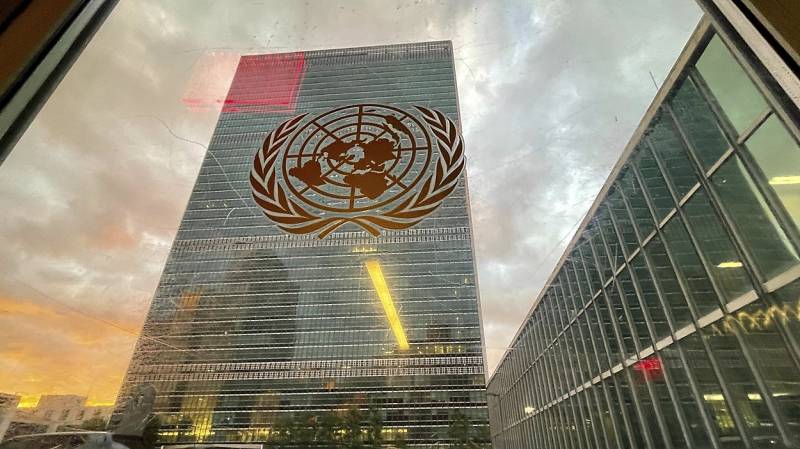
The question that begs attention is how we reached the current impasse that threatens the peace in the region and inches the region towards flagrant violence that can have disastrous consequences for the entire region. The territory is surrounded by three nuclear-armed powers and a minor skirmish has the potential to transform it into a conflagration with catastrophic outcomes. It is high time that the UN salvages its reputation and embarks on tangible measures that bring India to the negotiating table along with Pakistan and genuine Kashmiri leadership. Indulging in fallacious propaganda or fruitless polemical discussions will serve no purpose and not an alternative for meaningful dialogue.