
Vote of each and every MNA will be counted, declares CJP
Asks all political parties to rise up in defence of Constitution: Rules out interference in administrative affairs: Issue now on hand is term of disqualification of party’s defector: JUI-F assures SC its rally, sit-in will be peaceful SCBA tells court elected representative’s vote is that of individual, not of party: PML-N terms reference ‘mere wastage of SC’s time’: PPP says no-trust motion not covered by Article 186: JUI says SC should avoid ending supremacy of Parliament
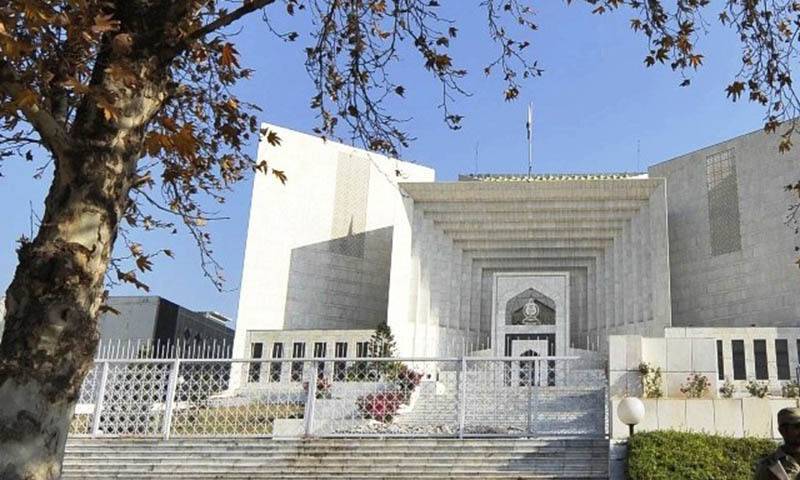

The Chief Justice of Pakistan on Thursday called upon all the political parties to rise in defence of the Constitution and abide by the democratic values, reported 24NewsHD TV channel.
Taking up the hearing of the presidential reference seeking interpretation of Article 63(A), Chief Justice Umar Ata Bandial outrightly, while heading a larger bench, ruled out interference in administrative affairs. “We will see the law,” he remarked.
Justice Umar Ata Bandial remarked that the vote of each and every member of the National Assembly (NA) on the no-trust motion against the government would be counted, and that it would be an insult to a legislator if his or her vote was not counted.
During the hearing of the presidential reference, seeking court’s opinion on Article 63-A of the constitution and the petition filed by the Supreme Court Bar Association (SCBA), seeking court’s order to the political parties to refrain from holding public gatherings in a tense political atmosphere, Chief Justice of Pakistan (CJP) Justice Umar Ata Bandial said now the only question was that of the term of disqualification of an MNA. “There is a detailed description of a legislator’s disqualification in Article 63-A,” the CJP added.
He stated categorically that the exercise of a democratic right by members of the parliament (MPs) did not mean that routine life of the people was disrupted. The judge also made it clear it did not want to involve itself in administrative matters.
“The court wants the political parties to defend the constitution and democratic conventions instead,” he emphasized.
A five-member larger bench of the apex court, headed by Chief Justice of Pakistan (CJP) Justice Umar Ata Bandial, is hearing both these cases.
Justice Ijazul Ahsan remarked that it was still unclear when voting on the no-trust motion would take place.
Attorney General of Pakistan (AGP) argued before the bench that the vote cast by a member of the parliament (MP) without taking his or her party into confidence did not count. “Every political party is independent in running its affairs,” he said, and added, “If Muslim League did not have the authority to run its own affairs, Pakistan would have never been created.”
When Justice Jamaluddin Khan Mandokhel inquired from him whether there was a mention of disqualification of an MP in Article 63-A, the AGP replied the article’s title was ‘disqualification’.
He went on to add that the MPs were bound to follow the party lines at the time of election of the prime minister as well as when they were going to vote on the motion of no-confidence.
He was of the view that ‘voice of the conscience’ being repeatedly said by the PTI MNAs who had defected to the opposition parties in recent days was a mere ‘eyewash’.
He recalled that the apex court had in one of its verdicts made the observation that political parties were like an organisation.
The SC, on the occasion, also expressed its disappointment over the ruling PTI’s stick-wielding Tiger Force.
Justice Mandokhel remarked that if PTI had an armed group, should the court allow the JUI-F to also let loose members of its ‘Ansarul Islam’ wing?
The AGP said that there could be no sit-in, as had been conveyed to the capital city’s administration by the JUI-F, at the time of voting on the no-confidence motion.
He said that there could be no issues only if the JUI-F workers remained peaceful during their rally in Islamabad.
Hearing this, JUI-F’s lawyer, Kamran Murtaza assured the court that the party’s rally as well as the sit-in would be peaceful.
Later, the court adjourned the hearing until tomorrow (Friday).
PML-N terms presidential reference ‘wastage of time’
Earlier, Pakistan Muslim League-Nawaz (PML-N) on Thursday declared the presidential reference filed by the Pakistan Tehreek-i-Insaf (PTI) government in the Supreme Court (SC) with the view to seek the court’s interpretation of Article 63-A of the constitution a ‘mere wastage of court’s precious time’.
In its reply to the reference submitted to the SC in writing through Advocate Makhdoom Ali Khan, the party said that articles 95 and 63-A of the constitution were explicit that every member of the parliament (MP) had the right to vote of his or her own free will, and that the vote cast by each and every member would be counted.
“It is premature to file the reference at this point in time and an unnecessary exercise,” the PML-N opined.
PPP says no-trust motion not covered by Article 186 of constitution
Pakistan Peoples Party, in its reply submitted to the apex court, said that the reference was not covered by Article 186 of the constitution, and that if the SC gave its opinion on the Article 63-A, it would infringe upon the parties’ right to appeal.
The party further contended in its reply that Article 63-A could not be invoked prior to the casting of a vote by a legislator.
Alarmed at the defections by some of its MNAs to the opposition parties, the Pakistan Tehreek-i-Insaf (PTI) government had filed a presidential reference in the apex court a few days ago, in which it sought interpretation of Article 63-A of the constitution so that it could apply brakes on further defections.
Elected representative’s vote is that of individual, not of party, Bar tells SC
In its opinion submitted to the Supreme Court (SC) in writing on the presidential reference, seeking interpretation of Article 63-A of the constitution, the Supreme Court Bar Association (SCBA) on Thursday said that a member of the National Assembly’s (MNA) vote on the no-trust motion was that of an individual.
Giving reference of Article-95 of the constitution, the SCBA said the aforementioned article stated that the right of an MNA to vote was his or her individual right, and not that of a political party he or she was representing in the NA.
It further said that under the same article, the vote a legislator cast was counted.
Furthermore, the Bar added in its reply, under Article-63-A, no legislator could be barred from casting his or her vote, and there was no mention in the same article that a lawmaker voting against the party lines stood disqualified.
The SCBA argued that people ran their country’s affairs through their elected representatives.
NA Speaker can’t be empowered to reject votes of MPs: JUI
The Jamiat Ulema-e-Islam (JUI) also submitted a reply on presidential reference to the Supreme Court in which the party urged the apex court to avoid ending the supremacy of the Parliament.
“No party elections were held in the ruling Pakistan Tehreek-e-Insaf (PTI). The party is being run by the selected officials who cannot instruct any parliamentarian to vote or not to vote under Article 63(A),” reads the reply.
“The Article 63(A) is already undemocratic,” it added.
“The Speaker of the National Assembly cannot be empowered to reject the votes of the parliamentarians,” it stated and added that it was not necessary to comment on the reference before voting for the no-confidence motion.
“If the Supreme Court gives its opinion first, the forum of the Election Commission will become ineffective,” it pointed out and added that if a disqualification case was made against a parliamentarian, the matter would obviously reach the apex court.
“Those who join a party after winning elections independently also become part of it,” it stated.
“From the reference, it seems that the President, the Prime Minister and the Speaker are and will always be honest and trustworthy,” reads the reply.
“Lifelong disqualification over vote against party will further weaken the weak democracy,” it added.
PPP leaders
Pakistan Peoples Party (PPP) leaders again appeared in the Supreme Court in connection with the hearing of the presidential reference.
The party’s high-command has directed Sherry Rehman, Syed Khursheed Ahmed Shah, Syed Naveed Qamar and other leaders to go to the SC.
Similarly, leaders of other opposition parties, part of the steering committee, also attended the court’s hearing.
Also Read: Justice Qazi Isa expresses reservations over formation of SC larger bench
Alarmed at the defections by some of its MNAs to the opposition parties, the Pakistan Tehreek-i-Insaf (PTI) government had filed a presidential reference in the apex court a few days ago, in which it sought interpretation of Article 63-A of the constitution so that it could apply brakes on further defections.
Reporters: Waqas Azeem, Amanat Gishkori and Usman Javed Malik