
Tank check post tragedy: Pakistan's war against terrorism is not over yet
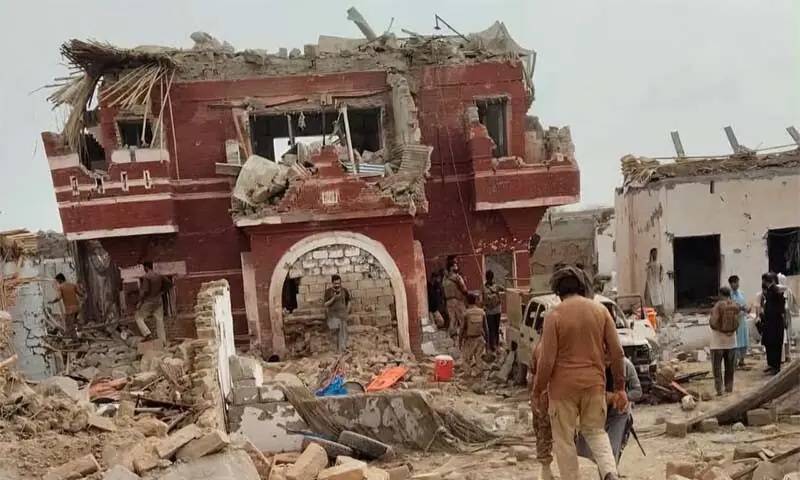

The suicide attack on a security check post in Tank district of Khyber Pakhtunkhwa, which claimed the lives of 15 police personnel, is among the deadliest terrorist incidents in recent months. It was not merely an attack on a law enforcement installation; it was an attack on Pakistan's sovereignty, internal stability and the sacrifices of those who continue to defend the country against violent extremism. The nation mourns the loss of brave personnel who laid down their lives in the line of duty, while the incident demands a resolute national and international response against terrorism in all its forms.
The tragedy underscores the persistent security challenges facing Pakistan despite years of successful counterterrorism operations. The police, armed forces, intelligence agencies, and other security institutions have collectively paid a heavy price in the war against terrorism. Thousands of officers and soldiers have embraced martyrdom over more than two decades, yet terrorist organisations continue attempting to destabilise Pakistan through suicide bombings, targeted killings and attacks on security installations. The Tank incident demonstrates that terrorist networks remain capable of exploiting operational gaps and launching devastating strikes.
The immediate priority for the government must be a swift, comprehensive and transparent investigation leading to the identification, arrest or elimination of all those involved in planning, facilitating, financing and executing the attack. Such investigations should rely on forensic evidence, intelligence collection, digital surveillance and inter-agency coordination. Bringing every perpetrator to justice is essential not only for accountability but also for restoring public confidence in the state's ability to protect its citizens and security personnel.
Pakistan has repeatedly maintained that terrorist groups operating against the country receive support from Indian and Afghan sanctuaries and hostile networks beyond its borders. Anti-Pakistan terrorist organisations have benefited from safe havens in Afghanistan. India is actively supporting these terrorists. Pakistan should continue presenting credible evidence it possesses through diplomatic channels and relevant international forums, including the United Nations, so that such evidence can be independently examined in accordance with the international law.
The international community can't afford to remain indifferent to attacks that target security forces fighting terrorism. The United States, the United Kingdom, the United Nations, the European Union, China, Gulf states and other influential powers have consistently declared terrorism to be a common global threat. Such incidents deserve unequivocal condemnation irrespective of where they occur. International partners should strengthen intelligence cooperation, enhance counterterrorism capacity-building, disrupt terrorist financing and support regional initiatives aimed at preventing extremist violence from across the borders. Terrorism cannot be selectively condemned; consistency is essential if global counterterrorism efforts are to retain credibility.
The broader regional security environment also deserves careful examination. Rising tensions across the Middle East and the Gulf have created an increasingly volatile geopolitical landscape. Periods of regional instability often encourage extremist organisations to exploit political uncertainty, weakened border controls and shifting security priorities. Policymakers should remain vigilant to the possibility that broader regional instability may indirectly embolden transnational extremist networks.
Pakistan's economic ambitions are directly affected by terrorist attacks. Terrorism carries consequences far beyond immediate casualties. Investors assess political stability, internal security and institutional resilience before committing capital to any country. Every major terrorist incident raises concerns among foreign businesses regarding operational risks, insurance costs, workforce safety, and supply-chain reliability. At a time when Pakistan seeks greater foreign direct investment, industrial expansion and enhanced regional connectivity, sustained terrorist activities threaten to undermine economic confidence and delay long-term development objectives.
Consequently, Pakistan's counterterrorism strategy must continue to evolve. Terrorist organisations increasingly employ encrypted communications, sophisticated propaganda, drones, cyber capabilities and decentralised operational structures. Security forces therefore require advanced surveillance technologies, artificial intelligence-assisted intelligence information, integrated command-and-control systems, biometric databases, counter-drone capabilities, electronic warfare tools, and precision equipment to detect and neutralise emerging threats before attacks tale place. Equally important is enhanced coordination among civilian law enforcement agencies, intelligence services, border management authorities and provincial governments.
Lasting success depends upon dismantling extremist financing networks, strengthening criminal justice institutions, improving border security, expanding intelligence penetration of terrorist organisations, preventing online radicalisation, and addressing governance deficiencies that extremist groups seek to exploit. Community policing, educational reforms, economic opportunities for vulnerable youth, and stronger local administration should complement kinetic security operations. Counterterrorism is ultimately a comprehensive national effort involving political leadership, security institutions, civil society and international cooperation.
The Tank tragedy is a painful reminder that Pakistan's fight against terrorism remains unfinished. The sacrifice of the 15 martyred police personnel must strengthen, rather than weaken, the nation's resolve. The government must ensure that those responsible are brought to justice through decisive action, while continuing to engage the international community with credible evidence regarding any external support for terrorist networks.
At the same time, Pakistan should reinforce diplomatic engagement, strengthen regional cooperation where possible, modernise its security architecture and sustain economic reforms that enhance national resilience. Terrorism seeks to instil fear, divide societies and obstruct progress. Pakistan's response must therefore be firm, lawful, technologically advanced and strategically patient. Only through sustained national unity, effective governance, international cooperation and an unwavering commitment to justice can the country honour its fallen heroes and move closer to lasting peace and security.