
Ukraine repatriates and buries nationalist leader with dark WWII past

Ukraine reburied the repatriated remains of a divisive nationalist leader on Monday, part of a wartime trend of commemorating historical figures of the country's independence movement -- despite their ties with Nazi Germany.
Andriy Melnyk, who died in 1964, was the leader of a branch of the Organisation of Ukrainian Nationalists (OUN), a prominent independence group that challenged Soviet rule including by working with the Nazis.
The reburial was held at the National Military Memorial in the Kyiv region, a cemetery opened last year for soldiers killed in Russia's invasion of Ukraine.
"It is extraordinarily symbolic that today's Ukrainian heroes... will rest side by side with Ukrainians of previous generations, who also acted so that Ukraine would be as it is," President Volodymyr Zelensky said.
Melnyk's repatriation from Luxembourg is part of a wider state-led project to create a pantheon to the country's heroes.
That project seeks to unify Ukraine in its fight against the Russian invasion around some historical figures, at the risk of glossing over divisive chapters of their legacy.
"Many people truly tried very hard to bring back to Ukraine its heroes -- people who might have come from different parts of the political spectrum and whose fates were not easy," Zelensky said.
Game-changer
Those heroes, he said, "were united by their faith in Ukraine, their strength to fight for it, and their desire to see Ukraine independent".
Melnyk led a branch of the OUN, which was mainly active between the 1930s and 1950s and whose members took part in the deportation and massacres of Jews and Polish people.
He was temporarily interned as a special prisoner at the Sachsenhausen camp in 1944 as his efforts to bring about Ukrainian independence clashed with German policies.
He died abroad and was "almost forgotten" in Ukraine's historical memory, said Ukrainian historian Yaroslav Hrytsak.
"The war is a game-changer: Ukrainians need anti-Russian symbols."
Russia's annexation of the Crimea peninsula from Ukraine in 2014 and the 2022 war have paved the way for a renewal in anti-Russian and nationalist ideas, said Anna Colin Lebedev, a specialist in post-Soviet societies.
"This pushes people to view the nationalist struggle as a just cause, while somewhat automatically downplaying the darker side of those movements. It involves a process of rehabilitation and depoliticisation of several issues."
First step
The rehabilitation of those figures does not amount to an endorsement of their ideology by the state, which "very explicitly" condemns Nazism, she added.
President Vladimir Putin has sought to justify his invasion by saying one goal of the conflict launched more than four years ago was to "de-nazify" Ukraine.
Kyiv has denounced that narrative as false Kremlin propaganda and a pretext to erase Ukrainian sovereignty and launch a conflict that has become Europe's bloodiest since World War II.
In the Kyiv cemetery, next to freshly dug graves, coffins bearing the remains of Melnyk and his wife, Sofia, were carried slowly by soldiers to the rhythm of a military orchestra.
The couple is only the first of a series of "national heroes" that Kyiv seeks to bring back, including the equally controversial OUN leader Yevgen Konovalets, killed by a Soviet agent in 1938.
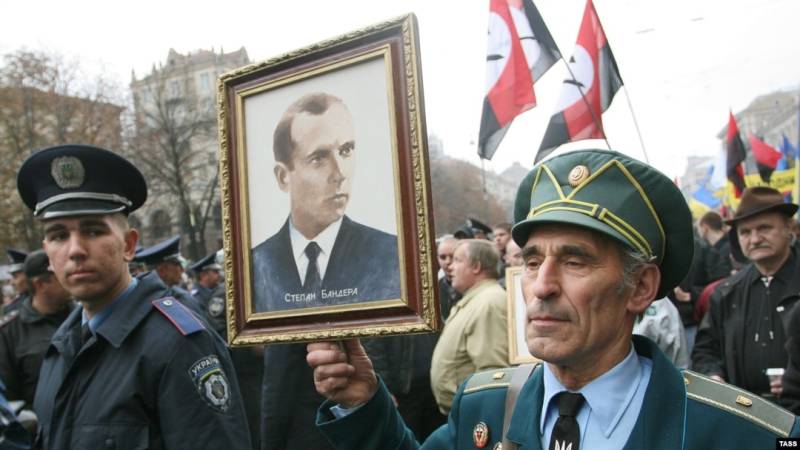
The Ukrainian media has also reported that Kyiv is pushing for the return of OUN leader Stepan Bandera -- a leading figure in Ukrainian nationalism -- seen as a hero by many in Ukraine for his fight against Moscow, despite his ties to Nazi Germany.
"Now is only the first step," Zelensky said.
"I am grateful to every person who worked so that return of great Ukrainian figures could happen and so that the Ukrainian people would receive their pantheon of heroes," he added.