
Ustad Nusrat Fateh Ali Khan powers young Pakistani and Indian artists from grave


Nearly three decades after his passing, Ustad Nusrat Fateh Ali Khan continues to shape musical journeys across Pakistan and India, not through memory alone but through melodies that keep finding new voices, new formats, and new audiences.
In an era dominated by streaming numbers and algorithm-driven discovery, his compositions remain active teachers, quietly guiding emerging artists as they reinterpret his work for contemporary listeners.

One of the most recent examples is Meri Zindagi Hai Tu, a phrase that first echoed through Nusrat Fateh Ali Khan’s voice in 1991.
The original rendition, later uploaded to YouTube by Oriental Star Agencies Ltd, reached 14 million listeners over seven years on a platform that did not even exist during the song’s creation. Its journey did not stop there.

In November 2025, singer Asim Azhar released a drama OST inspired by the refrain of the same title. Within just two months, the song crossed 30 million views on his YouTube channel alone, with additional streams across platforms such as Spotify.
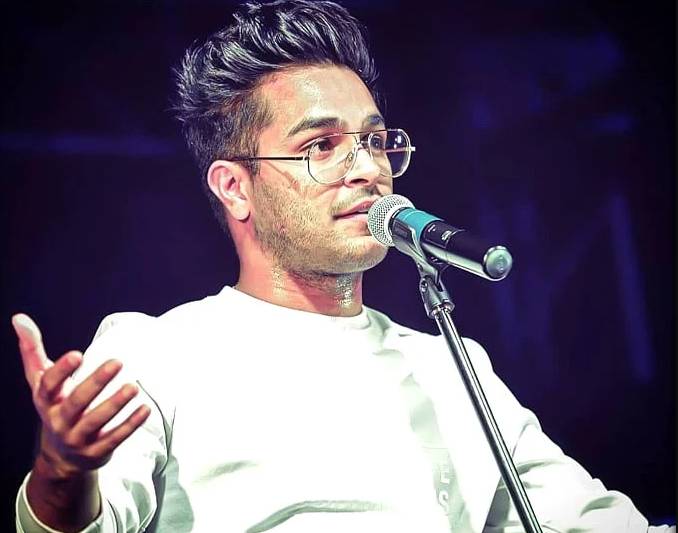
The renewed popularity illustrates how a single lyrical idea, shaped decades ago, continues to anchor modern compositions.
A similar arc can be seen with Un Ka Andaz-E-Karam, the deeply emotive qawwali written by Peer Naseeruddin Naseer and performed by Nusrat Fateh Ali Khan in 1991.
Known for its themes of divine mercy, surrender, and devotion, the song has long stood as a defining example of spiritual expression in Urdu qawwali. The original version, uploaded by OSA, accumulated 9.7 million views over seven years.
In October 2025, Indian singers Madhur Sharma, Moin, ER, and Roheb released a contemporary cover under Universal Music India. In under three months, the rendition crossed 42 million views, introducing the composition to a younger, digitally native audience while retaining the emotional weight of the original.
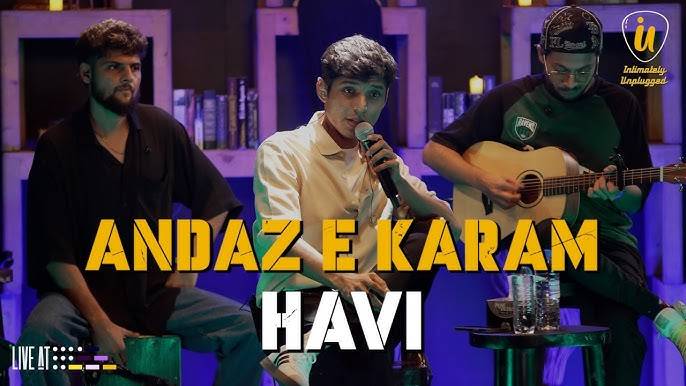
Adding to this continuum of influence, emerging artist Havi, whose real name is Abdur Rehman Sajid, rose to prominence about a year ago through his emotionally charged rendition of “Andaz-e-Karam.”
Havi developed a now-recognisable concert ritual, opening the performance with the line “Aik bohat purana masla hai,” delivered in a conversational tone that immediately draws the crowd in.
He then pauses deliberately, allowing anticipation to build, before launching into “Wo bhi apnay na huyay, dil bhi gaya haathon se,” a moment that reliably prompts loud cheers and collective sing-along from the audience.
The phrasing, melodic approach, and emotional restraint in his delivery clearly echo the stylistic influence of Nusrat Fateh Ali Khan, without attempting to replicate him.
While Havi’s version circulated widely across Instagram, Facebook, and TikTok, accumulating millions of views through short-form clips, the full performance uploaded to his YouTube channel crossed 6.7 million views within a year, marking a significant breakthrough in his career and further underscoring how NFAK’s musical language continues to guide and shape emerging voices.
Perhaps the most striking example of this enduring lineage is Sanson Ki Mala Pe.
Nusrat Fateh Ali Khan first performed the qawwali during his debut visit to India in 1979 at a wedding hosted by Raj Kapoor, with an early studio version released by EMI Pakistan in 1977.
The song’s earliest upload on OSA’s YouTube channel reached 22 million views over nine years.

Its afterlife has been extensive. Rahat Fateh Ali Khan’s tribute version, released on the Sufiscore YouTube channel in 2020, crossed 106 million views.
That same year, the Leo Twins offered their own interpretation, gathering 33 million views. More recently, Vandana Sharma’s rendition, uploaded by Humara Music in 2024, reached 18 million listeners.
Each version carries a distinct vocal approach, yet all trace their foundation back to Nusrat’s original phrasing and spiritual intensity.
These numbers tell a story beyond metrics.
They point to a shared musical education where Nusrat Fateh Ali Khan remains a reference point, a guide whose compositions continue to instruct singers in emotional discipline, phrasing, and restraint.
Emerging artists often do not replicate his style; they absorb its principles. His music offers structure, emotional honesty, and a balance between devotion and performance that continues to resonate across borders.
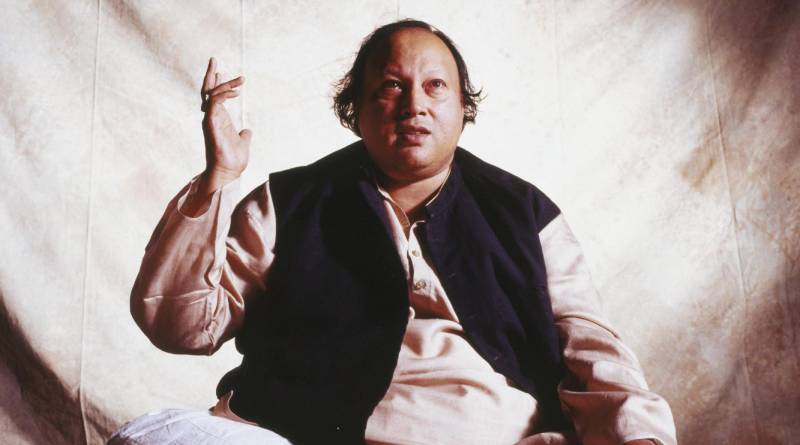
Nusrat Fateh Ali Khan passed away on August 16, 1997, in London at the age of 48 after suffering from liver and kidney complications, with sudden cardiac arrest marking the end of his life.
His death closed a chapter in live performance, yet his influence only widened. He was instrumental in bringing Sufi devotional music to global audiences, collaborating internationally and introducing qawwali to listeners unfamiliar with its spiritual and cultural context.

Today, his presence is felt not through nostalgia but through continuity. Each reinterpretation, cover, or inspired refrain serves as proof that his work remains relevant in a rapidly shifting musical landscape. Younger singers may approach his compositions with new arrangements or contemporary production, but the emotional spine remains intact.
In this sense, Nusrat Fateh Ali Khan continues to function as an ustad, long after his final performance. His music still teaches, still elevates, and still opens doors for artists finding their voice. As streaming platforms amplify his legacy and new renditions introduce him to fresh audiences, it becomes clear that some legacies do not fade. They simply find new singers to carry them forward.