
The girl who was Lal Qalandar

By Shamroz Khan
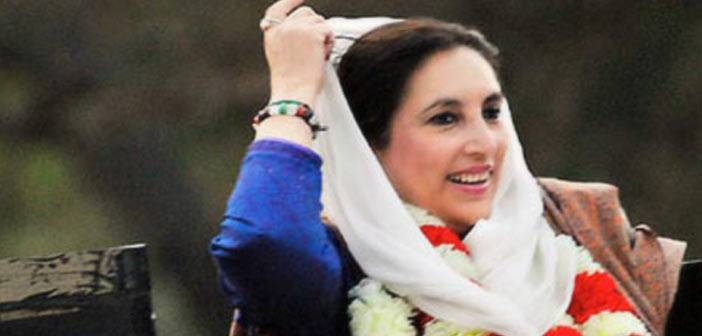
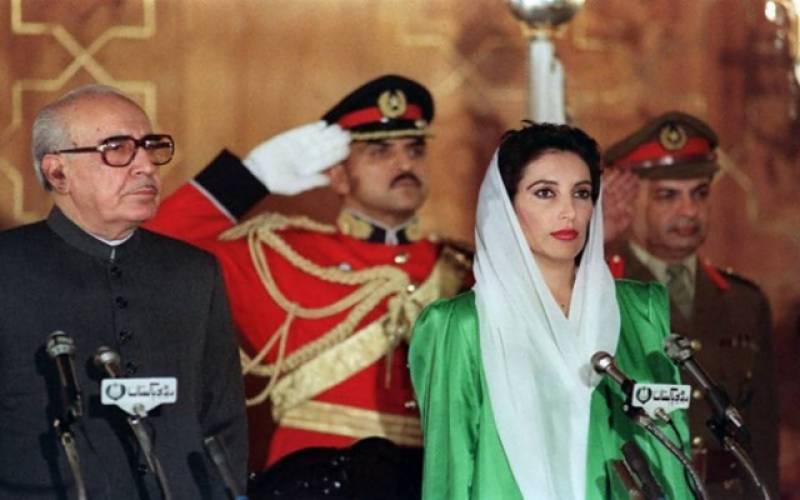
A little over 34 years ago, on December 2, 1988, Benazir Bhutto was sworn in as the Prime Minister of Pakistan, the first female prime minister not only of country but also of the Islamic world.
On a very hot day on June 21, 1953, the members of the Bhutto family and the nursing home staff were very happy on the birth of Bibi at Pintos Nursing Home in Karachi.
“ہم اقتدار کی پرواہ نہیں کرتے بلکہ غریبوں کے دلوں میں جگہ ڈھونڈنے کی کوشش کرتے ہیں۔”
— PPP (@MediaCellPPP) December 27, 2022
شہید محترمہ بینظیر بھٹو#SalaamBenazirBhutto pic.twitter.com/42YBA2E5KF
The father called his first child as ‘Pinky' and the mother gave her initial name of 'Baby', but in the records of the nursing home, the name of the girl was written as Benazir Bhutto, after her late aunt who died at a young age.
Benazir Bhutto's father Zulfikar Ali Bhutto first married in 1943 to Shirin Amir Begum and in September 1951 he married Nusrat Bhutto, an Iranian woman of Kurdish origin.
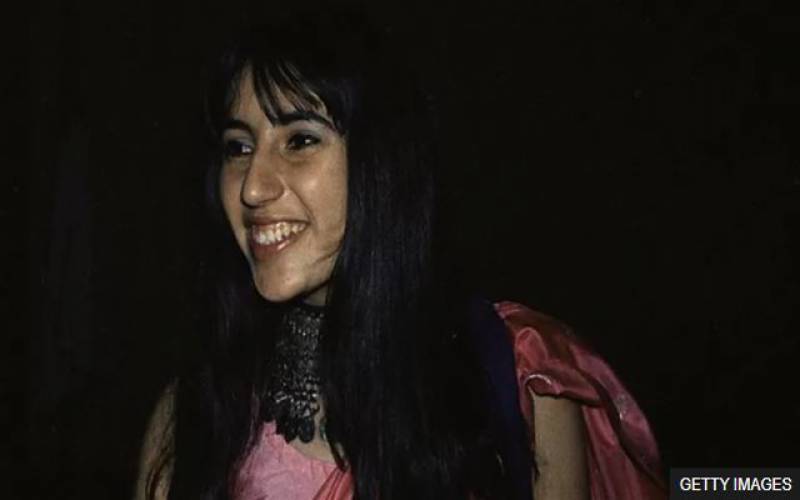
Zulfikar and Nusrat Bhutto had four children, including Benazir, Mir Murtaza, Sanam Bhutto and Shahnawaz Bhutto.
Benazir received her early education from Lady Jennings Nursery and then from Convent of Jesus and Mary, Karachi. Then for two years, she studied at the Rawalpindi Presentation Convent, after which she was sent to the 'Convent of Jesus and Mary' in Murree.
In December 1968, 15-year-old Benazir Bhutto passed the O-Level examination with distinction, and in April 1969, she was sent to Radcliffe College of Harvard University in the United States for an undergraduate degree in political science.
She also became the social secretary of her hostel Elite House at Harvard, and Benazir, like her father, was also active in the campaign against America's involvement in the Vietnam War at the same time.
“میں آئین کی بحالی، قانون کی بالادستی اور پاکستان کی عوام کو آزادی دلانے کیلئے لڑنا چاہتی ہوں۔”
— PPP (@MediaCellPPP) December 27, 2022
شہید محترمہ بینظیر بھٹو#SalaamBenazirBhutto pic.twitter.com/KnJG1IesMU
In 1972, Benazir Bhutto appeared with her father in the Indo-Pak talks. This time she arrived in India to attend the famous Simla Agreement ceremony, where she also was introduced to Prime Minister Indira Gandhi for the first time.
It was a turning point in Zulfikar Ali Bhutto's political training and under his constant guidance of her daughter that she received the attention of the Indian media, consisting of radio and newspapers.
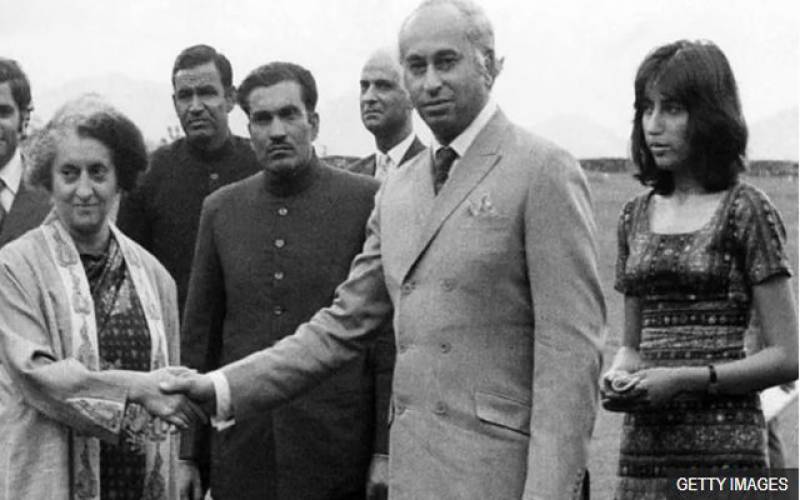
At such a young age, Benazir Bhutto herself explained this focus of the press on herself in her own words, "I was a symbol of the new generation. I was born in independent Pakistan. That is why I was free from all the complexities and prejudices that had separated Indians and Pakistanis as a result of the bloody tragedy and trauma of partition.”
After completing her studies at Harvard in 1973, Benazir went to Lady Margaret Hall College of Oxford University to study philosophy, political science and economics, from where she succeeded in second grade. At his father's insistence, she obtained a postgraduate degree in international law and diplomacy from St. Catherine's College, another institution at Oxford University.
In 1974, Benazir had the opportunity to meet Muslim leaders such as Muammar Gaddafi, Anwar al-Sadat, Shah Hussein and Shah Faisal when she attended the Summit of the Organization of Islamic Cooperation with her father in Lahore.
“پاکستان پیپلز پارٹی ظالموں کے خلاف اس لیے جدوجہد کرتی ہے، کیونکہ ہم غربت، ظلم اور استحصال کو برداشت نہیں کرسکتے۔”
— PPP (@MediaCellPPP) December 27, 2022
شہید محترمہ بینظیر بھٹو#SalaamBenazirBhutto pic.twitter.com/s8xcnvPASk
On July 5, 1977, General Muhammad Ziaul Haq, the chief of army staff, imposed martial law in the country and arrested political leaders, writers, journalists, intellectuals and anyone who had the slightest doubt that he could raise his voice against the army or its seizure of power. Zulfikar Ali Bhutto was also arrested but released when there was widespread public protest.
After the military coup, Zulfikar Bhutto nominated Nusrat Bhutto as the co-head of the party, while in October 1977 Benazir was also appointed a member of the party's central executive committee.
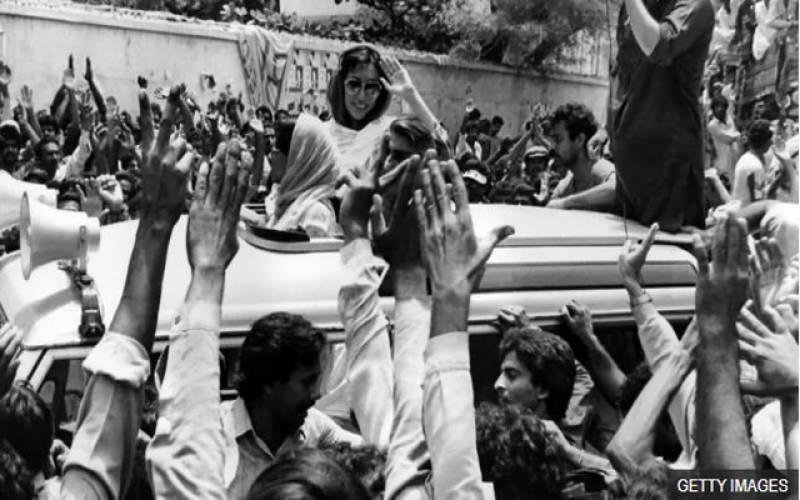
It was at this time that Benazir Bhutto emerged as the party's future leader and became the party's most popular political face. She and Nusrat Bhutto continued to organize demonstrations and protests against General Zia and when given the opportunity, they would also meet Zulfikar Bhutto in jail.
Zulfikar Bhutto was tried for the murder of Muhammad Ahmed Khan Kasuri, father of his political opponent Ahmed Raza Kasuri. The Lahore High Court sentenced him to death and the Supreme Court upheld the sentence. Zulfikar Bhutto was hanged on April 4, 1979.
Before the execution, Zulfikar Bhutto asked both Nusrat Bhutto and Benazir to leave the country, but both of them refused. After this execution, Benazir and Nusrat Bhutto were again arrested for six months. Both were placed under house arrest for another six months and released in April 1980. On September 21, 1988, before the birth of Benazir Bhutto's first child and the party's current co-chairman Bilawal Bhutto Zardari, the PPP led a vigorous election campaign which continued even after the birth of Bilawal Bhutto.
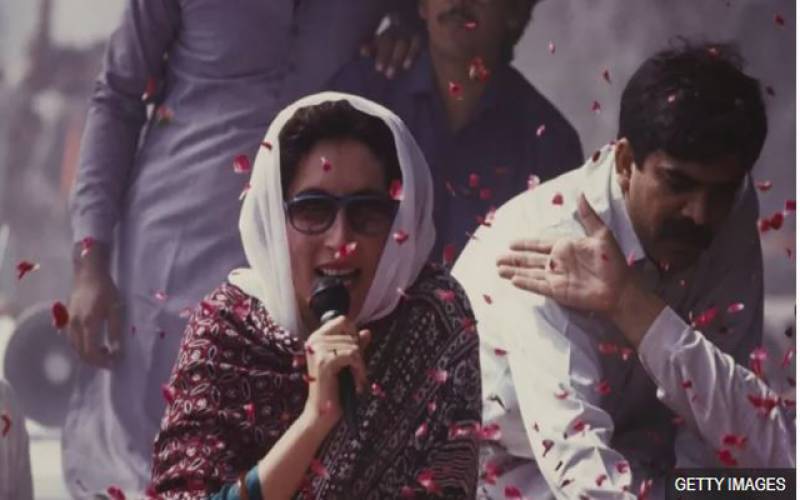
Such was the popularity of the party that the PPP received applications from more than 18,000 candidates in anticipation of a landslide victory.
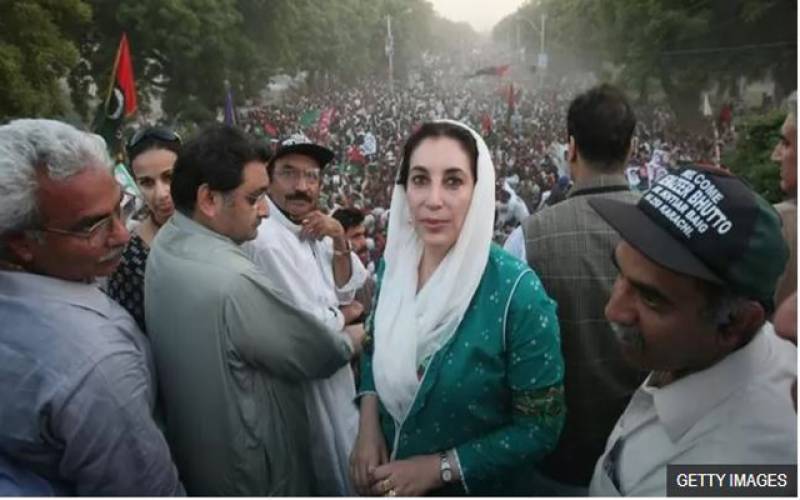
Benazir Bhutto was elected as the first woman Prime Minister of Pakistan on November 16, 1988.
On December 2, 1988, Benazir was sworn in as the Prime Minister of Pakistan for the first time.
Benazir Bhutto, the only two-time prime minister of Pakistan and the head of the Pakistan People's Party, was assassinated in Rawalpindi on December 27, 2007.
His 15th death anniversary is being celebrated today. Benazir Bhutto's admirers and confidantes still cherished the days spent with her.