
Pakistan acting as intermediary in US-Iran negotiations, confirms Witkoff
Trump's special envoy says there are signs Tehran was interested in making a deal: Iran responds to US plan via intermediaries, also sends five-point counterproposal
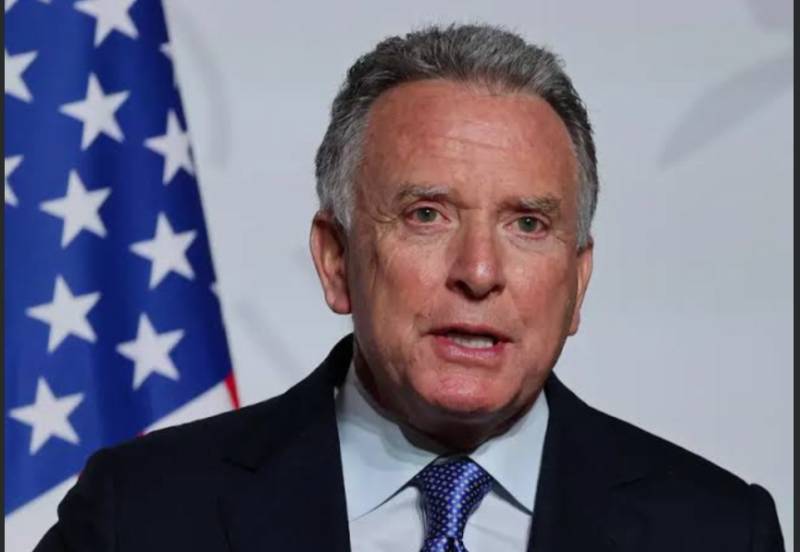

US Special Envoy for Middle East Steve Witkoff has confirmed that a 15-point peace plan was shared with Iran through Pakistan, with early talks positive but nuclear disputes unresolved.
Steve Witkoff, serving as a special envoy under President Donald Trump, revealed that the United States has been engaging Iran through indirect diplomatic efforts, with Pakistan acting as a mediator. “There are signs that Tehran was interested in making a deal,” he added.
During a Cabinet meeting at the White House, Witkoff said that a 15-point proposal outlining a potential peace framework has been delivered through Pakistan’s government. He noted that the plan is intended to guide negotiations toward a resolution.
Pakistan’s Foreign Minister, Ishaq Dar, also acknowledged his country’s role in facilitating communication between the two sides. In a social media post, he said the proposal is currently “being deliberated upon by Iran.”
Witkoff described the early exchanges around the framework as encouraging, mentioning “strong and positive messaging and talks,” but avoided discussing the details due to the sensitive nature of the negotiations.
According to senior officials from the Trump administration, efforts are underway, led in part by Vice-President JD Vance, to organize a meeting in Pakistan this weekend. The goal of the talks would be to explore options for de-escalation and a potential resolution to the conflict involving Iran.
Reflecting on earlier negotiations prior to the conflict, Witkoff indicated that disagreements over Iran’s nuclear programme were a major obstacle. He said Iranian representatives maintained a firm stance on uranium enrichment.
“Throughout our meetings with the Iranians, we heard the following from them: ‘the Iranians have the inalienable right to enrich.’ Then we heard they possessed enough 60% enriched material, 460 kilograms, to make 11 atomic bombs,” Witkoff said during a Cabinet meeting at the White House.
He further added, “These are incontrovertible signs, among many other signs, that their regime had not given the negotiating team authority to make a deal required by you.”
Witkoff, speaking during the cabinet meeting, said the nascent talks could be successful if the Iranians realize there were no good alternatives - a realization Tehran might be coming to, he argued.
"We will see where things lead, and if we can convince Iran that this is the inflection point with no good alternatives for them other than more death and destruction," Witkoff told reporters. "We have strong signs that this is a possibility."
Witkoff said Pakistan had been acting as a mediator, confirming statements from Pakistani officials.
Iran responds to US 15-point plan
Iran has responded through unnamed intermediaries to a 15-point US plan to end the war, news agency Tasnim reported, and is now waiting for Washington's reply.
The exact contents of the US plan, conveyed to Iran via Pakistan according to Pakistani officials, are not officially known.
"Iran's response to the 15 points proposed by the US was officially sent last night through intermediaries, and Iran is awaiting the other side's response," Tasnim reported, citing an informed source.
Iran responded by sending a five-point counterproposal, according to the source cited by Tasnim.
The five points were ending the "aggression", the establishment of a mechanism guaranteeing that neither Israel nor the United States would return to war, financial compensation, and the end of hostilities on all fronts -- meaning that Israel would stop fighting Hezbollah in Lebanon and possibly Hamas in Gaza.
The source also indicated that Iran wanted its sovereignty over the vital Strait of Hormuz to be recognised.
Trump reveals ‘gift' from Iran
On Thursday, President Donald Trump said the “gift” from Iran he had referenced days earlier was Tehran’s decision to allow 10 oil-carrying ships to pass through the Strait of Hormuz, describing the move as a sign the two sides may be “dealing with the right people”.
Speaking during the cabinet meeting at the White House, Trump recounted watching footage of vessels transiting the waterway, initially seeing “eight boats going right up the middle”, before Iranian officials indicated two more would follow. “They then apologized … and they said we’re going to send two more boats, and it ended up being 10 boats,” he said.
Trump framed the gesture as a potential opening for diplomacy while warning that military pressure would continue if talks fail.
Iran has not confirmed any such gift, but Iranian Foreign Minister Abbas Araghchi said in televised comments that Iran has "permitted passage through the Strait of Hormuz for friendly nations including China, Russia, India, Iraq and Pakistan."
Trump urged Tehran to agree to a deal to end weeks of US and Israeli strikes, saying that Iran's leaders now have “the chance … to permanently abandon their nuclear ambitions and to join a new path forward.”
At the same time, he warned that if Iran does not engage, “We’re their worst nightmare," saying, "We’ll just keep blowing them away.”
While Trump claimed Iranian officials were signalling interest in an agreement — and described them as “great negotiators” — he acknowledged uncertainty over whether a deal would materialize. “I don’t know if we’ll be able to do that,” he said. “I don’t know if we’re willing to do that.”
- Saudi Arabia intercepts drones -
The Saudi defence ministry said it had "intercepted and destroyed" four drones over the kingdom's east early Friday.
- Rubio to join G7 meeting -
US Secretary of State Marco Rubio landed in France to join a meeting of G7 foreign ministers on Friday, an AFP correspondent said.
Rubio, who skipped the first day of the talks outside Paris, said before departing that it was in the "interest" of all G7 nations to push for the reopening of the Strait of Hormuz currently blocked by Iran.
Britain, Canada, France, Germany, Italy and Japan -- the other G7 members -- on Thursday signalled their hope for a diplomatic solution to the conflict.
- Guards claim missile, drone attacks -
Iran's Revolutionary Guards said on Friday they had carried out missile and drone strikes the previous day targeting sites in Israel and military facilities in the Gulf used by US forces.
A maintenance facility for US air defence system Patriot was targeted in Bahrain, the Guards said in a statement carried by Iranian news agencies.
- Israel strikes Tehran -
Israel's military said its forces carried out "a wide-scale wave of strikes targeting infrastructure of the Iranian terror regime in the heart of Tehran" early Friday.
- Australia defends efforts -
Australia's leader said Friday it was not consulted over the war with Iran, responding to President Donald Trump's swipe the US ally was not doing enough.
Prime Minister Anthony Albanese said Australia was in close contact with Gulf states under attack from Iran, providing a surveillance aircraft to help defend the United Arab Emirates, where many Australians live.
"There is no request been made to Australia that has not been agreed to," Albanese told reporters in Canberra.
- Blasts in Beirut -
Lebanese media reported an Israeli strike hit Beirut's southern suburbs early Friday, as AFP correspondents heard several explosions from the Hezbollah stronghold that Israel has repeatedly struck since war erupted.
AFPTV footage showed smoke billowing from the area after the raid.
- Israel army demands more soldiers -
The Israeli military said it needs more troops for deployment in southern Lebanon, where forces are engaged in fighting Hezbollah as part of efforts to establish a so-called "buffer zone".
"On the Lebanese front, the forward defensive zone that we are creating requires additional (Israeli army) forces," military spokesman Brigadier General Effie Defrin said, noting that the military is operating across multiple fronts, including the West Bank, Gaza and Syria.
- Israel opposition leader attacks govt -
Israel's main opposition leader Yair Lapid accused the government of steering the country towards a "security disaster" by "sending the army into a multi-front war without a strategy, without the necessary means and with far too few soldiers".
"The (Israeli army) is stretched to the limit and beyond. The government is leaving the army wounded out on the battlefield," Lapid said.
- Israeli soldier killed in Lebanon -
The Israeli army announced the death in combat of a soldier in south Lebanon, just hours after reporting another death from its ranks.
Four Israeli soldiers have now been killed in fighting in south Lebanon since Hezbollah began launching rocket attacks against Israel on March 2 to avenge the killing of Iran's supreme leader.