
Locals find gold particles near Diamer-Bhasha Dam
Thousands find livelihoods as gold extraction expands along Indus River banks: Thousands of people become associated with gold extraction occupation in Gilgit-Baltistan: Demand for excavators increases sharply in Chilas: Gold worth billions of rupees expected to recover from soil before completion of dam
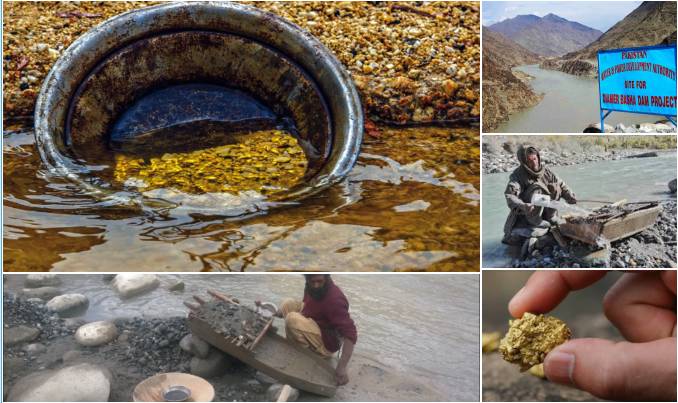

In Gilgit-Baltistan’s Diamer district, soil from land set to be submerged by the under-construction Diamer-Bhasha Dam along the banks of the River Indus has begun yielding gold, 24NewsHD TV channel reported on Wednesday.
According to the report, locals engaged in the profession of extracting gold particles from the soil are recovering gold worth substantial amounts every month, turning the activity into a major source of livelihood for thousands of people.
The discovery of gold has generated widespread employment opportunities, and the practice of searching for gold particles along the Indus riverbanks has emerged as a profitable business and a dependable means of income for the local population.
Thousands of people have now become associated with this occupation, which has taken the shape of one of the most significant livelihood sources in the area.
The demand for excavators has increased sharply in Chilas due to the growing scale of gold extraction, prompting machinery to be brought in from other cities across the country.
The practice of searching for gold particles along the Indus River is centuries old; however, earlier generations relied on traditional methods and carried out gold extraction on a small scale.
In Gilgit-Baltistan, Sonaiwal tribes have practised this occupation for centuries, using it as their primary means of livelihood, but in recent years the use of excavators has transformed the activity, drawing thousands more people into the trade.
Reportedly, the value of the land that will be submerged by the dam is considered lower than the value of the gold present in the soil, while local residents continue to extract gold at an unprecedented pace.
If the current pace of gold extraction continues until the completion of the Diamer-Bhasha Dam, there are strong prospects that gold worth billions of rupees could be recovered from the soil of Diamer.
The Diamer-Bhasha Dam is located on the River Indus between the Diamer district of Gilgit-Baltistan and the Kohistan district of Khyber Pakhtunkhwa, approximately 315 kilometres upstream of the Tarbela Dam and around 40 kilometres downstream of Chilas.
Construction of the dam began in 2020 and spans areas in both Gilgit-Baltistan (GB) and Khyber Pakhtunkhwa (KP), with the project designed as a 272-metre-high roller-compacted concrete dam, making it one of the tallest of its kind in the world upon completion.
Once completed, the dam is expected to generate up to 4,800 megawatts of hydropower, store millions of acre-feet of water for irrigation and drinking purposes, extend the life of the Tarbela Dam, and help control downstream flooding.
Meanwhile, concerns over unregulated mining persist in other regions, as last year on December 29, 2025, the KP government imposed a ban under Section 144 on mineral extraction in districts including Swabi, Nowshera, Kohat, and Karak to curb illegal mining and protect river ecosystems.
According to a notification issued by the home department, gold mining and extraction activities along the banks of the Indus and Kabul rivers were strictly prohibited, warning that violators would face action under Section 188 of the Pakistan Penal Code, including confiscation of equipment, fines, imprisonment, or both.
The ban followed earlier crackdowns on illegal placer mining, particularly in the Karak district, where repeated operations along riverbeds had prompted government intervention due to environmental damage and smuggling concerns.
Reporter: Sami Ullah