
Lahore allows kites sale from Feb 1, manufacturing to start tomorrow
Over-sized kites, hazardous string and spools banned: Mandatory for motorcyclists to install safety wires on their bikes: Online portal for traders' registration activated: Deputy Commissioner issues notification with SOPs to celebrate three days Basant from Feb 6-7-8
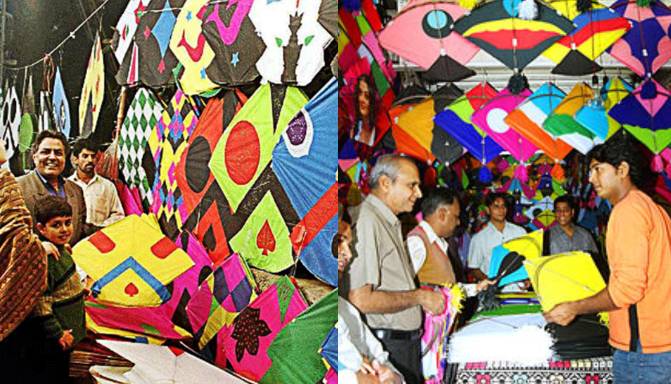

The government has allowed the manufacture of kites and string in Lahore from December 30, while sales will be permitted only between February 1 and February 8, as part of conditional approval for celebrating Basant in 2026.
Deputy Commissioner Lahore Syed Musa Raza has issued an official notification allowing the cultural festival to be observed on February 6, 7 and 8, 2026, under strict terms and safety measures aimed at preventing accidents and loss of life.
According to the 24NewsHD TV channel, SOPs have been issued for the district administration, police, kite flying associations and citizens, making it clear that Basant will be celebrated only within Lahore’s district limits and that kite flying will be allowed on the specified days under regulated conditions.
The sale of kite-flying material has been fixed from February 1 to February 8, while business owners have been allowed to legally start preparations and related work from December 30.
However, the making and sale of spools, commonly known as charkhis, has been completely banned, and only string in the form of a “pana”, wound around a large paper ball, will be permitted.
The use of nylon, plastic and metallic wire has been strictly prohibited, and the district administration has been directed to adopt a zero-tolerance policy against such hazardous materials.
For effective regulation, the e-Biz app and an online portal have been activated for the digital registration of kite and string manufacturers and sellers.
Authorities have also made it mandatory for motorcyclists to install safety wires on their bikes to prevent throat injuries caused by stray strings.
The notification further states that the size of kites must not exceed the prescribed limits, warning that violations will invite legal action. Police and district officers have been instructed to launch a strict crackdown against those selling banned kite sizes and lethal string.
Deputy Commissioner Syed Musa Raza said Basant is a cultural festival of Lahore and ensuring its safety is the administration’s responsibility. He made it clear that bloody string and chemical coatings would not be tolerated under any circumstances.
He added that while business owners could start work legally from December 30, the protection of human lives remained the top priority, and no negligence would be allowed. Urging parents to play their role, he appealed to them to prevent children from using prohibited string and assured that law-abiding citizens would be provided full protection during the festival.
The kites come in a variety of names and shapes, and each has its own characteristics and appellation in Lahore. The primary shapes are generally variations of the rhombus or curvilinear designs.
Traditional kites used on Basant in Lahore:
The Gudda is traditionally a rhombus-shaped kite and normally the heavier of the two, often featuring a 'patta' (a triangular paper cut-out) at the bottom in place of a tassel. It comes in various sizes, with Gudda sizes measured in 'tawa' (e.g., 2.5 tawa, 3 tawa, 4 tawa, 5 tawa).
The Guddi is traditionally a rhombus-shaped kite and has a small paper tassel at the bottom. It also comes in various sizes measured in 'gitth' (e.g., four-and-a-half gitth).
Patang: This is a common name for kites in general, but also refers to a specific curvilinear shape that is said to be unique to Lahore.
Kup: An elongated version of the Patang, also featuring a curvilinear shape.
Pari: Known as the 'Star-kite' in English, this design is unique and attractive, sometimes described as being as light as a butterfly, and has a small tail (extra loose paper at the bottom).
Lucknow Kat (Lucknow Cut): A specific style or design popular as a smart-shaped gudda during Basant, originally brought from Lucknow.
Tukkal: It has the same shape as a patang, but both lower wings of it are extra small, and the horizontal width of it is larger than the normal size of a patang.
Do-Akhal (Maida): It is a big and heavy gudda or guddi having two coloured eyes.
Lepo: These kinds of not-extra-big kites are usually used by kids, as these kites handle extra-fast wind in the sky.
Rocket: It is a long, rocket-shaped kite.
Parphara: It is an interesting shape as it rises in the sky; it makes a noise of waving the paper.
Teerah: It is a broad-winged gudda type.
Machhar: It is also a Pari-shaped kite with an extra-large tail.
Silai Marka: It has specific markings on both sides of the wings.
Dabbidar: It is designed in Gudda shapes, usually, and has several colourful squares.
Pappardan: It is a very large kite.
Kites were traditionally made with intricate designs by pasting panels of different coloured paper together, showcasing the aesthetic taste of the culture.
Reporter: Tahir Jamil