
From the Strait of Hormuz to American Streets: The Story of Iran’s Ascendancy
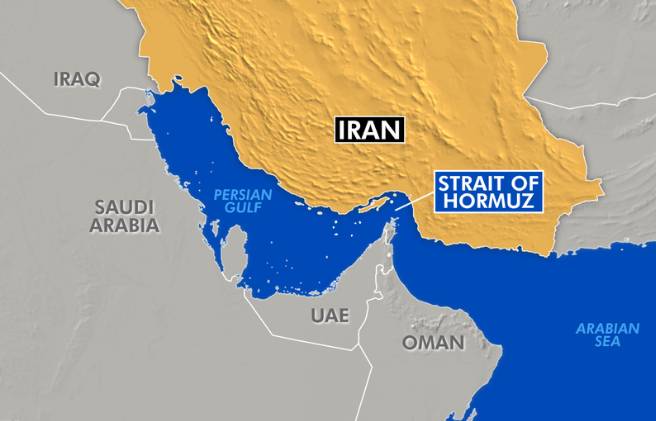

In recent weeks, global politics has taken an unexpected and complex turn, where domestic unrest and international affairs appear increasingly interconnected. Following what is widely perceived as an unprovoked American attack on Iran, the consequences of the conflict began to reverberate inside the United States within a matter of weeks. Across numerous states, more than eight million Americans reportedly took to the streets, protesting the war and the policies of former President Donald Trump, while raising strong voices in support of Iran and Palestine.
Interestingly, while the United States and Israel failed to mobilize large-scale protests within Iran against its government, the opposite dynamic unfolded in their own societies. In both the United States and Israel, citizens themselves were seen protesting effectively against the policies of their leadership. These demonstrations are not merely emotional or temporary reactions; rather, they reflect growing unease over the destruction, humanitarian crises, and civilian suffering caused by American and Israeli military actions in Iran and Palestine. The echoes of these protests have resonated globally, signaling a shift in the international political landscape.
The anti-war protests in the United States, Israel, and the United Kingdom go beyond expressions of domestic political dissent. They represent a broader transformation, indicating that resistance to American dominance is no longer confined to the Middle East or developing nations. Instead, this resistance is now being echoed within Western societies themselves. In this context, the protests on American streets can be interpreted as a continuation of a long-standing ideological front—one that Iran has upheld since its 1979 revolution.
For decades, Iran has positioned itself as a staunch supporter of the Palestinian cause and a vocal critic of American and Israeli influence in the Middle East. Its support for groups such as Hezbollah in Lebanon, various militias in Iraq, and the Houthi movement in Yemen reflects a comprehensive strategic approach that extends beyond conventional military power. Rather than engaging in direct large-scale warfare, Iran has cultivated a network of ideological alignment and local alliances, amplifying its influence across the region. This strategy, often referred to as the “Axis of Resistance,” enables Iran to project power without direct confrontation.
This approach has proven effective in multiple respects. From the eastern Mediterranean to the Persian Gulf, Iran has established a sphere of influence that continues to challenge its adversaries. Its presence in Lebanon, Syria, Iraq, and Yemen demonstrates how, despite decades of sanctions and limited resources, Iran has secured a strong foothold in regional affairs. In this sense, Iran’s power can be described as “networked power”—rooted not in direct control, but in relationships, ideology, and strategic partnerships.
However, the question remains whether this influence has truly evolved into regional hegemony. Hegemony implies not just influence, but dominance that is acknowledged by other states, compelling them to align their policies accordingly. Economically, Iran continues to face significant challenges, including prolonged sanctions, internal structural weaknesses, and limited integration with global markets. These factors have hindered its development trajectory.
Militarily, while Iran has made notable advancements in missile and drone technology, its conventional military capabilities are still considered weaker compared to those of the United States and Israel. Nevertheless, the recent conflict has highlighted both Iran’s resilience and certain vulnerabilities within American strategy.
On the diplomatic front, Iran’s relations with key regional players remain complex. Countries such as Saudi Arabia and the United Arab Emirates continue to view Iran’s military posture with suspicion, particularly its support for non-state actors, which they perceive as destabilizing.
Although there have been intermittent signs of rapprochement, a persistent trust deficit continues to impede lasting stability. Despite these challenges, Iran’s strategic flexibility and adaptability allow it to remain an active and influential player. The decentralized nature of the “Axis of Resistance” enables it to operate simultaneously on multiple fronts, making it difficult for adversaries to neutralize entirely.
The recent wave of mass protests across the United States is being interpreted in some quarters as evidence of Iran’s clear advantage over the United States and Israel in this confrontation. These demonstrations are seen as proof that the foundations of American foreign policy are weakening and that global opposition to it is intensifying. From the Iranian perspective, such developments reinforce the narrative that resistance to Western interventionism is now emerging from within the West itself.
However, to characterize these protests as Iran’s complete victory would be an oversimplification.
The Palestinian cause enjoys broad global sympathy that transcends any single nation or ideology. Many protesters in the United States and elsewhere are driven primarily by concerns over human rights, justice, and opposition to war, rather than explicit support for Iran’s regional policies. Even if demonstrators do not fully endorse Iran’s strategy, they may, in the current context, perceive its narrative as comparatively justified.
Moreover, the American political system is structured in such a way that public protests do not immediately translate into fundamental shifts in foreign policy. Institutional frameworks, strategic interests, and geopolitical considerations continue to play decisive roles.
Viewed in a broader context, the Middle East remains a complex region, shaped by the competing interests of major global powers such as the United States, Russia, and China, alongside influential regional actors like Turkey and Israel. In such an environment, the establishment of uncontested dominance by any single state remains highly unlikely.
That said, Iran has undeniably established itself as a resilient and consequential regional actor—one that symbolizes resistance while maintaining significant influence over key geopolitical developments. Its alliances and ideological narrative provide it with a distinct advantage. Alongside countries like Saudi Arabia, Turkey, and Pakistan, Iran is often regarded as one of the leading states within the Muslim world.
Still, Iran has yet to achieve the status of an undisputed regional hegemon. While its influence is substantial, it continues to face persistent economic, military, and diplomatic challenges. Its strategy has enabled it to secure a strong and impactful position, and the growing global unrest and protest movements have further strengthened its narrative. Yet, its journey toward full hegemony remains incomplete.
Ultimately, the developments “from the Strait of Hormuz to the streets of America” tell a compelling story—not necessarily of absolute Iranian dominance, but of a shifting global discourse in which Iran’s narrative is gaining traction. Iran today stands as a significant, capable, and determined regional power, but its transformation into an uncontested leader of the region—and the broader Muslim world—remains a work in progress.