
Second round of Federal–Action Committee talks begin in Muzaffarabad amid key political deadlines
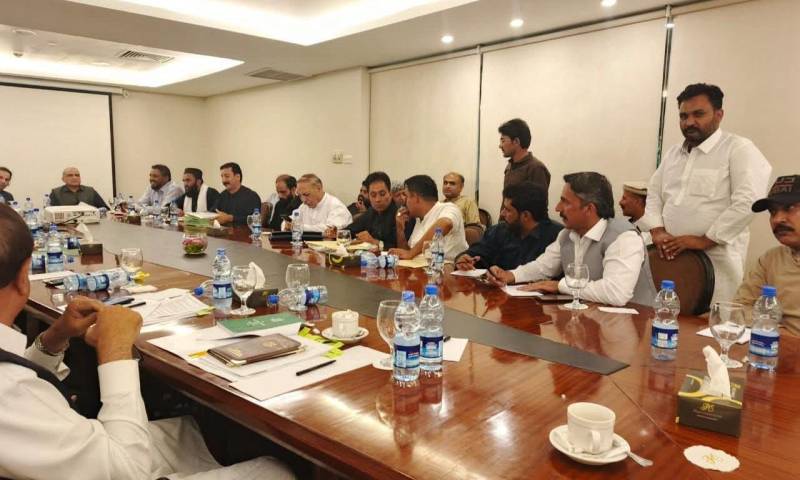

The second round of important talks between the Federal Negotiation Committee and the Joint Public Action Committee began in Muzaffarabad on Saturday, with discussions focusing on a 38-point charter of demands, including the contentious issue of abolishing 12 refugee seats.
The negotiations resumed after a brief break in proceedings.
Federal Minister Ahsan Iqbal is not participating in the second round of talks, while a delegation of federal ministers and political leaders is engaging in the dialogue on the instructions of Prime Minister Shehbaz Sharif.
The federal negotiating team includes ministers Rana Sanaullah and Dr. Tariq Fazal Chaudhry, along with other political figures. Senior politicians, including former prime ministers Raja Pervez Ashraf and Qamar Zaman Kaira, are also part of consultation meetings, according to sources.
From Azad Kashmir’s political spectrum, Prime Minister Faisal Mumtaz Rathore, PML-N President Shah Ghulam Qadir, Chaudhry Yasin, and several other leaders are participating in the talks.
Members of the Joint Public Action Committee, including Shaukat Nawaz Mir, Omar Nazir, Raja Amjad, Saad Ansari, Sardar Arbab, Abid Aslam, Imtiaz Aslam, and Khan Ilyas, are also present.
Additional participants include Raja Ghulam Mujtaba, Mujtaba Bande, Faisal Gilani, Tauseef Jaral, Iftikhar Zaman, Raja Sohaib, and Anjum Zaman.
The federal delegation arrived in Muzaffarabad on Saturday, while Pakistan People’s Party representatives had reached a day earlier. Prior to the talks, federal ministers held consultations with PML-N President Shah Ghulam Qadir and other political stakeholders.
Azad Jammu and Kashmir Chief Secretary Khushal Khan Khattak is hosting the negotiations, which include representatives from the federal government, the Azad Kashmir administration, and other key stakeholders.
Sources said detailed discussions are underway on multiple demands, including electoral reforms and the proposed abolition of refugee seats. Progress in the talks is expected to play a crucial role in determining the future political and electoral roadmap in Azad Kashmir.
The Action Committee has set May 31 as the deadline for acceptance of its demands, warning of province-wide protests on June 9 if no agreement is reached. Officials say the outcome of the talks could influence the announcement of the general election schedule, which is expected to be finalised after the completion of negotiations.
The dialogue process is being viewed as highly significant for the political stability and upcoming electoral developments in Azad Kashmir, with participants continuing consultations on several key points as discussions progress.