
Hamas says 'heavy fighting' in Gaza as Israel boosts ground operations
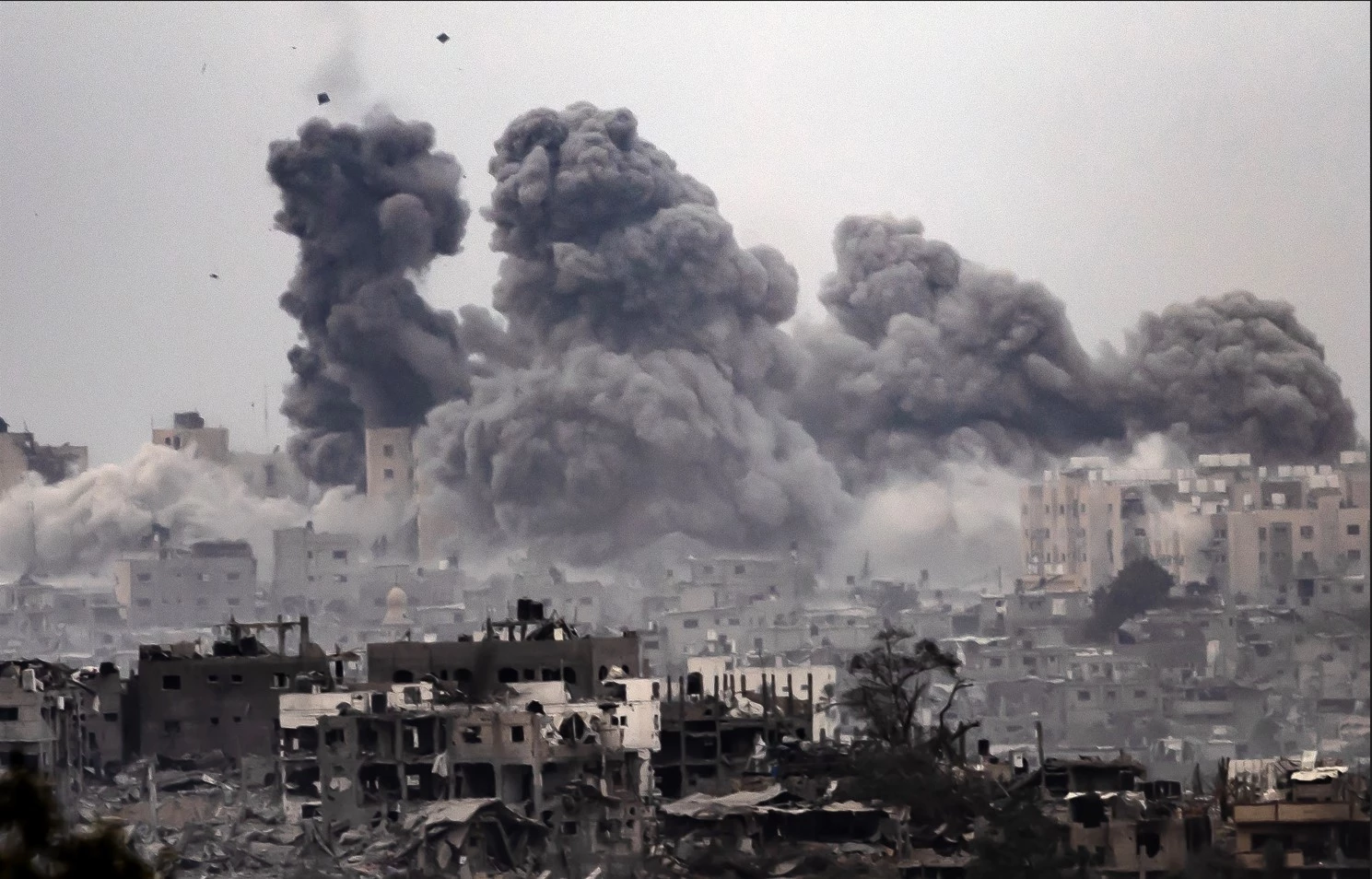

Hamas said Sunday its fighters were engaged in "heavy fighting" in Gaza where Israel has escalated ground operations, as calls multiply to deliver aid to the Palestinian territory after weeks of siege and bombardment.
World leaders underlined the urgency of increasing aid into the Hamas-controlled territory and protesters worldwide rallied for a ceasefire, after Israeli Prime Minister Benjamin Netanyahu steeled his nation for a "long and difficult war".
Despite calls for a humanitarian truce, international outrage and the potential risk to hostages held in Gaza, Israel has intensified the war triggered by Hamas's unprecedented attack.
Hamas fighters stormed across the Gaza border on October 7 in the deadliest attack in Israel's history, killing 1,400 people, mostly civilians, and kidnapping 239 others including many migrant workers, according to the latest figures provided Sunday by army spokesman Daniel Hagari.
The Hamas-run health ministry in Gaza says the retaliatory Israeli bombardment has killed more than 8,000 people, mainly civilians and half of them children.
Panic and fear have surged inside the Palestinian territory, where the UN says more than half of its 2.4 million residents are displaced and thousands of buildings destroyed.
Hamas's armed wing, the Ezzedine al-Qassam Brigades, said on Sunday its fighters were "engaged in heavy fighting... with the invading occupation (Israeli) forces in northwest Gaza".
Israel's army said a new "stage" of the war started with ground incursions since late Friday, an escalation from two brief operations earlier in the week.
- Aid 'acceleration' -
In a phone call with Netanyahu on Sunday, US President Joe Biden "underscored the need to immediately and significantly increase the flow of humanitarian assistance to meet the needs of civilians in Gaza", according to a readout of the conversation from the White House.
And in a separate call with President Abdel Fattah al-Sisi of Egypt, which borders Gaza to the south, the two leaders "committed to the significant acceleration and increase of assistance", the White House said.
UN chief Antonio Guterres said the situation was "growing more desperate by the hour" as casualties increase and essential supplies of food, water, medicine and shelter dwindle.
Top Hamas official Musa Abu Marzouk in a statement Sunday called on Egypt to take "decisive" action to speed up aid to Gaza.
"Egypt should not remain a spectator. We expect a decisive stance by Egypt allowing aid to enter Gaza as soon as possible," he said.
The Palestinian Red Crescent Society said Israel was repeatedly bombing around Al-Quds hospital in central Gaza, causing damage and putting civilians at risk.
Mohamed al-Talmas, who has taken shelter in Gaza's biggest hospital Shifa, said "the ground shook" with intense Israeli raids.
The UN agency for Palestinian refugees, UNRWA, said "thousands of people" broke into several of its warehouses and distribution centres in Gaza, grabbing basic items like flour and hygiene supplies.
"This is a worrying sign that civil order is starting to break down," it said.
A US government official, speaking on condition of anonymity, said earlier Israel was committed to allowing 100 to aid trucks into Gaza daily -- a figure the UN has said was needed to meet the most basic needs.
- 'All areas are dangerous' -
On Sunday Israel's military said it had struck hundreds of Hamas targets and increased its ground forces in Gaza. Military spokesman Hagari vowed to "chase down" Hamas's leader in Gaza, Yahya Sinwar.
The army said troops had "confronted" militants who emerged out of a tunnel in north Gaza, highlighting challenges in Hamas's vast underground network to Israel's ground operation.
In a late-night televised address on Saturday, Netanyahu announced a "second stage of the war" to "eradicate" Hamas, the Palestinian Islamist movement that has governed Gaza since 2007.
Communications were down in Gaza after Israel cut internet lines ahead of the intensification of its operations, although connectivity was gradually returning on Sunday.
The "burden" lies with Israel to distinguish between militants and innocent civilians in Gaza, US National Security Advisor Jake Sullivan told CNN television.
Hagari again urged Palestinian civilians to go south "to a safer area", but residents remained wary as air strikes continue.
Ibrahim Shandoughli, a 53-year-old from Jabaliya in northern Gaza, told AFP he and his family went nowhere.
"Where do you want us to evacuate to? All the areas are dangerous."
- 'Psychological games' -
In Israel, sympathy has swelled for the families whose loved ones were abducted by Hamas and are at heightened risk as the war intensifies.
Hamas has released four hostages, but this week said "almost 50" had been killed by Israeli strikes, a claim that was impossible to verify.
"We demanded that no action be taken that endangers the fate of our family members," said Meirav Leshem Gonen, the mother of hostage Romi Gonen.
After Hamas said it was prepared to release the hostages if Israel freed the Palestinian prisoners it was holding, Israel's Defence Minister Yoav Gallant accused the group of playing "psychological games".
"Hamas is cynically using those who are dear to us -- they understand the pain and the pressure," Gallant told relatives of hostages, according to a statement released by his office.
Ifat Kalderon, whose relatives are believed held in Gaza, told AFP she supported the idea of a prisoner release in exchange for the hostages.
"Take them, we don't need them here," she said, referring to Palestinian detainees.
The ground operations have heightened fears that Israel's other enemies -- the Iran-allied "axis of resistance" forces in Lebanon, Syria, Iraq and Yemen -- could enter the conflict.
Iran's President Ebrahim Raisi warned on X, formerly Twitter, that Israel's "crimes have crossed the red lines, which may force everyone to take action".
Top ally the United States has warned Israel's enemies to stay out and strengthened its military presence in the region.
Skirmishes have intensified on the Israeli-Lebanese border with Iran-backed Hamas ally Hezbollah, raising fears of a new front.
On Sunday militants in south Lebanon fired rockets towards Israel, which has responded with strikes, in a fresh escalation along the border.
Violence has also spiked in the occupied West Bank since the October 7 attacks, with more than 110 Palestinians killed, according to the territory's health ministry.
Lebanon border clashes escalate
Palestinian group Hamas, embroiled in war with Israeli forces in Gaza, said Sunday its militants in south Lebanon had launched rockets towards Israel, in a fresh escalation along the border.
A second Islamist group announced rocket launches at Israel's north, while powerful Iran-backed movement Hezbollah -- a Hamas ally -- said it had shot down an Israeli drone over Israeli territory using a surface-to-air missile.
Cross-border exchanges have become an almost daily occurence since October 7, when Hamas militants stormed southern Israel and killed more than 1,400 people, mostly civilians, according to Israeli officials.
Israel has responded with an unrelenting bombardment of Gaza, which the Hamas-run health ministry says has killed more than 8,000 people, also mostly civilians.
The Israeli army on Sunday reported launches from Lebanon which it said targeted areas near the border.
Israeli forces had returned fire towards the origins of the launches, the army added. Lebanon's official National News Agency (NNA) reported that the Israeli air force carried out several raids on south Lebanon towns.
Hamas's military wing, the Ezzedine al-Qassam Brigades said in a statement its fighters in Lebanon had launched 16 rockets at Nahariya, a coastal town Israel's Galilee region, "in response to the crimes of the occupation (Israel) against our people in Gaza".
The armed branch of Islamist group Jamaa Islamiya also said it had fired "targeted rockets" at the Israeli border town of Kiryat Shmona, the NNA reported.
Shiite group Hezbollah said it had targeted multiple Israeli army positions, also announcing the death of one of its fighters on Sunday.
Since October 7, cross-border violence has killed at least 59 people in Lebanon according to an AFP tally.
Most were Hezbollah fighters, although there have been four civilians among the victims, including one journalist.
Israeli officials have reported four deaths, including one civilian.
There are fears that if Hezbollah were to launch its own war with Israel, the conflict could spill over into the wider region.
Nearly 29,000 people have been displaced in Lebanon due to the clashes, according to the International Organization for Migration.
Israel hits military infrastructure in Syria
Israel's military said Monday it had carried out strikes on military infrastructure inside Syria, as fears grow that its war against Hamas could spur broader regional conflict.
"A short time ago, an IDF fighter jet attacked the launchers from which the launches were made last night from Syrian territory towards Israeli territory," the military said.
The Israeli jet "struck military infrastructure in Syrian territory", it said.
The military did not provide more details, but according to Israeli public broadcaster Kan News, the strikes took place near Daraa.
Concerns are growing about the regional fallout from Israel's war on Hamas in Gaza.
There has been a string of attacks on US forces in Iraq and Syria as well as increasing exchanges of fire between Hezbollah and Israeli forces on the Lebanon border since the Gaza conflict began.
Late Sunday, the Israeli military said it was striking "Hezbollah terrorist targets in Lebanon", also in response to rocket fire.
Cross-border exchanges with Hezbollah have become an almost daily occurrence since October 7, when Hamas militants from Gaza stormed southern Israel and killed more than 1,400 people, mostly civilians, and seized nearly 240 hostages, according to Israeli officials.
Israel has responded with an unrelenting bombardment of Gaza, which the Hamas-run health ministry says has killed more than 8,000 people, nearly half of them children.
Since the Hamas attack, cross-border violence has killed at least 59 people in Lebanon according to an AFP tally.
Most were Hezbollah fighters, although there have been four civilians among the victims, including one journalist.
Israeli officials have reported four deaths, including one civilian.
Nearly 29,000 people have been displaced in Lebanon due to the clashes, according to the International Organization for Migration.
33 aid trucks enter Gaza
More than 30 aid trucks entered Gaza on Sunday, the largest convoy to the war-ravaged Palestinian territory since deliveries began trickling in again over a week ago, the UN said.
The United Nations humanitarian organisation OCHA said 33 trucks carrying water, food and medical supplies had gone into Gaza on Sunday, through the Rafah border crossing with Egypt.
"This is the largest delivery of humanitarian aid since 21 October, when limited deliveries resumed," OCHA said in an update on the situation in Gaza sent early Monday.
To date, it said, 117 trucks had entered Gaza through the crossing since limited deliveries resumed to the crowded Palestinian territory of 2.4 million people, which is facing a near-total siege and relentless Israeli bombardment.
Prior to the siege, some 500 trucks carrying aid and other goods entered Gaza every day.
Israel imposed the siege and unleashed its massive bombing campaign after Hamas gunmen stormed across the border on October 7, killing 1,400 people, mostly civilians, and seizing 230 hostages, according to Israeli officials.
Israel's strikes have since then killed more than 8,000 people, half of them children, the Hamas-controlled health ministry in the territory said.
Thousands of buildings have been flattened, with more than half the population displaced.
UN chief Antonio Guterres voiced alarm that Israel was intensifying its military operations in Gaza, warning that "the world is witnessing a humanitarian catastrophe".
A US government official, speaking on condition of anonymity, said Sunday that Israel was committed to allowing 100 aid trucks into Gaza daily -- a figure the UN has said was needed to meet the most basic needs.
OCHA welcomed the latest aid deliveries, but stressed that "a much larger volume of aid is needed on a regular basis to prevent further deterioration in the dire humanitarian situation, including civil unrest".
"In particular, entry of fuel to operate medical equipment and water and sanitation facilities is urgently required."
Of the 117 trucks allowed in so far, it said that 70 had carried medical supplies and 60 of them brought in food and nutritional items.
Only 13 carried water and sanitation supplies, it said.
And Israel has blocked all deliveries of fuel, saying it would be exploited by Hamas to manufacture weapons and explosives.
- International pressure -
Iranian President Ebrahim Raisi said Sunday that Israel's ongoing bombardment of Gaza "may force everyone" to act in the latest warning that the conflict could spread across the region.
British Prime Minister Rishi Sunak and French President Emmanuel Macron spoke by telephone and expressed "their shared concern at the risk of escalation in the wider region", a Downing Street spokesperson said.
Norway's Prime Minister Jonas Gahr Store called the situation in Gaza "catastrophic", telling NRK public radio Israel "has the right to defend against attacks", but its response has been disproportionate.