
World politics take a turn! Why is the U.S. moving closer to China?
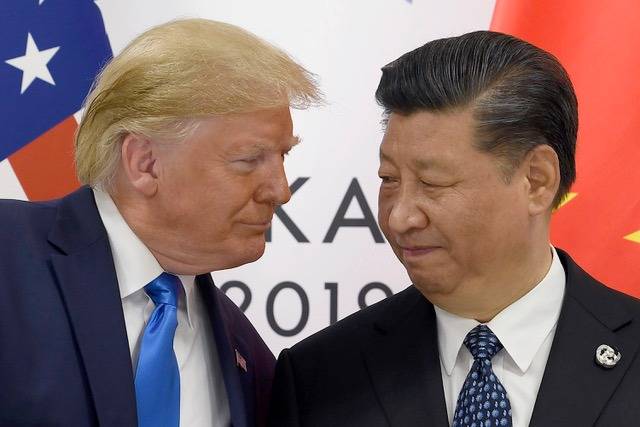

What was bound to happen has finally occurred: the United States, which had long threatened China, is now compelled to negotiate. Trump’s meeting with the Chinese President demonstrates that even the U.S. recognizes China as a global superpower, and that confrontation is no longer a viable option.
When the U.S. President met the Chinese President after six years, I was reminded of an interview I conducted eight years ago in Beijing for a national media group with Mr. Sha Zukang, then Under-Secretary-General of China at the United Nations and the first Director-General of the Arms Control Department within China’s Ministry of Foreign Affairs. He had remarked that in the coming years, the U.S. might appear to challenge China, but it would not be able to withstand China’s mountain-like resilience and rapidly rising economic power for long. Today, that prediction appears to be unfolding exactly as he foresaw.
During that interview, Pakistan’s then-Ambassador to China, Masood Khalid, was also present. He noted that China possesses a unique ability to achieve victory over its adversaries without engaging in direct conflict. I observed the remarkable achievements of the Chinese Communist Party in China. In this article, we will explore this remarkable capability in detail.
Tensions between the world’s two superpowers, the United States and China, may finally be easing—a reminder that even the tallest mountains of ego can be moved with careful diplomacy. U.S. President Donald Trump and Chinese President Xi Jinping met face-to-face for the first time in Busan, South Korea, raising global hopes for a breakthrough in trade, technology, and political relations. As the saying goes, “A journey of a thousand miles begins with a single step,” and for the first time in years, cautious optimism is returning to U.S.–China ties.
The meeting focused on easing rising trade tensions and exploring a major trade deal. Held on the sidelines of the APEC Conference, the talks sparked global optimism. Both leaders emphasized dialogue, cooperation, and tension reduction, raising hopes for greater stability in international trade.
Foreign affairs experts warn that the road ahead remains fraught with challenges, reminding us that “smooth seas do not make skilled sailors.” Yet, this encounter offers a glimmer of hope that long-standing rivalries might finally find a path toward understanding.
In exchange for a reduction in U.S. tariffs, China agreed to discuss key issues. President Trump expressed hope that the meeting could result in a landmark agreement addressing multiple longstanding problems. His approach reflected a willingness to confront challenges, including those created by his own policies, which had burdened Americans without harming China. The U.S. delegation emphasized resolving mutual concerns, while China highlighted its commitment to global peace and prosperity.
During the meeting, Trump repeatedly praised Xi Jinping’s leadership and negotiation skills. He said, “We are going to have a very successful meeting. We know each other well, and our relationship has always been strong. President Xi is the leader of a great nation.”
Xi Jinping, in turn, responded with vision and diplomacy, acknowledging past differences while emphasizing cooperation. He stated, “Disagreements between the world’s two largest economies are natural. Despite storms and challenges, we must stay the course. China and the U.S. must navigate the ship of bilateral relations steadily. China’s growth aligns with President Trump’s vision of ‘Making America Great Again.’ Both nations have the ability to support each other’s prosperity and, as major powers, shoulder responsibilities to achieve meaningful outcomes for their people and the world.
It is a testament to the Chinese Communist Party’s exceptional performance that the U.S. President has been compelled to meet with the Chinese President. China holds a clear advantage over the United States for several reasons: its large and rapidly growing economy, advanced military capabilities, and expanding global influence. As the world’s second-largest economy, China plays a central role in international trade. Its diverse exports and robust manufacturing sector make it a major player on the global stage. It is prudent for the United States to finally acknowledge this reality.
The meeting between the U.S. President and China’s President makes it clear that, despite lingering challenges, it is encouraging to see Trump moving away from his previously arrogant and destabilizing approach to global affairs. He is not only signaling a willingness to engage in constructive dialogue but is actively participating in negotiations, a stance that is crucial for America’s long-term stability. President Trump now has the opportunity to turn mutual respect and a commitment to global stability into a strong foundation for cooperation. If successful, this foundation could pave the way for shared prosperity and well-being, creating a lasting impact that benefits not only both nations but the entire world.