
Toxic winds from India worsen smog crisis in Pakistan
Polluted Indian air pushes Lahore’s AQI to hazardous levels: Indian smog winds blanket Lahore, Faisalabad, Gujranwala in thick haze: Dozens of factories sealed and heavy fines imposed in Punjab for violating environmental laws
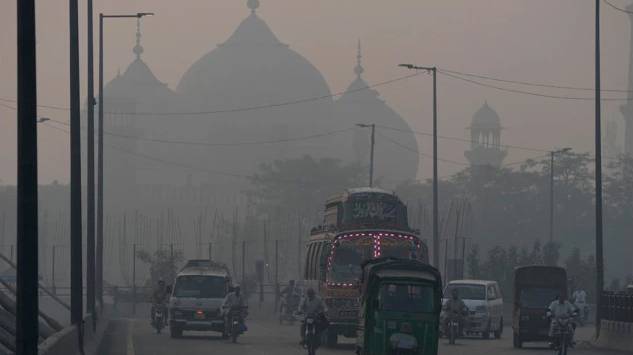

Polluted winds blowing from the Indian regions of Haryana, Ludhiana, Patiala, and Jalandhar have entered Pakistan, significantly affecting the air quality in Lahore, Faisalabad, Kasur, and Gujranwala, 24NewsHD TV channel reported on Friday.
According to the Environmental Protection Department, the accumulation of smog and fine particulate matter in the atmosphere has intensified pollution levels.
Slow wind speeds ranging from one to six miles per hour are trapping polluted particles close to the ground, while temperature inversion is causing these pollutants to remain suspended in the air.
The department reported that PM₂.₅ and PM₁₀ particles are dominant in the atmosphere, leading to a visible reduction in horizontal visibility across affected areas.
Air quality in Lahore has reached unhealthy levels, with the pollution peaking during early morning, late evening, and nighttime hours.
Officials predict Lahore’s Air Quality Index (AQI) to remain between 330 and 370 today, indicating hazardous conditions.
Although a slight improvement is expected during the afternoon hours between 1 pm and 5 pm, the overall air quality is likely to remain poor.
The Smog Monitoring and Forecasting System alarmed that the current wind pattern in Punjab is moving from east to west, carrying polluted air from across the border.
Environmental authorities have advised the public, particularly children, the elderly, and those with respiratory conditions, to avoid unnecessary outdoor activities.
Under the directives of Punjab Chief Minister Maryam Nawaz, anti-smog enforcement efforts have been intensified.
Authorities have issued over 10,000 notices under the zero-tolerance policy against stubble burning, while more than 190 factories and brick kilns have been inspected, resulting in dozens of closures and heavy fines.
Over 1,200 monitoring teams are actively ensuring strict compliance with dust control Standard Operating Procedures (SOPs) at construction sites across the province.