
EU prosecutors demand 11 Greek MPs face action over subsidy scandal
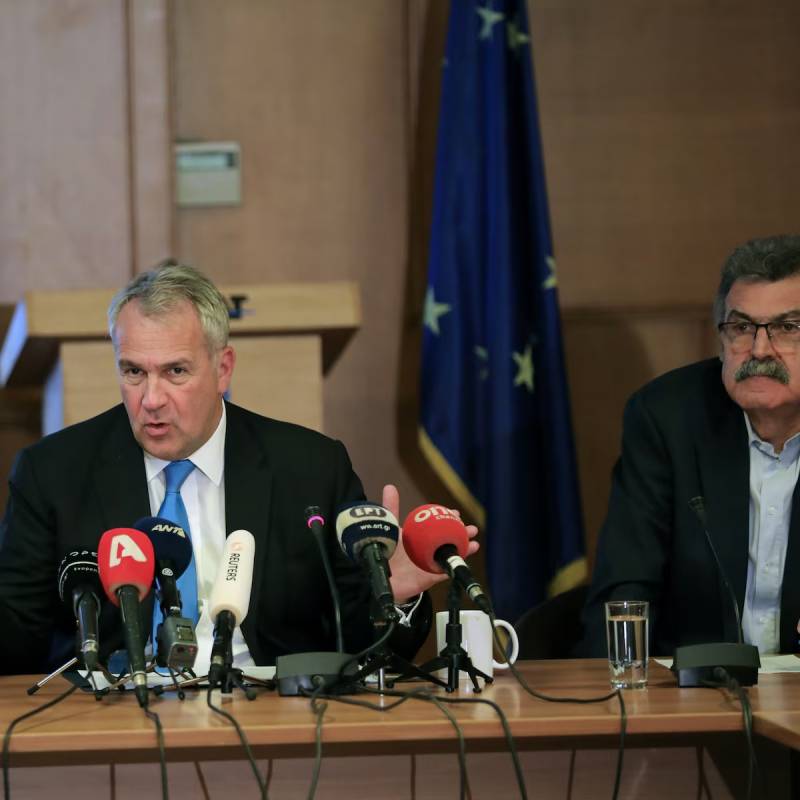

European prosecutors on Wednesday demanded that Greece lift the parliamentary immunity of 11 lawmakers suspected of involvement in a scam that syphoned off millions of euros in EU farm subsidies.
The scandal has rocked Greece since the European Public Prosecutor's Office (EPPO) revealed the fraud in May. Farmers launched widespread protests this year after the scandal led to delays in the payment of agricultural aid.
The names of the 11 have not been released but according to Greek media, they include two ministers and several senior members of the ruling New Democracy party.
The case has piled pressure on conservative Prime Minister Kyriakos Mitsotakis, whose family has been politically influential in Crete for over a century. Most of the fraudulent subsidies went to Crete.
Pasok, the main opposition party, said that any ministers on the list should resign.
"The dismissal of ministers and deputy ministers from the government team is the only way forward for Mr. Mitsotakis," the centre-left party said in a communique, adding that the scandal "carries in large part the hallmarks of New Democracy."
Government spokesman Pavlos Marinakis called the development "serious". He said authorities were waiting for the case file to be sent to parliament "so that an assessment can be made for each case individually."
The demand to parliament marks the second wave of the investigation, after raids and arrests in October.
The EPPO said in a statement that the European chief prosecutor had called for the lifting of parliamentary immunity of 11 lawmakers "in an investigation into an alleged organised fraud scheme involving agricultural funds."
The agency said it also had information regarding the possible involvement of a former agriculture minister, his deputy and five former MPs, for acts allegedly committed in 2021. None have been named.
The EPPO said the investigation concerns "instigation of breach of trust, computer fraud and false attestation with the intent to obtain for another an unlawful benefit."
Ministers cannot be independently prosecuted by Greek courts. Any probe must first pass through parliament in a cumbersome process that is frequently blocked by the government's majority lawmakers.
Greek police last year made dozens of non-political arrests over the scandal.
According to Greek authorities, the network defrauded at least 23 million euros ($27 million) since it started around 2018.
The suspects are accused of making subsidy claims for land that they did not own and exaggerating the number of animals on farms. Some people receiving payments had no link to agriculture.
- Bananas on Olympus -
The scheme started after the EU's Common Agricultural Policy began calculating subsidies based on land instead of livestock in 2014.
The incomplete land registry at the time made ownership across much of Greece unclear. Farmers were therefore allowed to declare land owned elsewhere in the country to claim subsidies.
Cases under investigation include pastures declared on archaeological sites, olive trees in a military airport and banana plantations on Mount Olympus.
The scandal has already led to the resignation of one minister and the closure of the OPEKEPE agency that handled EU subsidies.
The ruling party's former coordinator for EU funds resigned in August. She denies any wrongdoing.
"To conceal the illicit origin of the proceeds, the suspects are believed to have issued fictitious invoices, routed the funds through multiple bank accounts, and mixed them with legitimate income," the EPPO said in October.
According to OPEKEPE, approximately 80 percent of subsidies for pastures granted from 2017 to 2020 ended up in Crete.
And while the number of livestock farmers in Greece is decreasing, 13,000 new farmers were registered in Crete between 2019 and 2025. The number of declared sheep and goats doubled over the same period.
Mitsotakis, who notes the fraud began before he came to power in 2019, has vowed to imprison the "thieves" responsible and to reclaim the funds.
Elections are scheduled in Greece next year. Mitsotakis's conservative party leads in opinion polls, but is not expected to secure an absolute majority.