
Inquiry recommends prosecuting Nepal's top figures over deadly crackdown on protests
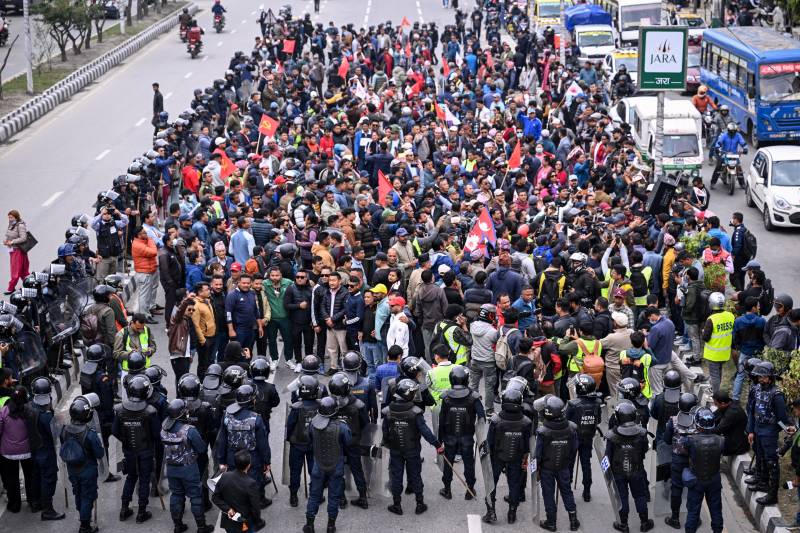

Nepal's inquiry commission into the deadly crackdown on anti-corruption protests in September 2025 that toppled the government has recommended prosecuting multiple top figures, including former prime minister KP Sharma Oli.
Oli and his ex-home minister Ramesh Lekhak have been detained since a new government took power in March. Neither has been charged, and both deny responsibility for the violence.
The three-member commission, headed by a former Supreme Court judge, interviewed more than 200 people and produced report exceeding 900 pages, a leaked copy of which has been seen by AFP.
The unrest initially erupted over a brief social media ban but quickly broadened into nationwide protests driven by longstanding fury over economic hardship.
Parliament and government offices were set ablaze, leading to the collapse of Oli's government.
Here are some of its key findings of the report:
- Who was killed? -
At least 76 people were killed and more than 2,500 wounded during the two days of violence, the report said.
That included at least 19 people killed on the first day, 20 the next day, and 36 who died later of their injuries.
The vast majority were shot dead -- 51 of the victims had bullet wounds. Autopsy reports detailed that many were shot in the head or chest.
Three police officers were beaten to death, while nine people were burned alive when they were trapped in buildings set ablaze.
- What happened on September 8? -
Young protesters marched on parliament.
"While there is compelling evidence that the demonstrators were violent, there is no way to say with certainty that their actions posed an imminent threat to the police," the report read.
The report said it had "not established that there was an order to shoot" from top officials, including Oli.
"It was the understanding of the then-police chief and some officers that the decision to fire is made by the field commander," it read.
"The use of force by security forces was not targeted but indiscriminate," it said, adding that gunfire continued for about four hours.
It said "no effort was made to stop or control the firing and, due to their negligent conduct, even minors lost their lives".
- What happened on September 9? -
Crowds gathered the next day to protest the previous day's killings, but the report said people with "criminal tendencies also joined" the unrest, without identifying them.
Attackers then simultaneously targeted police officers, government buildings and properties linked to politicians.
"The pattern of the attack was the same in almost all the places," it noted, a modus operandi that included first disabling security cameras, stopping water supplies and damaging data server rooms in government buildings.
"After that, they would burn documents, carry out looting, and finally set fire to the buildings by igniting gas cylinders," it added. "If those were not available, they would pour petrol into bottles, and throw them inside."
The rapid spread of fires suggested the possible use of highly flammable substances such as sodium or magnesium, it said, while urging authorities to form a specialised team to identify perpetrators.
- What did Oli say? -
Oli, 74, has blamed "infiltrators" for the violence. He has denied issuing an order to open fire.
"The prime minister does not issue orders to the police, the Ministry of Home Affairs is the responsible authority," Oli said, in a written statement to the commission.
"Therefore, the prime minister is not answerable in this matter."
Oli resigned on the second day as protesters attacked government buildings and his home.
"If the movement had occurred because of me, then everything should have improved after my resignation -- but it did not," he said, describing the attacks as planned.
Lekhak, in his statement to the commission, said he had told Oli when protests turned violent.
"While clashes were ongoing between protesters and police inside and outside the parliament, it was my position that the federal parliament building must be protected anyhow," Lekhak told the inquiry.
"However, I did not give any order to use lethal force, that is, to open fire."
- What does the report recommend? -
The commission urged criminal investigations and prosecution of several senior officials, including Oli, Lekhak, the former police chief, other top security officials and a senior Kathmandu administrator.
The report said statements given to the commission by Oli and Lekhak suggesting they did not know about the violence were part of a bid to shift responsibility and amounted to "criminal negligence".
"Even after some people had already died due to gunfire on September 8, neither the then prime minister nor any other officials took initiative to stop the shooting," it added. "Due to such negligence and careless conduct, further human casualties occurred."