
Czechs head to polls with billionaire ex-premier tipped to come first
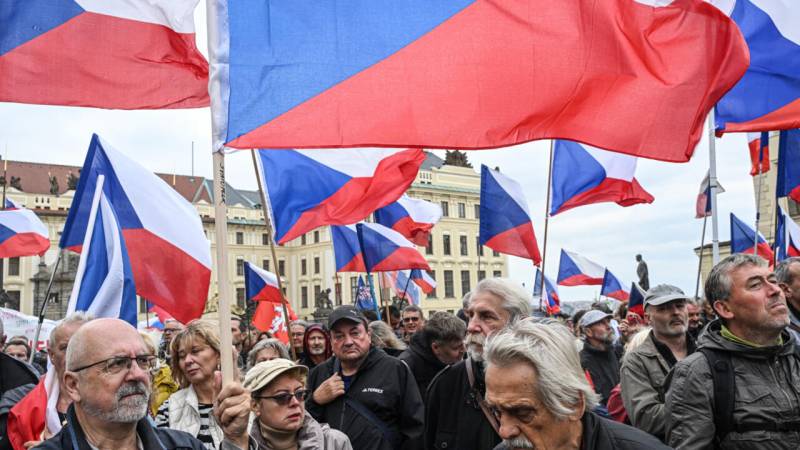

Polling stations across the Czech Republic opened on Friday for a two-day general election, which the party of self-described "Trumpist" Andrej Babiš is expected to top, although it is uncertain whether it will form a government.
A possible return to power of the billionaire ex-premier could draw the Czech Republic -- an ally of Ukraine -- closer to EU mavericks Hungary and Slovakia, spelling rocky relations with both Kyiv and Brussels.
But even if Babis's ANO ("Yes") party tops the vote, it will almost certainly have to negotiate a coalition or backing from other parties.
Babis is campaigning in the country of 11 million people -- a member of both the EU and NATO -- on pledges of welfare and halting military aid to Ukraine.
The current centre-right coalition government of Prime Minister Petr Fiala has provided extensive humanitarian and military aid to Ukraine. But many voters blame it for ignoring problems at home.
"We are helping Ukraine. Every year, we send 2.5 billion euros ($2.9 billion) in the budget to Brussels. And of course Brussels is helping Ukraine... So I think we are there," 71-year-old Babis said ahead of a TV debate with Fiala on Thursday.
Babis was critical of some EU policies while he was prime minister from 2017 to 2021, and is on good terms with Hungarian Prime Minister Viktor Orban and Slovakia's Robert Fico, who have maintained ties with Moscow despite its invasion of Ukraine.
'U-turn'
Casting her ballot at a Prague school, librarian Magdalena Servitova, 50, told AFP she would "hate a U-turn that would take us somewhere else".
"I would like our policy vis-a-vis Ukraine to continue as well, we should not turn our backs on Ukraine," she said.
Polling stations were to close at 2000 GMT on Friday, before reopening from 0600 to 1200 GMT on Saturday.
Election results were expected late Saturday.
ANO tops the opinion polls, with support exceeding 30 percent, ahead of Fiala's Together grouping with about 20 percent.
Describing himself as a "peacemonger" calling for a truce in Ukraine, Babis has vowed a "Czechs first" approach -- echoing US President Donald Trump -- and pledged "a better life" for all Czechs.
Fiala, a 61-year-old former political science professor, said the vote was "very important for the future development" of the country.
"Will we be a prosperous, safe, and free country, or will we shift somewhere towards the east?" he asked before the TV debate with Babis.
'Pragmatic businessman'
But Charles University analyst Josef Mlejnek told AFP he did not expect "a fundamental change" if Babis wins.
"Babis is a pragmatic businessman and the only thing he cares about is being prime minister," he added.
Analysts caution, however, that all will depend on the election results.
If Babis's party comes first but fails to win a majority, he could try to pursue a coalition with the far-right opposition SPD movement, which is backed by about 12 percent of voters, according to analysts.
There are also concerns about Russian propaganda being spread online to influence the elections.
The European Commission held an "emergency meeting" with TikTok on Thursday, "in the context of the Czech elections", after which the social media platform removed "several bots", commission spokesperson Thomas Regnier said.
A group of analysts said last week that Czech-language accounts on TikTok reaching millions of viewers "systematically spread pro-Russian propaganda and support anti-system parties through manipulated engagement".
Both Babis and Fiala have had scandals tarnish their reputations.
Fiala's government is under fire over the justice ministry's decision to accept $44 million in bitcoins from a convicted criminal.
Babis, Slovak-born and the seventh-wealthiest Czech according to Forbes magazine, is due to stand trial for EU subsidy fraud worth more than $2 million.
Babis allegedly took his farm near Prague out of his Agrofert food and chemicals holding company in 2007 to make it eligible for a subsidy for small firms.
He has rejected all allegations of wrongdoing as "a smear campaign".