
Ecuador: from Darwin to drug trafficking

As it gears up for the first round of presidential elections on February 9, here are five key facts about Ecuador, once one of South America's most stable nations, now one of its most violent due to a surge in drug trafficking.
New narco hub
In just a few years, Ecuador has become a key player in the regional cocaine trade with drug cartels taking advantage of lax security in ports on its Pacific coast to expand into the country from as far away as Mexico and Italy.
As part of his pledge to fight drug-related violence, outgoing President Daniel Noboa announced a state of emergency in January 2024.
Noboa's clampdown, which followed the jailbreak of a crime boss, sparked the dramatic storming of a TV station by criminal gangs during a live broadcast.
Since then the state of emergency has been reintroduced periodically in various parts of the country, including the capital Quito.
Ecuador's homicide rate jumped from six homicides per 100,000 inhabitants in 2018 to a record of 47 per 100,000 in 2023 before falling back to 38 last year.
More than 30 politicians have been assassinated in the country since 2023, including a popular candidate in the previous presidential election, Fernando Villavicencio.
Indigenous power
Ecuador's more than one million Indigenous people have developed powerful political representation that has played a key role in the downfall of three presidents between 1997 and 2005.
In August 2023, they chalked up a key victory for climate democracy when Ecuadoreans voted in an Indigenous-led referendum to halt the exploitation of an oil block in Yasuni National Park, the ancestral home of the Waorani people which is also one of the world's most diverse biospheres.
Three decades earlier, an Indigenous uprising forced the government to surrender more than two million hectares (7,700 square miles) of land to Amazonian and Andean tribal groups.
But while the constitution recognizes their ownership of the land, the state maintains control of everything under the soil.
Assange asylum
For seven years, the Ecuadorian embassy in London was at the centre of the Julian Assange saga, offering asylum to the WikiLeaks founder pursued by the US for divulging military secrets about the wars in Iraq and Afghanistan.
But in 2019 Ecuador's government decided it had had enough of Assange and booted him out of the mission, accusing him of meddling in the politics of other states and being unhygienic, among other complaints.
The Australian was then held in a high-security prison near London until he was freed five years later after reaching a deal with the US and flew home in June 2024.
Banana empire
One of the many ways drug traffickers are getting their product out of the country is by smuggling it among one of Ecuador's top exports, bananas.
Production was disrupted in 2024 by recurring power cuts linked to a prolonged drought that affected hydroelectric plants.
Noboa, one of the world's youngest presidents at 27, is the heir to the vast banana empire of his father Alvaro Noboa, who ran unsuccessfully for president five times.
Galapagos Islands
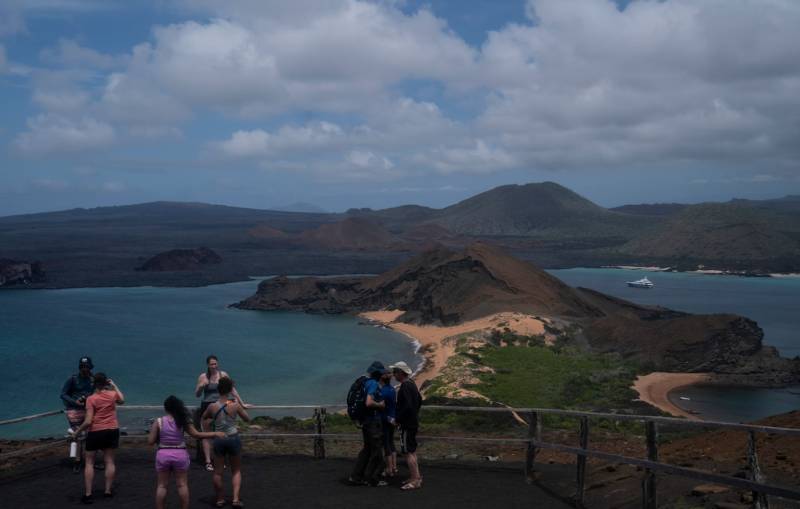
Ecuador is home to the famous Galapagos Islands, a marine-rich archipelago made up of 234 islands, inlets and rocks, with flora and fauna found nowhere else in the world.
Observing its wonders in the 19th century, British scientist Charles Darwin developed his theory of evolution after studying finches and mockingbirds there.
The impact of human activity through climate change and mass tourism threatens the unique ecosystems on the islands, listed as a world heritage site by UNESCO.