
When Giants Leave Quietly
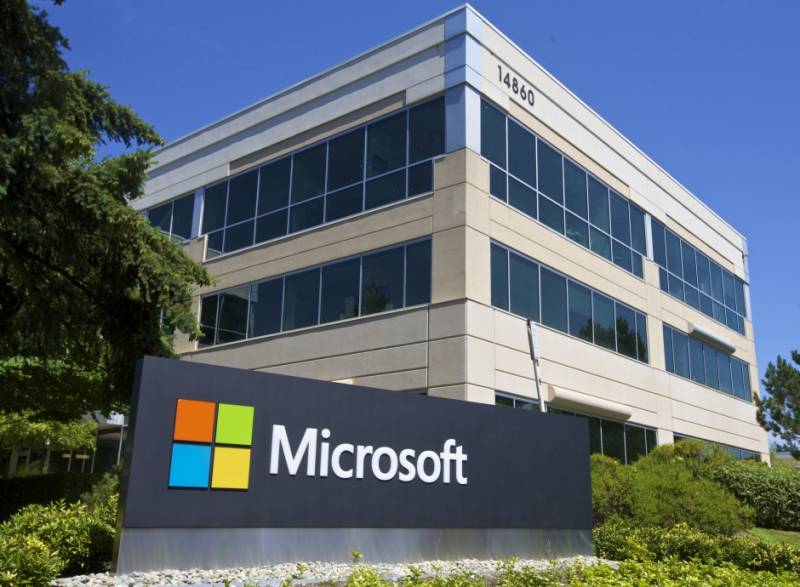

It wasn’t a storm. No press scandal. No political showdown. Just one more global player packing up and leaving Pakistan’s economic landscape a little emptier. Microsoft’s withdrawal isn’t unique, but it lands at a moment when the country can least afford to pretend this is business as usual.
There are some exits that make headlines. And then there are those that slip away almost unnoticed, leaving behind a silence more telling than a thousand press releases. Microsoft’s quiet decision to shut down its liaison office in Pakistan this week is, at first glance, a small administrative footnote. A minor line in the long ledger of corporate strategy. But anyone paying attention to Pakistan’s economic weather should feel a cold draft from that open door.
The official explanation is neither dramatic nor new. Microsoft, like many tech giants, has been pruning its workforce globally, axing 9,000 roles, about 4% of its staff, in the largest layoff since 2023. It’s part of a broader transition, a pivot to cloud services and AI-driven operations, where on-premise software sales and physical offices matter far less than they used to. This, the Ministry of IT was quick to point out, isn’t a retreat from Pakistan but a shift in business model. The services will continue. The licenses will be managed from Ireland. Local partners will keep things running.
And yet.
It would be disingenuous to pretend that this is simply about global strategy. Microsoft’s relationship with Pakistan was always tenuous, its footprint modest, but it symbolised something larger. The promise was that even in a fragile, politically unstable, and often self-sabotaging economy, global giants could still see potential here. The departure, however politely packaged, is a message: in a world where markets are tightening and risks are being recalculated, Pakistan is no longer on the shortlist of bets worth doubling down on.
Former president Arif Alvi was characteristically blunt in his tweet on X, pointing out how Microsoft once eyed Pakistan for a major regional hub, only to divert that investment to Vietnam in the aftermath of what he attributed to "regime change". And that isn’t a mere political grievance; it’s a reflection of the economic consequences of instability. When governments change in the shadows, and policies flip with every season, investors take notice. The numbers back this up. Venture funding in Pakistan’s tech sector has collapsed by nearly 90% since 2022. Once-hyped startups like Airlift and VavaCars have shuttered. Careem and Uber have also departed their decade-old ride-hailing services here.
None of this is a coincidence.
But it’s also not entirely about us. Globally, Politics, Technology and Economic landscapes are rapidly evolving. Tech companies are shrinking their physical footprints, moving away from regional offices and leaning on cloud platforms and third-party providers. It’s cheaper, leaner, and more scalable. Microsoft’s revenue from Pakistan was a fraction of a percent of its global earnings. In cold business logic, there was little reason to stay tethered here when the same services could be piped in from Dublin or Dubai.
Still, the question we must ask is why countries like Vietnam, Bangladesh, and even Kenya remain on these companies’ maps, while we keep falling off?
The answer, in part, lies in the same old maladies: regulatory chaos, erratic taxation, crumbling infrastructure, and an unrelenting brain drain. Over 10,000 IT professionals have left the country in the past three years. The rupee has lost a third of its value since 2022. Internet speeds crawl where they should fly, and electricity flickers out in the middle of coding sprints and boardroom pitches. Investors aren’t driven away by politics alone. They flee uncertainty. And uncertainty has become Pakistan’s defining export.
The texture of this isn’t abstract. Sit in a café on Islamabad’s F-7 Markaz and listen closely. Conversations about Python certifications, freelance gigs on Upwork, and visa appointments for Dubai or Berlin outnumber talk of anything being built in Lahore or Karachi. It’s the same reason why startups that once crowded incubators at NIC Lahore are now building pitch decks for foreign VCs on Zoom.
Yet even amid this gloom, what makes the Microsoft exit sting is the message it sends to Pakistan’s young, educated, and digitally connected middle class, that the future they were promised is slipping further from reach. Every tech office that shutters means fewer jobs for graduates who can code in Python but can’t afford to leave Lahore or Karachi. It means more talent lost to Toronto, Riyadh, and Berlin. It means another generation asked to shrink its dreams.
But let’s be clear. This was not a surprise. The signs have been blinking for years. And if Pakistan’s leadership, economic managers, and private sector elites didn’t see this coming, it says more about their myopia than Microsoft’s ruthlessness.
So, do we have hope in this scenario? What do we need to reconsider and reevaluate?
The answer is neither easy nor convenient. What do we need? A consistent, investor-friendly regulatory environment, yes. Reliable infrastructure, certainly. But more importantly, a political system that inspires confidence rather than dread. Because in the end, business is about trust, in contracts, in policy, in the future. And you cannot build a $100 billion digital economy in a country where even the next election date feels like a state secret.
Which brings us to the uncomfortable intersection of economics and politics. The so-called ‘hybrid’ model of governance, with its increasingly suffocating grip on dissent, media, and judiciary, is no longer just a moral crisis; it’s an economic one. Foreign investors and multinationals notice when amendments curtail judicial independence or when political vendettas masquerade as accountability. They read between the lines of the 26th Amendment. They measure risk not just in currency devaluation or tax rates, but in the fragility of law and the volatility of power.
And so Microsoft leaves. Quietly, efficiently, and inevitably. Pakistan, meanwhile, stands at a crossroads it has visited too many times before.
Perhaps this time, we might pause long enough to read the writing on the wall. Because if global companies see no future here, it won’t be long before our own best and brightest start believing them too.
And in that silent, slow erosion, not with a bang, but with a quiet shutting of doors, lies the real crisis. One we ignore at our own peril.