
AI revolutionises sandstorm forecasting in China with faster, more accurate warnings
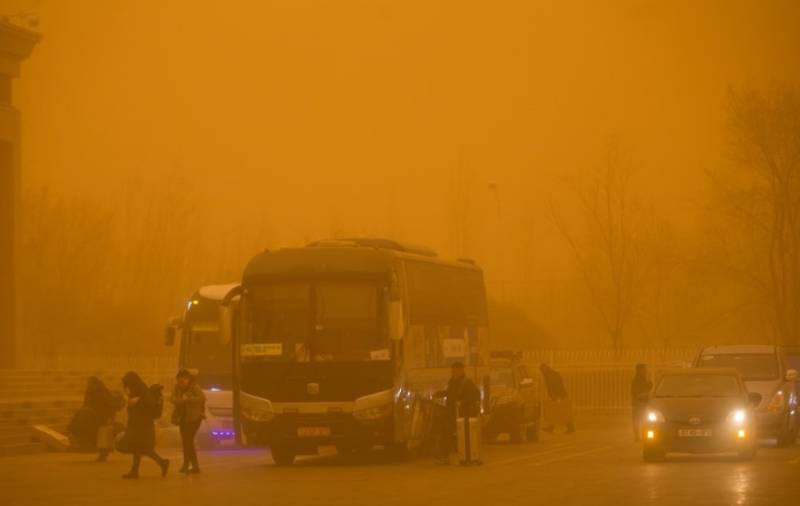

China is leveraging artificial intelligence to transform sandstorm and air pollution forecasting, enabling meteorologists to deliver faster, more accurate warnings to millions affected by severe dust events.
The breakthrough comes from the AI-driven Global Aerosol-Meteorology Forecasting System (AI-GAMFS), developed by Chinese scientists to improve predictions of dust storms and atmospheric pollution.
The technology is already helping residents in provinces such as Gansu better prepare for seasonal sandstorms, which often blanket cities in dust, disrupt transportation and pose health risks. Instead of being caught off guard, residents can now receive detailed warnings days in advance, allowing them to take precautions such as wearing protective masks and adjusting travel plans.
According to Gui Ke, an associate researcher at the Chinese Academy of Meteorological Sciences (CAMS), forecasting airborne particles such as dust, smoke and PM2.5 has traditionally been far more complex than conventional weather forecasting.
“Forecasting aerosols requires the simultaneous analysis of multiple pollution sources, chemical transformations and interactions with weather systems,” Gui said.
Unlike traditional forecasting models, which process weather conditions and aerosols separately, AI-GAMFS integrates meteorological factors such as temperature, wind speed and atmospheric pressure with aerosol behaviour in a unified framework. Scientists say this approach significantly improves forecasting accuracy by providing a more comprehensive picture of atmospheric changes.
The system also offers a dramatic improvement in speed. Conventional numerical forecasting models rely on large supercomputer clusters and often require hours to generate global forecasts.
By contrast, AI-GAMFS operates on graphics processing units (GPUs) and can produce a global forecast in just 36 seconds, making it more than 100 times faster than traditional systems.
The technology has already demonstrated its practical value. According to Duan Haixia, chief expert at the Lanzhou Institute of Arid Meteorology under the China Meteorological Administration (CMA), the system has accurately predicted more than 10 major dust storms across northern China since late last year.
The forecasts provide high-precision environmental and weather predictions three to five days in advance, helping authorities and residents prepare for severe conditions.
Beyond weather forecasting, the system is also being used to support public health measures. It can generate personalised alerts for vulnerable groups, including recommendations for allergy sufferers to wear N95 masks and warnings to healthcare providers about potential increases in respiratory illnesses.
AI-GAMFS has been deployed at China’s National Meteorological Centre and more than 10 provincial meteorological departments, including those in Gansu and Shaanxi provinces.
The system has also been integrated into the China Meteorological Administration’s “MAZU” public early-warning cloud platform, which distributes disaster alerts to the public.
Chinese authorities say the model has been fully open-sourced in accordance with international standards, providing developing countries with access to a low-cost, high-precision solution for aerosol and air-quality forecasting.