
Russia–Britain Tension: How the Ukraine War Is Pushing Europe Toward a Wider Confrontation

The Russia–Britain relationship has entered in another dangerous phase, with the war in Ukraine increasingly becoming the central fault line between Moscow and London. What began as Britain’s political and military support for Ukraine has gradually developed into a broader confrontation involving weapons technology, long-range strikes, sanctions, intelligence, cyber and hybrid threats, and competing visions of European security. The latest exchanges between the two countries suggest that the boundary between supporting Ukraine and becoming directly exposed to the Russia-Ukraine conflict is becoming increasingly difficult to define.
Britain remains one of Ukraine’s most important Western military supporters. London has committed £25 billion in total support to Ukraine, including £16 billion in military assistance, while promising to maintain £3 billion a year in military aid through 2030-31. Britain has also trained more than 63,000 Ukrainian personnel and has committed substantial quantities of drones and air-defense missiles. These commitments demonstrate that London does not view the Ukraine conflict merely as a distant European war but as an issue directly connected to British and European security.
The relationship deteriorated further in August when Britain announced that it would provide Ukraine with technology enabling Kyiv to manufacture Storm Shadow-type long-range cruise missiles domestically. Moscow interpreted the decision as a major escalation because Ukrainian long-range weapons have increasingly been used against targets inside Russian territory. Russia has warned that deeper British involvement could expose British military facilities and personnel to retaliation. London, maintains that Ukraine has the right to defend itself against Russia's invasion.
The latest diplomatic confrontation illustrates how rapidly the relationship is deteriorating. On September 18, Russia summoned Britain's charge d'affaires in Moscow to protest London's continuing military assistance to Ukraine. Moscow accused Britain of becoming increasingly involved in the conflict, while London reaffirmed its support for Kyiv.
There are several interconnected reasons. The first is fundamentally strategic. Britain sees Russia's military campaign against Ukraine as a challenge to the European security order. London argues that allowing Russia to achieve its objectives through force would weaken the principle that national borders cannot be changed by military aggression. Moscow, by contrast, regards Western military assistance to Ukraine as part of a wider effort to weaken Russia strategically.
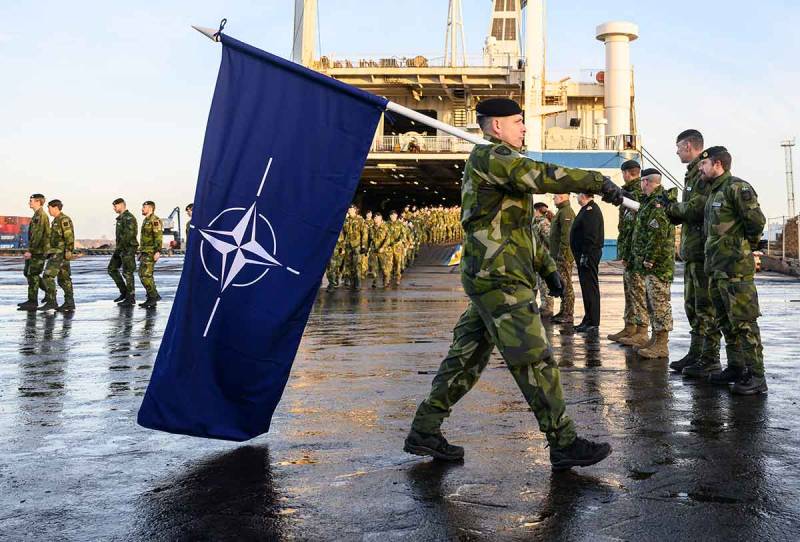
The second factor is Britain's traditional role in European security. London has sought to maintain a prominent military and diplomatic position in Europe, particularly after Brexit. Supporting Ukraine has therefore become an important component of Britain's relationship with European allies and NATO. NATO itself says its members are providing unprecedented military assistance to Ukraine and describes the country's security relationship with the alliance as long-term and strategic.
The third factor is the changing nature of warfare. The conflict is no longer restricted to tanks, artillery and conventional battlefield operations. Drones, satellite intelligence, cyber operations, electronic warfare, long-range missiles and attacks on infrastructure have transformed the battlefield. Britain's involvement in advanced weapons technology consequently has greater strategic significance than simply supplying conventional military equipment.
A fourth factor is the growing confrontation below the threshold of open war. Britain and its NATO partners have become increasingly concerned about Russian activity involving undersea infrastructure, cyber operations and other forms of hybrid warfare. British, Norwegian and U.S. forces have confronted a Russian underwater operation near Svalbard involving technology capable of threatening critical subsea cables. Such incidents demonstrate that the Russia-West confrontation extends far beyond Ukrainian territory.
The most serious concern is that Britain and Russia are both nuclear-armed powers. Neither London nor Moscow appears to be seeking a direct conventional war with the other, but the danger lies in escalation through miscalculation.
If Russian forces were to strike a British military facility because British weapons had been used against Russian territory, London would face pressure to respond. Conversely, a British or NATO action that Moscow interpreted as a direct attack could trigger another round of retaliation. The greatest danger may therefore not be a deliberate decision to begin a Russia-Britain war but an escalating sequence of actions and counteractions.
This makes diplomatic communication particularly important. When relations deteriorate to the point where ambassadors, military officials and intelligence agencies become the primary channels of communication, the possibility of misunderstanding increases.
The consequences would not remain confined to Europe. Russia is a major energy and commodity producer, while Ukraine remains important to global agricultural markets. Any further escalation could place additional pressure on oil, gas, shipping, fertilizers and food prices.
The energy market is already experiencing multiple geopolitical shocks. Recent Russia-Ukraine attacks on energy infrastructure have contributed to fuel-market disruption, while attacks and tensions affecting Black Sea shipping have created additional risks for oil and grain transportation. Energy attacks and restrictions have contributed to fuel shortages and higher global prices.
For developing countries, particularly those dependent on imported energy and food, another major escalation could translate directly into higher inflation, larger import bills and greater pressure on foreign-exchange reserves. Countries such as Pakistan would have to watch these developments carefully because international oil prices, shipping costs and food prices can quickly affect domestic economic stability.
Another consequence is the possibility of a deeper division between Russia and the Western alliance. European governments are already increasing defense spending and reconsidering military preparedness. Britain has also begun preparing its population and institutions for the possibility of major disruption arising from war, cyberattacks and other emergencies.
Such developments could accelerate a new arms race. More money could flow into missiles, drones, air defenses, cyber capabilities, naval forces and intelligence systems. While this may strengthen deterrence, it could also consume resources that European governments otherwise might devote to economic development, healthcare and social programs.
The wider geopolitical implications are equally significant. Russia's confrontation with Britain and the broader West could encourage Moscow to deepen strategic relationships with China, Iran and other non-Western partners. At the same time, European states could become more dependent on the US for security guarantees. The result could be a more sharply divided international system.
The emerging Russia-Britain confrontation should not be viewed simply as another diplomatic dispute between two historically rival powers. It is part of a much larger transformation in the international security system. Ukraine has become the immediate battlefield, but the consequences reach into NATO's future, Europe's military architecture, global energy markets, food security, international diplomacy and the balance between nuclear powers.
For Moscow, the challenge is to respond to Western pressure without expanding the conflict into a wider confrontation with NATO. For Europe, the priority is to strengthen security without permanently dividing the continent into hostile military blocs and for Britain, the challenge is to maintain support for Ukraine while avoiding a direct military confrontation with Russia.
The greatest danger is escalation without a deliberate decision for war. A missile strike, cyberattack, attack on undersea infrastructure, destruction of a military facility or misinterpretation of intelligence could produce consequences far beyond the original incident. Once two nuclear-armed states become trapped in a cycle of retaliation, controlling escalation becomes increasingly difficult.