
Dr Sultan Bashiruddin Mahmood: The scientist behind Pakistan’s nuclear journey
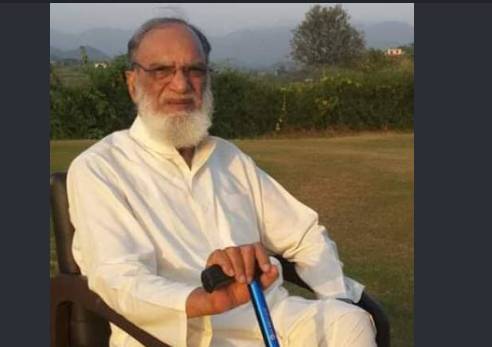
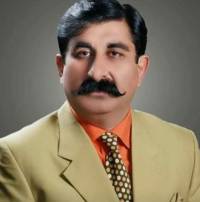
Pakistan’s nuclear history is often narrated through a handful of celebrated names. Yet the development of a national nuclear capability was never the achievement of one individual. It was the product of scientists, engineers, administrators, technicians and political leaders who worked through different stages of an extraordinarily demanding national project. Among those was genius Dr Sultan Bashiruddin Mahmood, a senior engineer and former Director General of the Pakistan Atomic Energy Commission (PAEC), whose career represents an important chapter in Pakistan’s scientific and nuclear development.
Dr Sultan Bashiruddin Mahmood’s contribution began at a time when Pakistan was attempting to build scientific capabilities under severe technological, financial and geopolitical constraints. He joined the PAEC in the late 1960s and worked at the Pakistan Institute of Nuclear Science and Technology and later at the Karachi Nuclear Power Plant. His career placed him in several of the country’s most important nuclear institutions. Contemporary accounts describe him as having held key appointments across major nuclear facilities during a career spanning almost three decades.
One of his most significant contributions came during the formative years of Pakistan’s uranium-enrichment effort. In 1974, after India conducted its first nuclear test, the PAEC began examining possible enrichment technologies. Dr. Mahmood was asked to prepare a detailed assessment of different approaches, including gaseous diffusion, centrifuge, jet-nozzle and laser-based methods. His assessment favoured centrifuge technology as the practical option for Pakistan.
That episode is important because it demonstrates that Pakistan’s nuclear development was not simply the result of importing an existing technological package. Pakistani institutions were simultaneously studying, evaluating and developing technical capabilities of their own. Dr. Mahmood subsequently served as project director of the enrichment project before Dr. Abdul Qadeer Khan assumed leadership of it in 1976. The historical record therefore places Mahmood among the scientists involved in the early institutional development of Pakistan’s enrichment program, although credit for the eventual program belongs to a much broader scientific and governmental effort.
His engineering work extended beyond uranium enrichment. Dr. Mahmood was associated with reactor technology and served in senior positions connected with Pakistan’s nuclear-power and plutonium-related infrastructure. One particularly notable technical contribution attributed to him was the development of the “SBM Probe,” an instrument designed to detect leaks in steam systems. A recent review of Pakistan’s nuclear history describes the invention as a sophisticated device that brought him recognition within the nuclear engineering community.
His professional career also illustrates the importance of human capital in Pakistan’s nuclear story. Nuclear technology requires much more than reactors, laboratories and machines. It requires engineers capable of designing systems, identifying technical failures, managing complex installations and transferring knowledge to younger generations. Dr. Mahmood belonged to the generation that helped create this technical culture inside Pakistan’s nuclear establishment.
His contribution to Pakistan’s scientific discourse did not end with engineering. Dr. Mahmood is also an unusually prolific writer. His published works crossed the boundaries of nuclear science, mathematics, cosmology, religion, Quranic interpretation and reflections on human destiny. His bibliography includes Doomsday and Life After Death, The Miraculous Qur’an: A Challenge to Science and Mathematics, The Greatest Success, The Life of Book: A Scientific Interpretation of Quran, Muhammad: The First & the Last, The Holy Quran and Dirac Equations, Cosmology and Human Destiny, and an English-language Tafseer of the Holy Quran.
These books reveal another dimension of Dr Sultan Bashiruddin Mahmood’s intellectual life. He did not see science merely as an engineering discipline; he repeatedly explored the relationship between scientific inquiry, cosmology, mathematics and Islamic thought. Whether readers agree with all of his interpretations is a separate question. What is undeniable is that he attempted to engage with questions that many scientists and religious scholars traditionally treated within separate intellectual worlds.
Dr Mahmood is also recognized formally for his services. The Government of Pakistan awarded him the Sitara-i-Imtiaz in 1998, while the Pakistan Academy of Sciences awarded him a gold medal the same year. These recognitions came after decades of work within Pakistan’s scientific establishment.
After leaving the PAEC, he became involved in humanitarian work through Ummah Tameer-e-Nau. Following the September 11 attacks, Pakistani authorities questioned him over meetings with Osama bin Laden, Mullah Umar and others. He denied providing nuclear information, and was eventually released without being charged with an offense.
The larger significance of Dr Sultan Bashiruddin Mahmood lies in the scientific infrastructure he helped build. Pakistan’s nuclear capability was the result of institutional continuity, research laboratories, engineers, reactor specialists, enrichment experts, universities and generations of trained scientists. Dr Mahmood was one of the scientists who occupied an important place within that process.
His story also offers a broader lesson for Pakistan. Nuclear capability may provide strategic security, but the deeper national asset is scientific knowledge itself. The engineers who mastered reactor technology, enrichment, instrumentation and nuclear safety created capabilities that extended beyond any single project. Their work demonstrated that Pakistan could develop sophisticated technological expertise despite limited resources and intense international pressure.
Dr Sultan Bashiruddin Mahmood should be remembered as a significant figure in Pakistan’s scientific history. He was an important architect of the country’s nuclear program. As an engineer, project leader, nuclear specialist and author, he contributed to important phases of Pakistan’s nuclear development and left behind an unusually broad body of intellectual work.
The history of Pakistan’s nuclear program is ultimately a history of collective scientific effort. Dr. Sultan Bashiruddun Mahmood’s career is one part of that larger story—a story of the engineers and scientists who transformed difficult technical ambitions into functioning institutions and helped establish a scientific capability whose consequences continue to shape Pakistan’s national life. His legacy, deserves to be examined neither through uncritical glorification nor through the controversies of his later years alone, but through the full record of his professional contributions, intellectual pursuits and place in the evolution of Pakistan’s nuclear enterprise.