
Mid East tension: Qatar says its naval forces were in Bahrain buildings targeted by Iran, 67 Kuwaiti soldiers injured
US radar systems in Jordan and UAE damaged in air attacks: Saudi Arabia, Qatar intercept several missiles: Iran death toll rises to 1,230: Lebanon says 123 killed in Israeli strikes: 13 dead in attacks on Gulf states: FM Araghchi says Tehran did not seek ceasefire: Bahrain says missiles hit two hotels, residential building in Manama: Trump wants role in picking new Iran leader
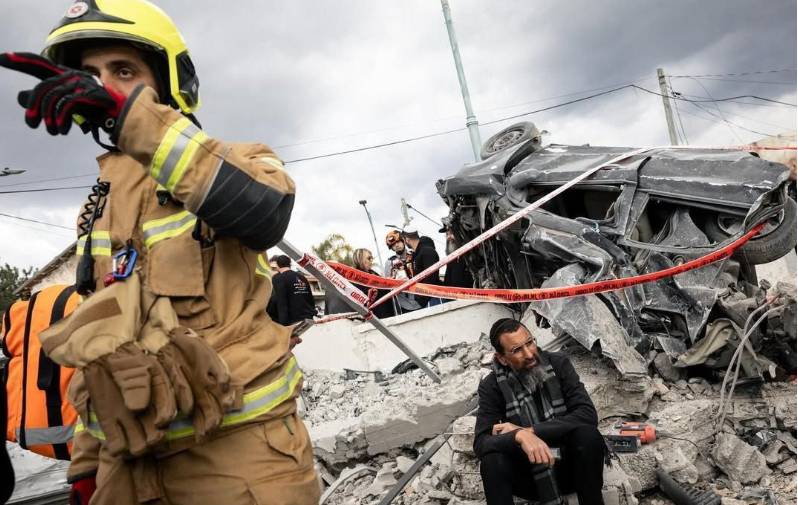

Qatar on Friday said its naval forces were inside buildings targeted by Iran in Bahrain overnight, though they were unharmed, after Manama reported attacks on residential buildings and a hotel.
The Gulf has borne the brunt of Iran's retaliation since US-Israeli strikes sparked war on Saturday, with Tehran striking US assets but also civilian infrastructure in the region.
"The State of Qatar strongly condemns the Iranian attack targeting buildings in various parts of the Kingdom of Bahrain, housing members of the Qatari Emiri Naval Forces participating in the Unified Maritime Operations Center of the Gulf Cooperation Council's Unified Military Command," the foreign ministry said in a statement.
"The Qatari Emiri Naval Forces personnel present in the targeted buildings are safe and unharmed," it added.
Explosions were heard in Manama, Dubai and Abu Dhabi on Friday.
Earlier on Friday, Bahrain said Iran had struck a hotel and two residential buildings in the capital Manama, correcting a previous announcement that two hotels and one residential building were hit.
"Iranian aggression targeted a hotel & 2 residential buildings in Manama," Bahrain's interior ministry posted on X, reporting "no loss of life".
It said the attack sparked a fire in one of the residential buildings, which had been extinguished.
The attack came a day after an Iranian missile strike sparked a blaze at Bahrain's main state-owned oil refinery.
The raging war, which has spread across the Middle East and beyond, entered its seventh day Friday as Iran claimed that the missiles of the Islamic Revolutionary Guard Corps (IRGC) Navy struck the US aircraft-carrier USS Abraham Lincoln near the Strait of Hormuz while Kuwait disclosed that 67 of its military personnel were wounded in the attacks.
A spokesperson for the Khatam al-Anbiya Central Headquarters, quoted by Tehran Times, said the aircraft-carrier was targeted by missiles while it was operating 340km from Iran’s maritime borders near the Strait of Hormuz.
The spokesperson said that the attack prompted the vessel and its accompanying destroyers to withdraw rapidly from the area. The spokesperson claimed the ships fled at high speed and have since moved more than 1,000 km away from the location.
Earlier, Iranian state media reported that four ballistic missiles were fired toward the carrier. However, the US Central Command stated that the missiles did not come close to the vessel, which continued operating in the area.
67 Kuwait army personnel injured
Kuwait's defence ministry said early on Friday that 67 army personnel have been injured since the beginning of Iran's retaliation campaign -- the highest number by far of any Gulf military.
"Sixty-seven Kuwaiti military personnel have been injured" since the beginning of the attacks, according to Colonel Saud Al-Atwan, the defence ministry spokesman.
He did not specify where the soldiers were injured.
Kuwait had identified and "dealt with" 212 ballistic missiles and 394 drones since Saturday, he added.
Kuwait also has the highest death toll in the region so far, with eight out of 13 people killed in the Gulf having died in the tiny country.
This includes four US service members and two Kuwaiti army personnel as well as two civilians.
Washington said a total of six service members had been killed in the war.
The US has had a significant military presence in Kuwait since Washington came to the Gulf country's aid after Iraq invaded in 1990.
Kuwait has several US bases, including Camp Arifjan, which is home to the forward headquarters for the US Army component of the military's Middle East CENTCOM. The US Army also has stocks of equipment and supplies in the country.
Ali al-Salem Air Base hosts the 386th Air Expeditionary Wing, which the military describes as the "primary airlift hub and gateway for delivering combat power to joint and coalition forces" in the region. Additionally, the United States has drones including MQ-9 Reapers based in Kuwait.
Hezbollah warns Israel residents to evacuate from area with Lebanon border
Iran-backed militant group Hezbollah on Friday warned Israeli residents to evacuate areas within five kilometres (three miles) of the border with Lebanon, a day after Israel told residents of Beirut's southern suburbs to flee.
In a message in Hebrew in the group's Telegram channels, Hezbollah told Israelis to evacuate all localities "located within 5 kilometres of the border".
"This is due to the (Israeli) army's deployment of military vehicles and armoured personnel carriers in open areas, using these areas as military deployment points," it added.
Iran Guards say targeted US radar in UAE, Jordan, Qatar
Iran's Revolutionary Guards said on Friday their forces had targeted radar systems in the United Arab Emirates, Jordan, and Qatar.
"US THAAD radars deployed in the United Arab Emirates and Jordan, as well as the US FPS-132 over-the-horizon radar ('Desert Eye') stationed in Qatar, have been destroyed by the missile and drone units of the Islamic Revolutionary Guard Corps (IRGC)," said the Guards on their website Sepah News.
US cannot provide enough missiles: EU
The United States is not in a position to provide enough missiles to the Gulf states and Ukraine to defend themselves, EU defence and space commissioner Andrius Kubilius said Friday.
"It's very clear that after Iranian crisis, if we can call it so, it became more urgent for us in Europe to ramp up production of air defence and anti-ballistic missiles," he said.
"Because Americans really will not be able to provide enough of those missiles, both for the Gulf countries, for American army itself, and also for Ukrainian needs."
Kubilius said Europe was facing a "huge challenge" in developing anti-missile defence.
- 'Humanitarian disaster' -
Lebanese Prime Minister Nawaf Salam warned that "a humanitarian disaster is looming" as a result of Israeli evacuation orders that are causing a massive displacement of the population.
Residents of the southern suburbs of Beirut and of the south of the country, both Hezbollah strongholds, have fled in large numbers following unprecedentedly wide evacuation orders from the Israeli military.
- 'Transparent and impartial' -
The United Nations rights chief called for "transparent and impartial investigations" into an alleged deadly strike on a school in Iran, urging Washington to move "very quickly" with its announced probe.
"What we have asked for is obviously prompt, transparent and impartial investigations, which we understand has been announced by the United States of America," Volker Turk told reporters in Geneva, stressing that "we need this to happen very quickly and we need to also make sure that there is accountability as well as redress for the victims".
- Blasts over Tel Aviv -
Several blasts were heard over Israel's commercial hub of Tel Aviv, AFP journalists reported, after the military said it had detected new missiles launched from Iran.
"A short while ago, the IDF identified missiles launched from Iran toward the territory of the State of Israel. Defensive systems are operating to intercept the threat," the military said.
- Missile alerts by phone -
Residents of Dubai received an Emirati interior ministry alert on their phones urging them to shelter from potential missile threats, AFP correspondents reported.
"Due to the current situation, potential missile threats, seek immediate shelter in the closest secure building and steer away from windows, doors and open areas," the alert read.
- Saudi, Qatar thwart attacks -
Saudi Arabia said it destroyed three drones east of Riyadh as well as three missiles launched towards an air base.
Some Western embassy staff in Riyadh meanwhile were told to shelter in place, diplomatic sources said, following an attack on the US embassy compound earlier this week.
Qatar also said its air defences foiled a drone attack targeting the US air base at Al-Udeid, Washington's largest military facility in the Middle East.
US radar bases hit in Jordan, UAE
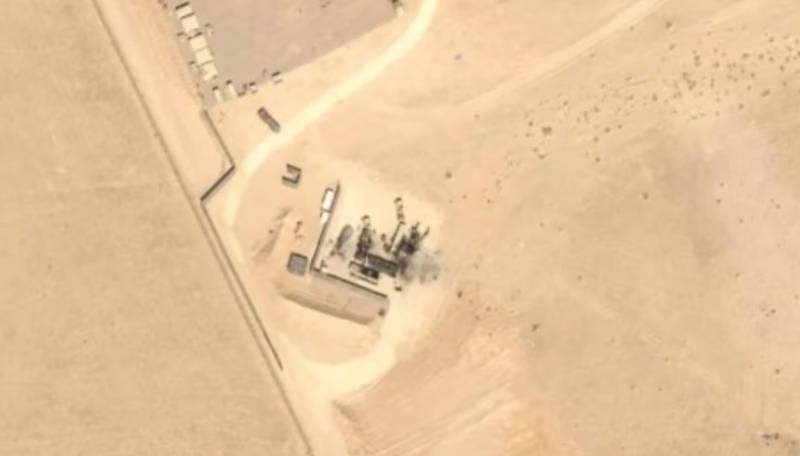
New satellite imagery analysed by CNN suggests that radar systems connected to US-supplied missile defence networks in West Asia, specifically in Jordan and the UAE, may have been targeted during the opening phase of the current conflict involving Iran.
According to the analysis, several military installations across the Arabian Peninsula show signs of damage to facilities that typically house radar components used for missile detection.
These radars play a crucial role in identifying incoming ballistic missiles and drones and are a core part of the Terminal High Altitude Area Defence, which is designed to intercept and destroy ballistic missiles during flight.
One of the clearest examples of damage appears at Muwaffaq Salti Air Base, a key military facility in Jordan where a US THAAD missile battery had been deployed.
A satellite image taken earlier this week shows two large impact craters near the radar installation associated with the system. CNN reports that the craters are roughly 13 feet wide, indicating that the site may have been struck multiple times.
Middle East conflict enters 7th day
The raging conflict, which has spread across the Middle East and beyond, entered its seventh day Friday after Israeli forces announced a "next phase" in the conflict and bombed Beirut's southern suburbs.
The Israeli military had earlier issued an unprecedented evacuation warning for the entire area -- "save your lives and evacuate your residences immediately" -- that sent residents fleeing in panic.
The war has been felt as far away as the Sri Lankan coast, where a US submarine torpedoed an Iranian warship, and Azerbaijan, which threatened retaliation after a drone hit an airport.
On the political front, US President Donald Trump rejected the possibility of Mojtaba Khamenei, son of the late Iranian supreme leader Ali Khamenei, replacing his slain father, dismissing him as a "lightweight".
"I have to be involved in the appointment, like with Delcy," Trump told Axios in an interview, drawing a comparison to Venezuela, where interim president Delcy Rodriguez has cooperated with him after the United States ousted her boss Nicolas Maduro in a military raid.
"Khamenei's son is unacceptable to me. We want someone that will bring harmony and peace to Iran," Trump told the publication, threatening more war in the future if a better alternative were not found.
- Beirut strikes -
Lebanon was dragged into the widening conflict on Monday, when Hezbollah attacked Israel to avenge the killing of Khamenei.
Israel responded with air strikes and sent ground troops into some Lebanese border villages, and on Thursday it targeted Beirut's southern suburbs, saying it was "striking Hezbollah infrastructure".
The Israeli warning that preceded the strikes sent people fleeing from the area, with massive traffic jams on the outskirts of the suburbs as people fired guns in the air, urging residents to leave as soon as possible.
On a Beirut beach, hundreds of families, many of them scared and angry, milled around after leaving, having nowhere else to go.
"We fled from the suburbs, we were humiliated," one man told AFP, declining to give his name.
Lebanese authorities say at least 123 people have been killed since Monday, with 683 wounded and at least 90,000 displaced.
Footage shows flames and smoke rising from a hotel in Bahrain after it was struck by an Iranian drone.
— Al Jazeera English (@AJEnglish) March 6, 2026
Another hotel and a residential building in Manama were also reportedly targeted. pic.twitter.com/ydHvNQBZBq
- From Sri Lanka to Azerbaijan -
On Iran's borders, neighbouring Azerbaijan warned that a drone attack on an airport "will not go unanswered", raising fears of another country entering the war.
Iran denied being behind the strike and blamed Israel, but that did not stop Azerbaijani President Ilham Aliyev from accusing Tehran of "terrorism".
Australia, meanwhile, deployed two military aircraft to the theatre, and Canada's Prime Minister Mark Carney said he would not rule out his armed forces taking part.
Following fresh strikes on Iran's capital, AFPTV images showed blackened vehicles and mangled buildings, with smoke still rising from some.
"We're going through a very important page of our history and I'm not afraid," a 30-year-old Tehran resident told AFP. "Hope is the only thing that we have right now."
An Iranian state-run foundation said the death toll from US and Israeli strikes on the country had risen to 1,230, a number AFP could not independently verify.
The US military has reported the deaths of six of its personnel since the war began Saturday.
Iranian Foreign Minister Abbas Araghchi struck a defiant tone Thursday, saying Tehran had not sought a ceasefire and did not "see any reason why we should negotiate with the US".
Regarding the possibility of a ground invasion, he told US broadcaster NBC News: "We are confident that we can confront them, and that would be a big disaster for them."
Israel, meanwhile, said 60 percent of Iran's missile launchers and 80 percent of its air defence systems had been destroyed.
Announcing a "next phase" in the campaign, army chief Eyal Zamir said Israel had "additional surprises ahead".
The latest Iranian missile barrage sparked a wave of explosions across Tel Aviv, and firefighters worked to contain a blaze at a residential building near Israel's commercial hub on Friday.
Israeli airstrikes struck residential areas in the southern suburbs of Beirut, Lebanon, with thick smoke rising above neighbourhoods as the strikes caused significant damage. pic.twitter.com/FDubstTJpI
— Al Jazeera English (@AJEnglish) March 6, 2026
- Gulf under fire -
The conflict has not spared the rich Gulf monarchies, usually seen as a haven in a volatile region, as Iran has lashed out at cities and energy infrastructure.
Thirteen people, seven of them civilians, have been killed in countries around the Gulf since the war began, including an 11-year-old girl in Kuwait.
Bahrain said early Friday that Iran had targeted two hotels and a residential building in the capital Manama, but that there was "no loss of life".
Saudi Arabia said it had intercepted three ballistic missiles launched towards an air base.
And Qatar said Thursday that it intercepted a missile attack as loud blasts, described by AFP journalists as the most intense yet, reverberated across Doha, with thick black smoke billowing across the horizon.
Falling debris from an intercepted drone injured six people in Emirati capital Abu Dhabi, officials added.
20 people killed in strikes on Shiraz
An Iranian official said on Friday that at least 20 people have been killed in US and Israeli strikes in the southern city of Shiraz.
"Twenty innocent citizens have been martyred and 30 others have been injured in this terrorist attack," said Jalil Hasani, deputy governor of Fars province, the official IRNA news agency reported.
He said the attack took place in a "residential area in the town of Zibashahr in Shiraz."
- Israel targets 'regime infrastructure' -
Israel said it had launched a wave of strikes on Tehran early Friday, targeting "regime infrastructure" in a "new phase" of the war.
AFP journalists in Tehran heard loud blasts in parts of the city and Iranian media reported heavy strikes.
- No US boots in Iran -
President Donald Trump said Thursday it would be a "waste of time" currently to consider sending US ground troops into Iran.
"It's a waste of time. They've lost everything. They've lost their navy. They've lost everything they can lose," he told NBC by telephone, adding that Iranian Foreign Minister Abbas Araghchi's remark that Tehran was ready for a US or Israeli ground invasion was a "wasted comment".
- Israel targets 'regime infrastructure' -
Israel said it launched a wave of strikes on Tehran early Friday, targeting "regime infrastructure" in Iran's capital.
AFP journalists in Tehran heard loud blasts in parts of the city.
- Australian personnel on US sub -
Three Australian military personnel were onboard an American submarine that sank an Iranian navy ship off Sri Lanka this week, Prime Minister Anthony Albanese said.
The personnel were on the submarine as part of training arrangements under AUKUS, a multi-decade defence pact with Britain and the United States.
previous announcement that two hotels and one residential building were hit.
- Egypt in 'state of near-emergency' -
Egyptian President Abdel Fattah al-Sisi said his country was in an economic "state of near-emergency" as he warned of runaway inflation.
At a military academy event, Sisi added that price-gouging traders could be tried in military courts, according to a statement from his spokesman.
- Houthi leader speaks out -
Yemen's Iran-backed Houthi leader said in a televised speech Thursday that his group was prepared to strike at any moment.
"Regarding military escalation and action, our fingers are on the trigger, ready to respond at any moment should developments warrant it," Abdul Malik al-Houthi said.
- NATO raises missile defence posture -
NATO said it has strengthened its "ballistic missile defence posture" as Iran steps up its strikes across the Middle East with a missile launched at alliance member Turkey before being shot down.
The alliance's 32 member states concurred with NATO commanders that the posture should remain at its "heightened level" until the threat from Iran's "indiscriminate attacks across the region" subsided.
- Sri Lanka takes control of Iranian ship -
Sri Lanka has offloaded crew of an Iranian navy vessel and assumed control of it, a day after a deadly US submarine attack on another ship.
President Anura Kumara Dissanayake said his country's navy had taken 208 sailors from the IRIS Bushehr which, like the ship torpedoed off Sri Lanka's southern coast on Wednesday, had participated in a naval exercise in eastern India.–Agencies