
SBP decides to keep policy rate unchanged at 12pc
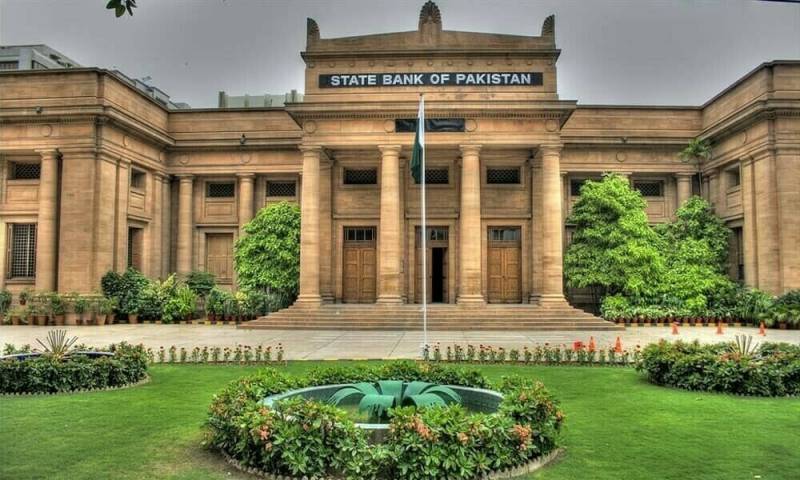

The State Bank of Pakistan (SBP) Monday decided to keep the policy rate unchanged at 12 per cent, assessing the current real interest rate to be adequately positive on a forward-looking basis to sustain the ongoing macroeconomic stability.
After being slashed by 1,000bps from 22pc since June 2024 in six intervals, the central bank's policy rate now stands at 12pc.
February inflation stood at a near-decade low of 1.5pc, largely due to a high base a year ago.
At its meeting today, the Monetary Policy Committee (MPC) noted that inflation in February 2025 turned out lower than expected, mainly due to a drop in food and energy prices.
Notwithstanding this decline, the Committee assessed the risks posed by the inherent volatility in these prices to the current declining trend in inflation. At the same time, core inflation is proving to be more persistent at an elevated level and thus uptick in the food and energy prices may lead to an increase in inflation.
Meanwhile, economic activity continues to gain traction, as reflected in the latest high-frequency economic indicators. Moreover, the MPC viewed that some pressures on the external account have emerged due to rising imports amidst weak financial inflows. On balance, the MPC assessed the current real interest rate to be adequately positive on forward-looking basis to sustain the ongoing macroeconomic stability.
The Committee noted the following key developments since its last meeting.
First, the current account turned into a deficit of $0.4 billion in January 2025 after remaining in surplus over the past few months. This, coupled with weak financial inflows and ongoing debt repayments, led to a decline in the SBP’s FX reserves.
Second, large-scale manufacturing output declined during H1-FY25, despite a substantial m/m increase of 19.1 percent in December 2024.
Third, the shortfall in tax revenues from the target widened further in January and February.
Fourth, both consumer and business sentiments improved during the latest waves.
And lastly, on the global front, uncertainty has increased significantly amidst the ongoing tariff escalations, which may have implications for global economic growth, trade and commodity prices. In response to these developments, central banks in advanced and emerging economies have recently slowed the pace of their monetary easing.
Based on these developments, the Committee noted that the impact of sizable earlier reduction in policy rate is now materializing. The MPC reiterated the importance of maintaining a cautious monetary policy stance to stabilize inflation within the target range of 5 – 7 percent. This, along with structural reforms, is essential to achieve sustainable economic growth.