
Embrace the opportunity
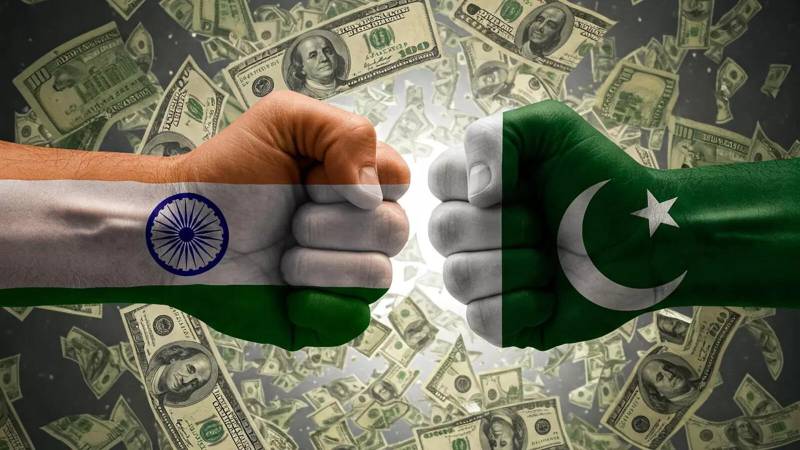

Despite their tumultuous history, the two nuclear powers of South Asia—India and Pakistan— have made significant marks on the global stage. However, after 77 years of independence, their quest for lasting peace remains elusive, highlighting the complexity of their relationship.
On April 22, 2025, new tensions arose between two nuclear-armed countries, India and Pakistan. The situation escalated when India accused Pakistan of being involved in the killing of 26 tourists in Pahalgam, located in Indian-administered Kashmir. Pakistan denied these allegations, calling them baseless. In response, India suspended diplomatic relations with Pakistan and halted the Indus Water Treaty. Pakistan subsequently reciprocated by suspending the Simla Agreement. The escalating cycle of actions and reactions heightened the region's risk of conflict, creating a tense atmosphere that kept everyone on edge.
In the early hours of May 7, 2025, India conducted strikes in various regions of Pakistan and Azad Jammu Kashmir, resulting in the deaths of 31 civilians and leaving 57 injured. The Indian Defence Ministry referred to these strikes as Operation Sindoor, stating that those responsible for the April 22 incident would face consequences. In response, Pakistan retaliated by shooting down five Indian jets. India remained steadfast and continued to escalate tensions. On May 10, 2025, Pakistan decisively launched Operation Bunyan-al-Marsoos against India. Remarkably, just hours later, both nations reached an agreement for a ceasefire.
During war, rulers often overlook the fact that the people bear the brunt of the losses. The lights in their homes go out, and many become homeless in their own country. People suffer and die from hunger. The Brussels Conference of 1874 and the Hague Conventions of 1899 established that the bombardment of undefended cities, villages, and towns is prohibited. Additionally, bombing buildings and facilities related to art, science, religion, culture, and philanthropic efforts is banned during aerial warfare. Sadly, India not only violated international law by striking Pakistan but also misrepresented its actions by claiming it had targeted terrorists instead of civilians.
On the other hand, the Indian media attempted to attract global attention by disseminating false information that was later proven to be baseless. In today's era of social media and artificial intelligence, creating and spreading news has become remarkably easy; however, presenting evidence and the truth has become much more challenging than ever before.
Since the partition, India and Pakistan have fought four wars, but a lasting peace between the two nations remains elusive. India became a nuclear power in 1974, followed by Pakistan in 1998. Fortunately, these weapons have remained untouched, but the unresolved tensions pose a grave threat. If the simmering disputes are left unaddressed, the repercussions could be catastrophic: peace in the region would be shattered, human rights would be violated, and the impacts of climate change would lead to an increase in diseases, famine, and hunger. Any impulsive decision could push the world toward disaster. Therefore, the dispute between India and Pakistan must be resolved through peaceful means and based on justice.
India stands as the largest democracy globally. It not only covers a land area greater than that of Pakistan but also has a population that is roughly five times larger. If ever war breaks out, both countries' populations will suffer severe human, economic, and psychological losses, the effects of which will impact future generations for decades. The most significant example is Hiroshima and Nagasaki, where the atomic bomb was dropped in 1945 and its effects are still felt today.
Moreover, both countries hold significant geopolitical importance in South Asia. They are key members of the South Asian Association for Regional Cooperation (SAARC) and the Shanghai Cooperation Organisation (SCO), both of which aim to promote regional development and peace. However, achieving regional peace will only be possible if both countries come together and prioritise public welfare, justice, and shared development. Unfortunately, nearly eight decades later, the gap between them remains unchanged.
With the recent ceasefire between India and Pakistan, there is a unique opportunity for both countries to come together and tackle their longstanding issues under international law. India should substantiate its claims with evidence rather than making unverified allegations. The focus should extend beyond mere differences; there are significant future challenges that require collaborative resolution. The current landscape provides a clear view of each country’s position, highlighting that warfare is about more than just weapon—it's also about wisdom and effective leadership. Together, both countries can pave the way for a more peaceful and constructive future.