
Netanyahu refuses to end Iran conflict without removal of enriched uranium
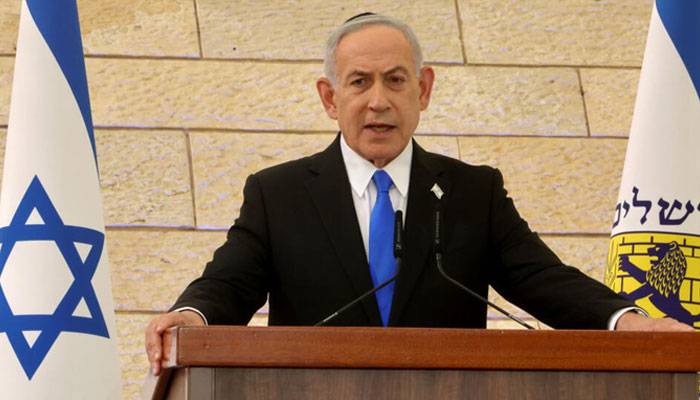

Israeli Prime Minister Benjamin Netanyahu has said that the ongoing conflict with Iran cannot end unless concerns over enriched uranium are fully addressed, 24NewsHD TV reported on Monday.
In an interview with an American television channel, Netanyahu said Israel had achieved significant gains in the war but stressed that it was not yet over.
He claimed Iran still possesses enriched uranium, which he said must be removed, along with the destruction of related nuclear facilities.
He further alleged that Iran continues to support armed groups and is developing ballistic missiles, adding that “much work remains” in dealing with these threats.
Netanyahu also claimed that US President Donald Trump supports the idea of removing Iran’s enriched uranium through military means.
He said Israel would not accept any agreement that results in a ceasefire with Iran while leaving Hezbollah active in Lebanon.
According to Netanyahu, Iran wants any ceasefire to also preserve its allied groups, which he accused of destabilising Lebanon and holding its people “hostage.”
He argued that if the Iranian government weakens or collapses, its regional proxy network—including Hezbollah, Hamas, and possibly the Houthis—would also disintegrate.
On the possibility of regime change in Iran, Netanyahu said it was possible but not guaranteed.
The Israeli leader also acknowledged that pre-war planning did not fully account for the potential closure of the Strait of Hormuz.
He alleged that China is assisting Iran in missile production by supplying specific components, though he did not provide further details.
Netanyahu further claimed that some Arab countries have shown interest in strengthening ties with Israel.
He also said he aims to reduce Israel’s dependence on US military aid over the next decade, proposing to eventually eliminate financial assistance and shift relations towards a strategic partnership.
Currently, Israel receives around $3.8 billion in annual US military aid, under a broader $38 billion assistance package pledged by the United States between 2018 and 2028.