
Are Trump and Netanyahu making the Middle East a highly inflammable region?
Does Iran have the capacity to resist a joint military attack by Israel and the US?
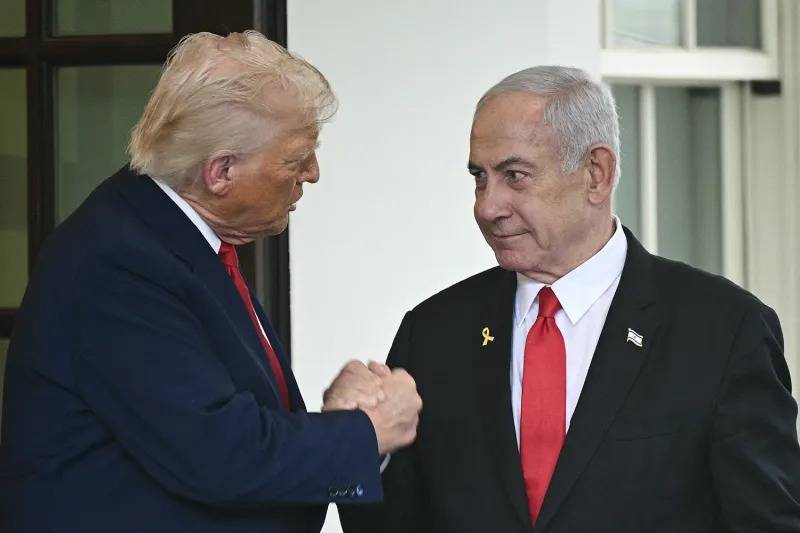
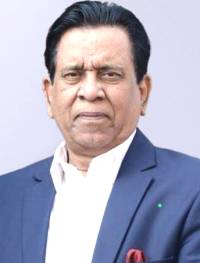
The war clouds have encircled the entire Middle East region, given the threats heralded by the US President Donald Trump and Israeli Prime Minister Benjamin Netanyahu against the Islamic Republic of Iran.
The context to go for such military options is manifold. Firstly, Washington and Tel Aviv want Tehran to roll back, freeze or cap its nuclear programme. Secondly, they jointly wish Iran to give up its support to the resistance movements in Gaza, including Hamas in Gaza, Hezbollah in Lebanon and Houthis in Yemen.
Another armed outfit calling itself the “Islamic Resistance Front (IRF) in Syria” is another force that has demanded that Zionist Israeli forces withdraw from southern Syria and the demilitarised zone in the Golan Heights. The Iran-backed group, formerly known as the “Southern Liberation Front,” has emerged as a new force to oppose Israel, which borders Syria’s southern region.
Iranian leadership does not appear to be in the mood to budge to American and Israeli demands, flatly stating that under no circumstances would Tehran accept any dictation against its nuclear programme, come what may. “This is our fundamental right to pursue the nuclear option, and no one has the right to stop us”, said the leader of the revolution (Rehbar-e-Inqilab), Ali Khamenei, while addressing a huge crowd in Tehran last week.
On the other hand, the Iranian President Masoud Pezeshkian affirmed today that his country will not yield to “American arrogance” regarding its nuclear program. He added that the process of negotiations with the US and Europe over the nuclear issue is ongoing, and five rounds have already been held so far.
“We will not bow to arrogance. We will never accept the elimination of our nuclear research, only to then wait for their approval to access the nuclear materials we need for our industry, medicine, agriculture and other sciences,” Masoud Pezeshkian went on to say.
“Who said we need permission to conduct scientific research? Who are they to demand we dismantle our entire nuclear industry?” he remarked.
Meanwhile, the International Atomic Energy Agency’s (IAEA) 35-member Board of Governors has passed a resolution accusing Iran of breaching Non-Proliferation Treaty obligations. Only 19 members of the Board voted in favour of the resolution, three opposed it, including China and Russia, while 11 members abstained from the voting process.
Diplomatic observers are of the firm view that the IAEA's move has been instigated by the United States, in an attempt to build some extra pressure against Iran. The issue would be forwarded to the United Nations’ Security Council for further action.
What has made the situation in the Middle East worse is American President Trump’s order that American personnel should move out of the Middle East because it is a dangerous place to live. In addition to this, the US is reported to have been preparing a partial evacuation of staff from its Iraqi embassy and allowed military dependents to leave locations around the Middle East due to heightened security risks in the region.
The most important question being asked in diplomatic circles is What's next? There is no immediate answer to it. President Trump seems to be losing hope of any outcome from the sixth round of negotiations scheduled with Iran on Sunday in Muscat, the capital of Oman.
However, Benjamin Netanyahu appears to be in a terrible hurry to attack Iran. He sought permission from President Trump in a 40-minute conversation on the phone on Tuesday.
The fate of the conference at the United Nations General Assembly, to be jointly hosted by French President Macron and the Saudi Crown Prince Muhammad bin Salman from June 17-20, is also not known. The main agenda of the conference is to find ways and means to ensure a two-state solution to the conflict in Gaza.
The United States has warned all member states attending the conference of dire consequences. It is an open threat to the organisers of the moot.