
Supreme Court takes up review appeal of Noor Mukadam’s killer
Apex court adjourns hearing for three weeks as an additional note from previous verdict is still awaited
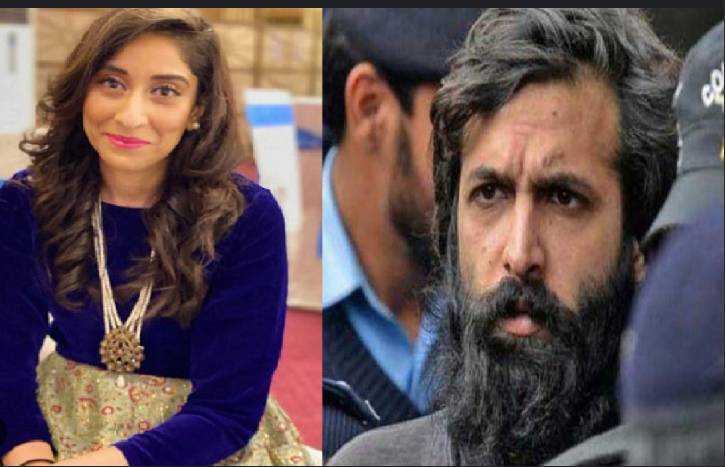

A three-member bench of the Supreme Court (SC) on Friday adjourned the hearing of the review appeal of Zahir Zakir Jaffer against the apex court’s verdict that upheld his death sentence for the gruesome murder of Noor Mukadam in Islamabad in 2021, reported 24NewsHD TV channel.
Noor Mukadam, aged 27 years, was found murdered at Zahir’s Islamabad residence in July 2021, with the probe revealing she was brutally tortured by him before being beheaded. Zahir Jaffer’s death sentence by the trial court had already been upheld by the Islamabad High Court (IHC).
During hearing of the review appeal on Friday, Advocate Khawaja Haris appeared in court on behalf of Zahir Jaffa, instead of Barrister Salman Safdar, who had represented the convict earlier.
Seeing this, Justice Hashim Kakar inquired: “Barrister Salman Safdar represented Zahir Jaffer before. Whether a lawyer can be changed during the hearing of a review petition?”
Barrister Haris informed the court that a lawyer can be changed as per the new law.
Justice Hashim Kakar went on to ask: “Was the law changed for someone or in principle?”
Justice Hasim Kakar remarked that he himself had written the verdict in this case and an additional note from Justice Ali Baqir Najfi was still awaited. He said that maybe you would get some benefit from the additional note.
Justice Hashim Kakar said that it's better at this stage to adjourn the hearing of the case until the additional not is received.
Later, the apex court adjourned the hearing of the case for three weeks.
The Zahir Jaffer had filed the review appeal on July 23 last. The 47-page review petition was filed by Advocate Khawaja Haris on behalf of Zahir under Article 188 of the Constitution (review of judgments or orders by SC). The state and Noor’s father, Shaukat Ali Mukadam, were made the respondents.
The petition contended that the issue of Zahir’s alleged “unsoundness of mind or mental capacity” that was raised before the SC in an application had not been addressed and was “given short shrift”.
It further said that “hype created on social media constantly created hatred towards the petitioner throughout the investigation and the trial (and even at appeal stage)”, which breached Zahir’s right to fair trial and due process.
“In the process of hurry, mistakes were made in the investigation and during trial,” the petition quoted a verdict from another case.
On the rape charges, the review plea argued that it was “apparent from the record that there is no evidence on the record in proof of this allegation”.
The SC had commuted Zahir’s death sentence on the rape charge to life imprisonment, as decided by the trial court, but did not acquit him of it. While he was acquitted of the 10-year sentence for kidnapping, a one-year term was handed down for wrongful confinement under Section 342 of the Pakistan Penal Code, according to the SC verdict.
Zahir’s review plea argued that the video recordings based on which the SC upheld the death sentence had not been proved during the trial and were not provided to any of the accused.
It said the apex court ruling was extensively based on video recordings stored in a digital video recorder (DVR) and on clips that the prosecution said were transferred from the DVR to a hard disk, providing the “most essential link in the chain of circumstances” on which the SC gave its verdict.
“Portions of these so-called recordings, on the basis whereof the inference of ‘last seen’ has been drawn against the petitioner, were never played during the trial, rather, only hearsay evidence thereof was led by the prosecution,” the plea stated.
The SC, in its detailed verdict, had stressed the significance of digital evidence by declaring that footage can be admissible as primary evidence under the “silent witness theory” — a rule of evidence that allows for photographic video or other recorded evidence to be admitted as substantive proof of what it depicts, without the need for an eyewitness’s testimony.
Justice Muhammad Hashim Kakar, who led the three-member bench, observed that the silent witness theory of authentication had developed in almost all jurisdictions over the last 25 years to allow photos to substantively “speak for themselves”.
The SC had also noted that Zahir neglected to provide any explanation for the victim’s presence at his residence and the ensuing recovery of her body from the premises.
Reporter: Amanat Ghiskori