
AI is here: Where are we?
Today, we are witnessing the seventh revolution. Artificial intelligence has arrived.
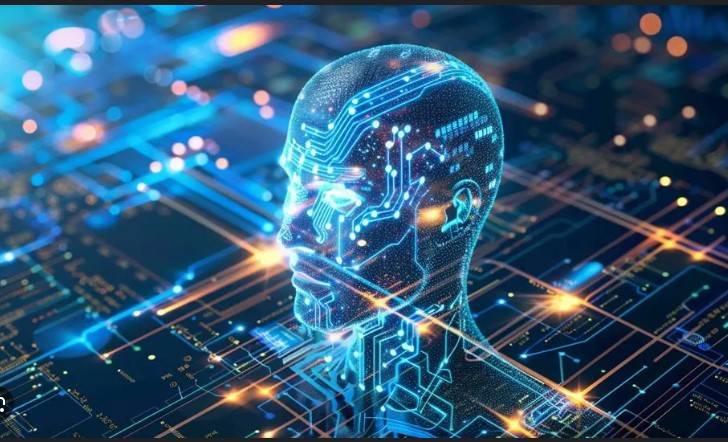

Homo sapiens emerged on the fabric of time around 300000 years ago. Originating in Africa around sixty millennia ago, they spread across the planet and, after the extinction of the Neanderthals, became rulers of the Earth. Since that time history of our planet is, in essence, the history of the human race and its love story with the machines.
In this series of columns, an endeavour will be made to understand the impact of AI on the current world, the near future, and what it entails for Pakistan. They will highlight that if we don’t wake up now and adopt a war footing attitude in catering to the incoming tsunami of Artificial Intelligence, by 2050 we shall be left far behind and face serious consequences as it sweeps across every facet of life as we know it today.
Human civilization has lived through 6 life-changing revolutions, all directly linked to the invention and usage of machines, ranging from the first stone used for digging to the wheel, to the rockets today. The first revolution was the origin of the hunter-gatherer communities, which depended on each other to survive, with primitive tools used for digging and fighting animals. The second one was the Neolithic revolution, starting around 12000 years ago, in which permanent settlements, farming, and civilization began along the rivers of Mesopotamia (Today’s Middle East). This was followed by the Urban and Political revolution, giving rise to the concepts of Government, law, and writing systems. Then came the Axial revolution, around 1000 BCE, which shaped the moral and spiritual framework of different civilizations, accompanied by major advancements in machine construction, especially in shipbuilding. The fifth revolution was the Industrial Revolution, in which machines came into their own for the first time in human history, forever changing the tapestry of the world. The last revolution that has had a life-changing impact on the human race is the current digital revolution, which has literally reduced the planet into a Global village, with mind-boggling advances in all spheres of life.
In all of the above, the common strand was that the Humans were in control. They themselves invented different contraptions and retained total control over them. The machines were subservient to the human mind and did as they were directed. However, as the digital revolution progressed, thinkers across the world started to fear the likelihood that one day the machines may become more powerful than the human race. A big part in this thought was fuelled by the Hollywood genre of movies like the Trilogy, Terminator, which appeared as fiction some years ago, may become a reality in the foreseeable future.
Today, we are witnessing the seventh revolution. Artificial intelligence has arrived. Oxford dictionary defines it as “The theory and development of computer systems able to perform tasks normally requiring human intelligence, such as visual perception, speech recognition, decision-making, and translation between languages.” Like all other revolutions before, it has its positive and negative aspects. But what makes it different is the lingering fear that the machines may outgrow human control, especially as quantum computing becomes more powerful. To put it simply, Quantum computers, once fully developed, will be the Houdini solving extremely intricate problems in seconds, whereas super computers of today would take millions of years to solve the same. And most of the processes would be beyond human understanding like the working of the financial world today.
The impact of AI when it is fully developed will be colossal. Whereas it may be of benefit in the fields of Medicine, Agriculture, Services, Manufacturing etc., in all probability it will be very detrimental to the labour market. McKinsey Global Institute estimates that AI can displace between 400-800 million jobs by 2030, depending on the adoption speed. And some experts are warning that virtually all jobs, especially those involving repetitive, data-driven tasks, will be replaced by machines. At best, it’s more likely that AI will transform how we work rather than eliminate entire professions. Hopefully, the need for human skills and creativity will continue to be important in many areas.
The most dangerous aspect of AI will be in the field of War. A cataclysmic change is already being witnessed today in the Ukraine-Russia War. The need for humans will reduce over time. The theatre will shift to a clash of technologies. Robots will replace Humans. But once the machines reach a level of development that they don’t need humans for decision making, then what? The entire edifice of human civilization will be under threat. Without any iron clad international treaties setting the limits on the scale of development, in the current free for all race, we may be writing our own end.
The astronomical speed with which AI is developing has surprised even the most conservative experts. The ease with which AlphaGo, a software developed by Google, beat the world champion of Go, a 2500-year-old Chinese board game, infinitely more difficult than Chess, in October 2015, shocked the scientific world. And the scarier part was that even the creators were surprised by its unconventional moves and seemingly “creative” plays, stemming from its unique combination of neural networks and search algorithms, allowing it to learn and improve through self-play and reinforcement learning.
The above brief about AI raises very serious questions for Countries like Pakistan. The coming apartheid between the AI leaders and the rest of the world is going to be a unique phenomenon. The gap will grow very fast. The big power game will be about technology and the materials needed for its development. The impact of AI on social, cultural, and religious ethos will be monumental.
The only way to survive is to prioritize AI over other issues. The plan has to be set in motion today. Remember that with AI, tomorrow is today.
Writer Aamir Zulfiqar Khan is a senior public policy expert who has served as Inspector General of Police, Punjab, Islamabad and National Highway & Motorways Police. He can be reached at amzkhan.lhr@gmail.com