
Sustainable agriculture and the risks we are not fully accounting for
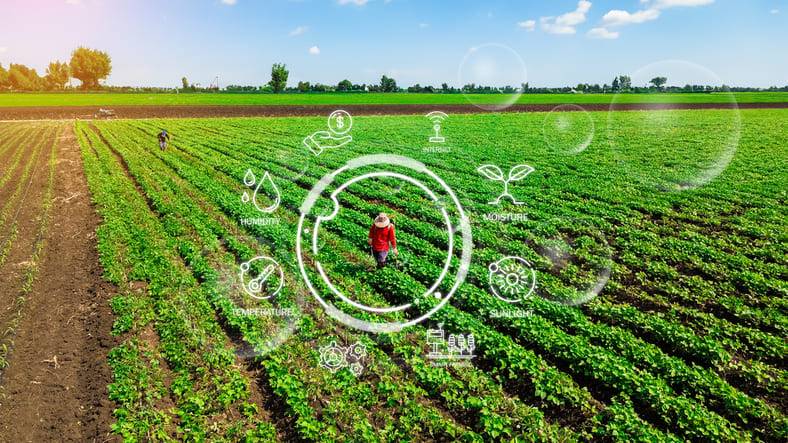

Pakistan's farms are changing. Governments, development agencies, and private investors are pouring resources into “sustainable” agriculture, including regenerative systems, climate smart practices, and precision technologies. The momentum is real. So are the gaps in thinking.
What is rarely acknowledged is that this transition is not a technical upgrade. It is a systemic shift that redistributes risks, costs, and responsibilities. In Pakistan, those risks flow downhill, toward the smallholders least equipped to absorb them.
The conceptual fog in policy and funding spaces does not help. Terms like climate smart, regenerative, and precision agriculture are used interchangeably, yet they reflect fundamentally different priorities: emissions reduction, ecological restoration, and technological optimisation. This blurring is convenient for broad coalitions, but it also creates room for weak definitions of sustainability, where a carbon metric or an efficiency gain is taken as evidence of system change.
On the ground, the picture is more complicated. In central Punjab, conservation agriculture can improve soil and water retention but often increases herbicide dependence, trading one problem for another. In Sindh's rice systems, alternate wetting and drying reduces emissions, but unreliable irrigation and pest risk routinely push farmers back to continuous flooding. In cotton, integrated pest management is widely promoted, but narrow margins and unpredictable pest pressure make preventive spraying the rational choice. Farmers are not resisting change. They are managing uncertainty with the tools they have.
These dynamics do not stop at the farm. Pakistan's textiles, flour milling, and livestock feed industries depend on stable volumes and consistent quality. Early stage transitions that introduce yield variability ripple through these systems, creating pressures that are rarely accounted for in programme design.
Precision agriculture adds another layer. Data driven input management holds genuine promise, but it demands capital, infrastructure, and technical literacy that most smallholders do not have. Without deliberate design, precision technologies risk accelerating consolidation, rewarding scale at the expense of the sector's majority.
Then there is the compliance burden. Carbon and regenerative programmes increasingly require farmers to measure, report, and verify their practices. The administrative weight of these requirements, including time, cost, and documentation, is rarely matched by reliable financial returns. In practice, the farmer carries the burden, while the system captures the value.
Pakistan also lacks the localised data these transitions require. Global principles from FAO, IPCC, and CGIAR are well established. But country specific emission factors, regional soil datasets, and validated transition models for Pakistani conditions remain limited. What works in Iowa or Wageningen still requires calibration before it works in Multan or Sukkur.
None of this argues against sustainable agriculture. It argues for honesty about what transition actually involves. Yield variability, rising management demands, and shifting cost structures are not edge cases. They are inherent to the process. Ignoring them does not accelerate adoption. It obscures risk.
What would a serious transition policy look like? It would make change gradual, with local demonstration and peer learning embedded from the start. It would provide continuous, in-season advisory support rather than one-off training. It would share risk through price floors, transition payments, or insurance mechanisms, instead of expecting smallholders to absorb short term losses on the promise of long term gains. And it would monitor not just adoption rates, but outcomes: who benefits, who is squeezed, and where unintended pressures are building.
The global momentum behind sustainable agriculture is necessary. But momentum without accountability produces a familiar pattern: transformation at the top, disruption at the bottom.
Caution, in this context, is not resistance. It is discipline.
Sustainability must be judged not only by environmental outcomes, but by how transitions are managed, how risks are distributed, and whether the process strengthens or strains the people who grow our food. The science is largely in place. The harder question is who sets the pace, and who is left carrying the cost.