
Eid In the Shadow of Grief
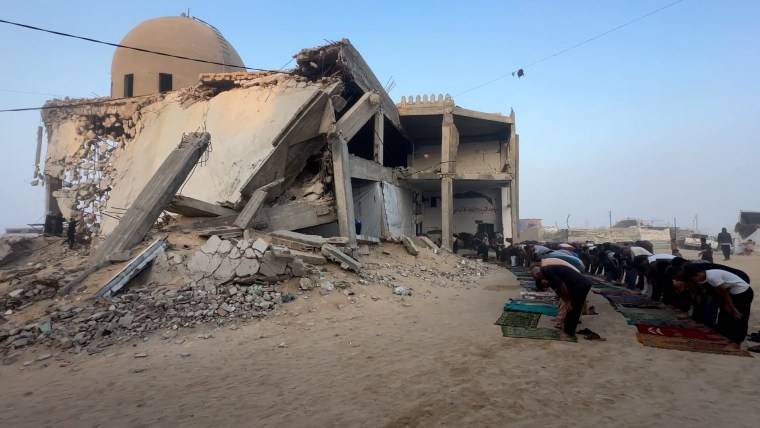

The night before Eid is usually filled with a particular kind of happiness that Muslims everywhere recognize instantly. Tailors rush to finish the last alterations, kitchens fill with the scent of cardamom and roasted vermicelli, and children lay out their new clothes beside their beds as if placing treasures on display. In many homes, alarms are set earlier than usual, not out of obligation, but excitement. It is the one morning in the year when children wake before their parents. Yet in recent years, the approach of Eid has felt different. Between the cheerful greetings and preparations, another reality presses quietly into our consciousness. On the television screen or the phone in our hands appear images from Gaza, apartment blocks flattened into dust, hospitals overwhelmed, families searching for loved ones beneath concrete. News from Iran brings similar images of explosions, sirens, and mourning. This contrast forces an uncomfortable question into the heart of Eid, how do we celebrate joy while others endure devastation? For Muslims, Eid ul Fitr marks the completion of Ramadan, a month of fasting, discipline, and spiritual renewal. It is meant to be a day of gratitude and community. Mosques overflow with worshippers. Strangers greet one another with warm embraces. Children clutch envelopes of Eidi with triumphant smiles.
However, the world beyond our neighborhoods has intruded into our celebrations in a way that is difficult to ignore. There are those who argue that Eid should be celebrated fully, without hesitation or restraint. Their argument is not merely cultural but theological. Eid is not optional; it is a sacred day prescribed as a reward for the completion of Ramadan. To suppress it, they argue, risks allowing oppression and tragedy to steal even our moments of gratitude. History offers many examples that support this view. Muslims throughout history have celebrated their religious festivals even during times of war, displacement, and hardship. Faith does not pause because circumstances are difficult. In fact, celebration itself can become an act of resilience. A humanitarian worker once told the story of an Eid gathering in a refugee camp. Families had almost nothing. Their “feast” consisted of simple bread, dates, and tea. Yet after the prayer, someone began reciting poetry. Children ran between the tents laughing, their faces bright despite the harsh surroundings. One elderly woman reportedly said, “If we cannot laugh today, then they have taken everything from us." Her words captured something profound. Joy, even modest joy, can be a form of resistance. There is also a deeply practical dimension to this perspective. Communities need moments of hope to sustain themselves. Children especially need the magic of Eid. One father recently described watching his young son prepare for the holiday. The boy carefully counted the coins he had saved during Ramadan and proudly showed them to his parents. “I’m going to buy sweets for everyone on Eid,” he said. Moments like these remind us that celebrations are not merely indulgences. They are the threads that bind families and communities together.
Yet there is another argument, one that speaks not against celebrating Eid, but against celebrating it without awareness. The Prophet Muhammad (PBUH) described the Muslim community as being like one body: when one part suffers, the whole body feels the pain. This teaching takes on painful clarity when we consider the realities in places like Gaza. There are countless stories emerging from the devastation, stories that force us to reconsider what celebration should look like. One journalist recounted meeting a small boy sitting outside the remains of what had once been his home. The child was asked what he hoped for on Eid. He did not ask for toys, clothes, or sweets. After a moment of silence, he said quietly, “I want my mother back. In that single sentence lives the grief of thousands of families. Another story comes from a doctor volunteering in a makeshift clinic. On the morning of Eid, she expected a somber atmosphere. Instead, she noticed a group of children gathered around a broken mirror, taking turns adjusting their hair and straightening the donated clothes they had received from aid workers. When she asked one girl why she was smiling, the child replied, “Because today is Eid, and Allah knows we are trying. “Even in devastation, the instinct to celebrate survives. These stories do not suggest that Eid should be abandoned. Rather, they invite us to rethink how it is observed. Subdued celebration is not the rejection of joy. It is the refinement of it. It allows gratitude to coexist with empathy. Perhaps it means beginning the day with a deeper awareness during the Eid prayer. When the imam raises his hands in supplication, we remember not only our own blessings but the suffering of others. Perhaps it means choosing generosity over extravagance. Across many communities, similar choices are being made. Mosques are encouraging worshippers to increase charitable giving during Eid. Community leaders are reminding congregations that celebration and compassion are not opposites, they are partners.
The false choice between cancelling Eid and celebrating extravagantly misses the wisdom that lies in the middle path. Islam has always embraced balance. One can smile while remembering those who mourn. One can share a meal while praying for those who hunger. Eid ul Fitr will arrive, as it always does, guided by the quiet sighting of the moon. Families will gather. Children will laugh. Mosques will fill with worshippers expressing gratitude for the completion of Ramadan. Perhaps this year our celebrations can carry a deeper awareness. We celebrate, but with humility. We gather, but with remembrance. We feast, but with generosity toward those who cannot. Somewhere in Gaza, if the moon of Eid appears above the ruins of shattered buildings, a child may still look up at the sky and whisper “Eid Mubarak.” That whisper carries both hope and heartbreak. The least we can do, in our relative safety and comfort, is to carry that child with us into our celebrations. Not as a burden, but as a reminder. A reminder that faith demands empathy. A reminder that gratitude must inspire generosity. A reminder that joy becomes more meaningful when it is shared. Let Eid be celebrated, as it must be. But let it be celebrated with a heart that remembers, a hand that gives, and a conscience that refuses to look away.