
Perseverance rover captures first-ever aurora on Mars in visible light
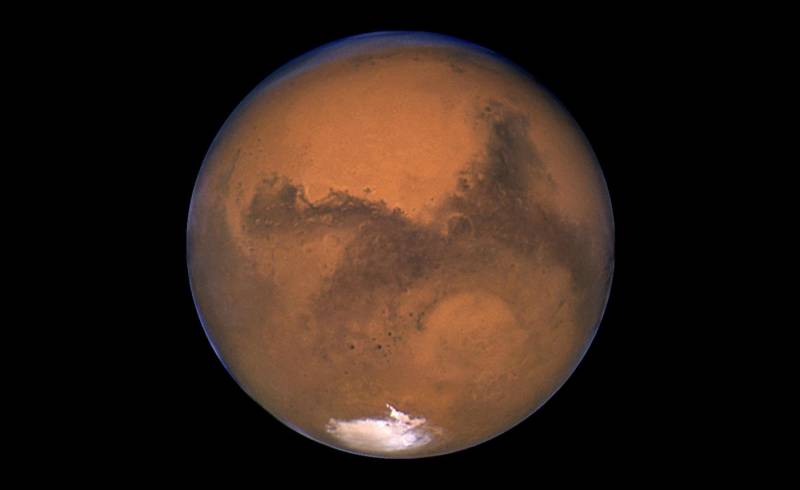

NASA's Perseverance rover has made history yet again — this time by catching a ghostly green glow shimmering across the Martian sky, marking the first observation of an aurora in visible light from the surface of any planet other than Earth.
The atmospheric light show occurred on March 18, 2024, when a blast of solar particles from a coronal mass ejection collided with the thin Martian atmosphere, producing a soft, faint green aurora that extended planet-wide. Scientists had anticipated the event after the sun ejected a massive wave of magnetic energy and gas three days earlier — and prepared Perseverance’s instruments to catch the moment.
“We simulated the conditions in advance, and we were ready,” said Elise Wright Knutsen, postdoctoral researcher at the University of Oslo and lead author of the study published in Science Advances. “Perseverance gave us front-row seats.”
Using the rover’s SuperCam spectrometer, researchers pinpointed the exact wavelength of the glow, confirming it was green — caused by the interaction of solar particles with oxygen in the Martian atmosphere. The Mastcam-Z camera then captured the visual proof: an otherworldly, emerald wash across the sky.
While auroras on Earth are corralled into dazzling curtains near the poles by our planet’s global magnetic field, Mars has no such planetary protection. The charged solar particles essentially pelt the whole planet, making for a more diffused, ghostly aurora that blankets the sky from horizon to horizon.
"This was a full-sky experience,” Knutsen explained. “No poles required.”
The aurora was far too faint for a human on Mars to see with the naked eye — but future astronauts could witness it if a more intense solar storm hits. And even this faint glow, invisible to the human eye, would show up vividly on camera.
“Just like on Earth, where auroras are brighter in pictures than they appear to us directly, this Martian aurora would have lit up any iPhone lens beautifully,” Knutsen said.
Auroras have been detected on Mars before — but only from orbit and in ultraviolet wavelengths. This marks the first time one has been seen in visible light, and from the planet’s surface. And while Mars isn’t alone — every planet with an atmosphere can experience auroras — this particular event offered an up-close look at a uniquely Martian version of the phenomenon.
As scientists continue to explore the Red Planet’s mysteries, the discovery of this silent, planetary-wide green glow adds a splash of beauty to the harsh alien landscape — and a new kind of wonder for future explorers to dream of.
“In a stronger storm,” Knutsen said, “you might step outside on Mars one night and see the whole sky pulsing green. It would be eerie… and utterly stunning.”