
First Overseas Convention in Kashmir a positive step but needs improved effort
By: Barrister Abid Hussain
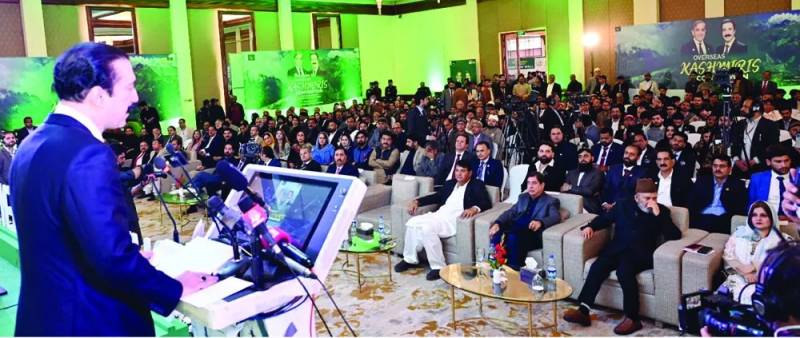
First and foremost, my thanks to both the Prime Minister of AJ&K Faisal Mumtaz Rathore and Chairman Overseas Pakistani Foundation Syed Qamar Raza. The 2026 overseas Kashmiri’s convention marked a historic milestone for Azad Jammu & Kashmir.
For the first time, overseas Kashmiris were formally invited to engage directly with the government in a structured forum held in Muzaffarabad, the administrative heart of the region. Hosting the event locally was a deliberate and symbolic decision. It enabled delegates to witness realities on the ground, engage with institutions directly, and assess opportunities and challenges firsthand.
It is important to clarify that participation was necessarily limited due to logistical, security, and capacity considerations associated with hosting a large international gathering in Muzaffarabad. However, a limited number of delegates does not equate to limited representation. The participants included community leaders, professionals, investors, youth representatives, and women from different regions abroad, ensuring diversity of perspective.
Rather than being a ceremonial gathering, the convention was structured around detailed focus groups and policy discussions. These sessions addressed:
• Investment barriers and regulatory challenges
• Infrastructure and development priorities
• Safety and security considerations
• Governance and institutional transparency
• Youth engagement and entrepreneurship
• Women’s empowerment and gender inclusion
• Current regional and international affairs
Delegates were not passive attendees; they were active contributors. Written recommendations were submitted, working groups were formed, and follow-up mechanisms were discussed to ensure continuity beyond the event itself.
It is also important to recognise that engagement with the diaspora is an evolving process. No first convention can resolve every constitutional, legal, or administrative question overnight. However, initiating dialogue is the essential first step toward formalising structures, improving data systems, and strengthening legislative engagement with overseas Kashmiris.
Constructive critics ask how representation can be improved — and that is a valid question. But dismissing the entire effort risks discouraging precisely the kind of participatory development that many have long called for.
Overseas Kashmiris remain one of the region’s greatest assets. Their contributions in remittances, philanthropy, advocacy, and expertise are well documented. The convention acknowledged this contribution and sought to transform goodwill into structured collaboration.
Progress requires partnership, patience, and pragmatism. Rather than undermining early steps, stakeholders should work collectively to:
• Build comprehensive diaspora databases
• Develop transparent policy frameworks
• Strengthen legislative engagement mechanisms
• Improve investment facilitation systems
• Ensure regular consultation forums
The first Overseas Convention was not an endpoint — it was a beginning. It demonstrated political will to engage, opened channels of dialogue, and laid the groundwork for institutional reform.
Constructive engagement will move Azad Jammu & Kashmir forward. Cynicism will not.
The overseas Kashmiri community deserves unity of purpose, not division.