
Field Marshal Asim arrives in Tehran amid Pakistan-led Iran-US peace talks
Naqvi holds more talks with Iranian FM Abbas Araghchi, Iran’s Minister of Agriculture Gholam Reza Noori and Tehran Governor General Mohammad Sadiq Motamediyan, Interior Minister talks to Saudi counterpart Prince Abdulaziz bin Saud
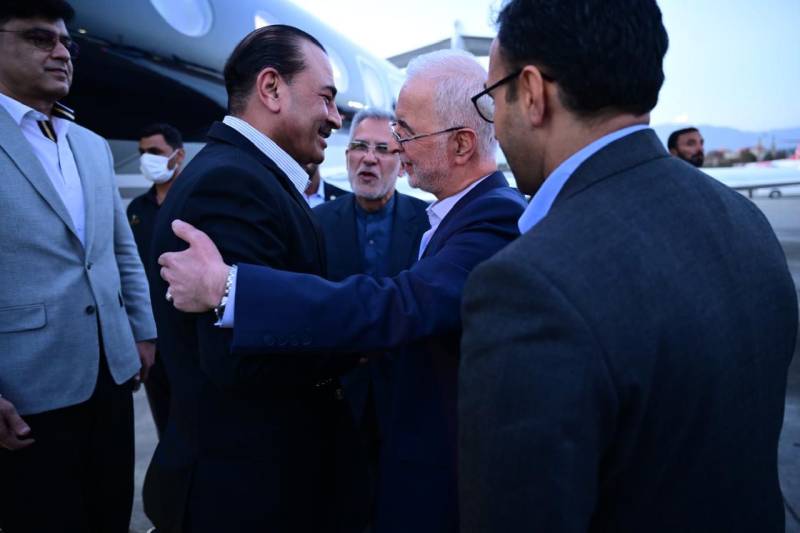

Field Marshal Syed Asim Munir, NI (M), HI (M), Chief of Army Staff (COAS) and Chief of Defence Staff (CDF), arrived in Tehran as part of ongoing mediation efforts, reported 24 NewsHD TV Channel.
According to ISPR press release, Field Marshal was received and welcomed by Iranian Minister for Interior Eskandar Momeni. Federal Minister for Interior Mohsin Naqvi was also present at the reception.
Earlier, Field Marshal Syed Asim Munir has left for an official visit to Iran to focus on discussions related to ongoing Iran-US talks, regional peace and stability, and other matters of mutual interest.
During the visit, Field Marshal Asim Munir is also expected to hold meetings with senior Iranian dignitaries to discuss bilateral cooperation and the broader regional security situation, the sources added.
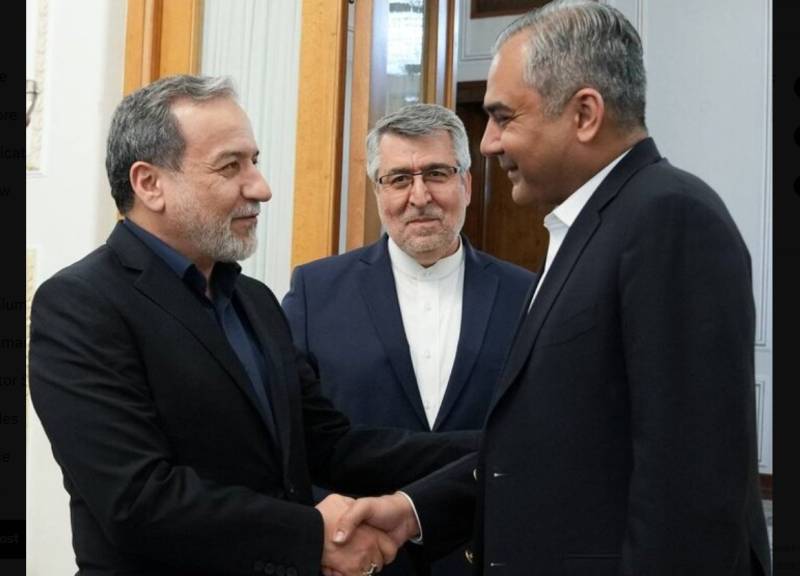
Earlier, Pakistan's Interior Minister Mohsin Naqvi met with some other Iranian officials on Friday. Interior Minister met with Iran’s Minister of Agriculture Gholam Reza Noori and Tehran province Governor General Mohammad Sadiq Motamediyan. Both sides discussed regional tension especially Iran-US talks mediated by Pakistan.
Pakistan’s Interior Minister Mohsin Naqvi, who has been in Tehran since Wednesday facilitating communication between Iran and the United States to reach a framework for ending the war and resolving disputes under the coordination of senior Pakistani officials, met with Iranian Foreign Minister Seyed Abbas Araghchi again
According to Iranian media reports, during the meeting between the two ministers different draft agreements regarding ending the US-Iran war were also deliberated upon.
Earlier, Interior Minister Mohsin Naqvi and Saudi Interior Minister Prince Abdulaziz bin Saud made telephonic contacts on Friday.
Both sides discussed regional tension especially peace talks between US and Iran and Pakistan’s mediation efforts. During the conversation, the two leaders discussed cooperation in the security sector and further promoting joint relations. The two interior ministers also had a detailed discussion on several important issues of mutual interest.
This follows a message by Pakistani Foreign Minister Senator Muhammad Ishaq Dar on Thursday evening, in which he stated: "We are doing our best as a mediator to bring Washington and Tehran together to reach a peace agreement."
According to an Al Jazeera news network report, the Pakistani Foreign Minister emphasized that Islamabad will continue to play its role in this regard.
Pakistan hosted the first round of negotiations between Washington and Tehran on April 12 (Farvardin 23); however, those talks did not culminate in an agreement to end the war.
These negotiations took place following a two-week ceasefire mediated by Pakistan, which was subsequently extended. Since then, the two sides have exchanged counterproposals and mechanisms to find common ground for resuming negotiations aimed at terminating the war.
Meanwhile, the transfer or retention of nuclear materials in Iran, alongside the management and control of the Strait of Hormuz by Iran, remain among the most critical issues over which the two sides reportedly still hold differences.
Mohsin Naqvi also held a detailed meeting with Abbas Araghchi in Tehran yesterday.
وزیر کشور پاکستان که به منظور پیشبرد مذاکرات ایران و آمریکا برای خاتمه جنگ در تهران به سر میبرد، بار دیگر با سیدعباس عراقچی دیدار کردhttps://t.co/cGevnxY3Ar pic.twitter.com/Xgtsvtadzv
— خبرگزاری ایسنا (@isna_farsi) May 22, 2026
UAE says '50-50' chance of US-Iran agreement on Hormuz strait
The US and Iran have just a "50-50" chance of reaching an agreement that would free up the Strait of Hormuz, a senior UAE official said on Friday.
Presidential adviser Anwar Gargash urged Tehran not to overplay its hand in the stop-start negotiations during the Middle East war's fragile ceasefire.
Iranian officials "have missed a lot of chances over the years because there's a tendency to overestimate their cards", Gargash told the GLOBSEC Forum in Prague.
"I hope they don't do that this time."
The oil-rich UAE, which hosts US military facilities, was targeted by about 3,300 drones and missiles during 40 days of war from February 28 onwards, Gargash said, with only around four percent getting through.
He said the Iran-blockaded Hormuz, which normally carries a fifth of global oil production, must go back to normal, and cautioned against an inconclusive ceasefire.
"Negotiations just to reach a ceasefire and sow the seeds for further conflict in the future is not what we're seeking," he said.
"And I think that the Strait of Hormuz clearly has to go back to the status quo and this should be an international waterway."
With US negotiators focusing on Iran's potential development of an atomic weapon, Gargash said: "The Iranian nuclear program was our second or third worry, now it's our first worry."
"We see that Iran is capable of using any weapon that it has in its hands, which is what we learned," he added.
Iran and Oman discuss Strait of Hormuz toll system
Iran is reportedly discussing with Oman a plan to collect tolls from ships passing through the Strait of Hormuz, reported New York Times.
Concerns have emerged that imposing tolls on the strait—through which 20% of the global oil and LNG supply passes—could raise transportation costs and impact energy prices. Additionally, the US, which is in negotiations with Iran over previous agreements, opposes the toll collection, raising fears of escalating tensions between the two nations.
Iran’s Ambassador to France Mohammad Amin-Nejad stated in a Bloomberg interview in Paris: “Iran and Oman must mobilize all resources to provide security services and manage navigation in the most appropriate manner,” adding, “This will involve costs, and those who wish to benefit from this traffic should also pay their share.” He was responding to a question about whether Iran had officially implemented a permanent toll system in the Strait of Hormuz. Nejad further emphasized, “The Strait of Hormuz is located in Iran’s territorial waters,” and “(potential) costs will be clear, transparent, reasonable, and logical.”
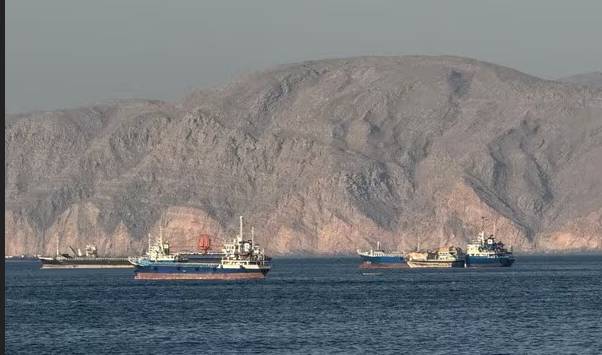
The strait, situated between Iran to the north and Oman to the south, connects the Persian Gulf and the Indian Ocean. Before the outbreak of the Iran war on February 28, 135 ships passed through the strait daily, but only 26 ships have transited in the past two days. This decline is attributed to concerns over Iran’s missile and drone attacks, as well as underwater mines.
Pakistan: We are doing our best
Pakistan's Foreign Minister Senator Muhammad Ishaq Dar stated in a message on Thursday evening: "We are doing our best as a mediator to bring Washington and Tehran together to reach a peace agreement."
According to an Al Jazeera news network report, the Pakistani Foreign Minister emphasized that Islamabad will continue to play its role in this regard.
US pins hopes on mediator Pakistan
US Secretary of State Marco Rubio voiced hope of progress on ending the war with Iran, as he looked to Pakistani mediators to help advance efforts to strike an agreement.
Previous comments by President Donald Trump had suggested weeks of stop-start negotiations to strike a permanent end to the war were teetering on the "borderline" between a deal and renewed attacks.
"I believe the Pakistanis will be travelling to Tehran today. So hopefully that'll advance this further," Rubio told reporters on Thursday.
A ceasefire on April 8 halted the war launched weeks earlier by the United States and Israel, but negotiation efforts, including historic face to face talks hosted in Islamabad have so far failed to yield a lasting agreement.
Pakistan's Interior Minister Mohsin Naqvi, who is widely considered close to Pakistan's powerful Army Chief Field Marshal Asim Munir, visited Iran for the second time in a week on Wednesday.
Iranian media, including the ISNA news agency, had reported based on unnamed sources that Asim Munir could himself visit Tehran as early as Thursday, but there was no comment from Pakistan authorities about any travel plan for the Army Chief.
Beijing did however, announce that Pakistan Prime Minister Shehbaz Sharif will travel on Saturday to China, which has also been involved in mediation efforts to end the war.
Though open warfare and strikes across the Gulf have reduced, the impasse continues to weigh on the world economy.
In April, Pakistan hosted the only direct negotiations, which Munir helped mediate, between US and Iranian officials to take place since February 28, when the war began. But the talks ultimately failed, with Tehran accusing Washington of making "excessive demands".
Since then, the two sides have exchanged multiple proposals, with the threat of renewed conflict looming all along.
"It's right on the borderline, believe me," Trump told reporters Wednesday. "If we don't get the right answers, it goes very quickly. We're all ready to go."
He said a deal could come "very quickly" or "in a few days", but warned Tehran would have to provide "100 percent good answers".
Rubio also criticised NATO allies for their refusal to help in the war against Iran.
"He's not asking them to commit troops. He's not asking them to send their fighter jets in. But they refuse to do anything," he said.
"We were very upset about that."
Iran rejects media speculations
Iran’s Foreign Ministry Spokesman Esmaeil Baqaei has emphasized that none of the speculations raised in recent days regarding various aspects of negotiations between Iran and the United States can be confirmed.
He made the remarks on Thursday evening in response to a question on the issue. Baqaei said that at this stage, the negotiations focus on ending the war on all fronts, including Lebanon. He added that claims made in the media about nuclear matters — whether enrichment or enriched material — are merely media speculation and lack credibility.
Baqaei clarified, “Accurate information about the details of the negotiations will be provided by authorized officials and the spokesperson for the negotiating team.”
- 'Forceful response' -
Tehran was on alert for the possibility of renewed armed conflict with chief negotiator Mohammad Bagher Ghalibaf warning Washington on Wednesday of a "forceful response" if Iran were to be attacked.
"The enemy's movements, both overt and clandestine, show that despite economic and political pressure, it has not abandoned its military objectives and is seeking to start a new war," Ghalibaf said.
Iran's foreign ministry spokesman Esmaeil Baqaei said the Islamic republic was examining points received from Washington, while repeating Tehran's demands for the release of its assets frozen abroad and an end to a US naval blockade.
Despite fiery rhetoric against Iran, Trump is under political pressure at home to find a resolution as energy costs rise.
The ceasefire halted the fighting but has not reopened the Strait of Hormuz, the vital waterway that normally carries about a fifth of the world's oil and liquefied natural gas.
The future of Hormuz remains a key sticking point in negotiations, with fears growing that the global economy will feel more pain as pre-war oil stockpiles deplete.
Iran imposed a Hormuz blockade as part of its retaliation in the war, allowing only a trickle of vessels through in recent weeks while introducing a toll system.
Iran's new body overseeing Hormuz said its claimed area of control extends to Emirati waters, drawing a sharp rebuke from Abu Dhabi.
Relations between Iran and the United Arab Emirates have been severely strained since the war, after Tehran launched missile and drone strikes against Gulf countries in response to US-Israeli attacks.
Hormuz carries around a third of global fertiliser shipments, raising concerns of higher food prices and shortages if the closure drags on.
- Lebanon strikes -
On another front in the war, Lebanese state media reported that an Israeli strike on Thursday damaged a hospital in Lebanon's south.
Since a truce began on April 17, Israel has continued to launch strikes, carry out demolitions and issue evacuation orders in south Lebanon, saying it is targeting Hezbollah, which has also kept up attacks.
Lebanon's health ministry said Israeli attacks have killed at least 3,089 people in Lebanon since March 2.
Hezbollah drew Lebanon into the Middle East war with rocket fire at Israel in retaliation for the killing of Iran's supreme leader in US-Israeli strikes.
The United States on Thursday sanctioned nine Hezbollah-linked individuals it accused of "obstructing the peace process in Lebanon".
Reporter: Ahmed Mansoor/Agencies