
Khamenei vows 'resistance' to Israel
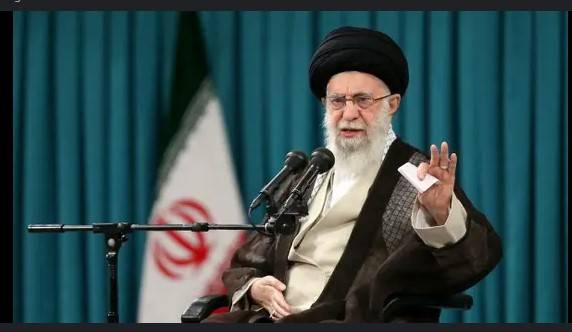

Iran's supreme leader Ayatollah Ali Khamenei vowed "resistance" against Israel as Tehran-backed Hezbollah held a funeral Sunday in Beirut for its leader Hassan Nasrallah, killed in an Israeli strike last year.
"The enemy should know that resistance against usurpation, oppression and arrogance is never-ending and will continue until the desired goal is achieved," Khamenei said in a statement published on his official website.
Nasrallah was killed alongside Iranian Revolutionary Guards general Abbas Nilforoushan in an Israeli strike on south Beirut on September 27, during a war between Israel and Hezbollah that ended in a November ceasefire.
Tens of thousands of mourners gathered in the Lebanese capital for the funeral of the longtime Hezbollah chief and his heir apparent Hashem Safieddine, who was killed in a separate strike.
Khamenei praised Nasrallah as "a great mujahid (fighter) and prominent leader", and Safieddine as "a close confidant and an inseparable part of the leadership".
Iran's Foreign Minister Abbas Araghchi, in Beirut for the funeral along with parliament speaker Mohammad Bagher Ghalibaf and deputy Revolutionary Guards commander Ali Fadavi, said the fight against "oppression and occupation" will continue.
Nasrallah's death was "not the end of the road", Araghchi said, but "a new point in the ongoing struggle against oppression and occupation".
Iranian state television broadcast the funeral live, with an anchor reciting poems hailing Hezbollah "resistance" fighters.
It also aired images of a gathering in the capital Tehran to mourn Nasrallah and Safieddine, which was attended by Iran's President Masoud Pezeshkian and other senior officials.
Other cities in Iran held similar gatherings, according to state TV.
Hezbollah has long been part of the "axis of resistance", an alliance of Iran-backed armed groups opposed to Israel and its ally the United States.
In a post on X, Araghchi said he was "honoured" to attend the funeral in Beirut.
He condemned Israel for sending warplanes that flew at low altitude over the procession, calling it a "violation of Lebanon's sovereignty."
'Wars of others'
Lebanon's President Joseph Aoun told a visiting Iranian delegation on Sunday that the war-scarred country was "tired" of external conflicts playing out on its territory.
The high-level delegation was in Beirut for the funeral of Hassan Nasrallah, the slain leader of Tehran-backed Hezbollah which fought a war with Israel last year that ended in a November truce.
"Lebanon has grown tired of the wars of others on its land," Aoun told the Iranian officials, according to a statement shared by the newly appointed president, a former army chief seen as close to the West.
"Countries should not interfere in the internal affairs of other countries," he added.
Long the dominant force in Lebanon, Hezbollah suffered staggering losses in the war with Israel, compounded by a massive blow with the December fall of ally Bashar al-Assad in Syria -- long a lifeline for the militant group for weapons from Iran.
Hezbollah's weakening allowed Lebanon's divided parliament to elect Aoun, seen as Washington's preferred candidate, after more than two years of presidential vacuum, followed by the approval of a new prime minister and government.
Aoun said Lebanon wanted "the best relations with Tehran, for the benefit of both countries and peoples".
During their meeting, Iran's parliament speaker Mohammed Bagher Ghalibaf extended an invitation from President Masoud Pezeshkian for Aoun to visit Iran, the Lebanese statement said.
Ghalibaf was accompanied by Iranian Foreign Minister Abbas Araghchi and Revolutionary Guards deputy commander Ali Fadavi.
The delegation landed in Beirut although regular flights between the two countries had been suspended.
The ban, which prompted protests from Hezbollah supporters, came after the United States warned that Israel might target Lebanon's only international airport in Beirut to thwart alleged weapons shipments from Iran, a Lebanese security source had told AFP.
In a televised address to tens of thousands attending Nasrallah's funeral in a Beirut stadium, Hezbollah chief Naim Qassem said he refused for "tyrant America to control" Lebanon.
The United States helped broker the Hezbollah-Israel ceasefire, which ended more than a year of hostilities including two months of all-out war that killed longtime leader Nasrallah in September.
The fighting, launched by Hezbollah in support of Palestinian ally Hamas in the early days of the Gaza war, killed thousands in Lebanon and left large swathes of the country's south in ruins.
Israel has on several occasions accused Hezbollah of using the airport in Beirut to bring in weapons from Iran. The group as well as Lebanese leaders have denied the allegations.
In a meeting with Ghalibaf, Lebanon's Prime Minister Nawaf Salam said that "the security of the airport and passengers is the priority", stressing that ensuring it was the responsibility of the Lebanese state, according to a statement from his office.