
Irish experts inaugurate skill lab at UHS for life-saving techniques
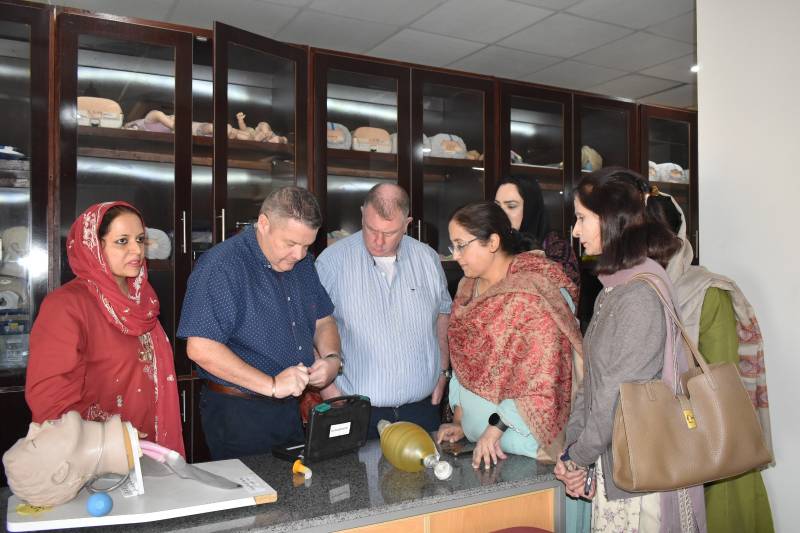

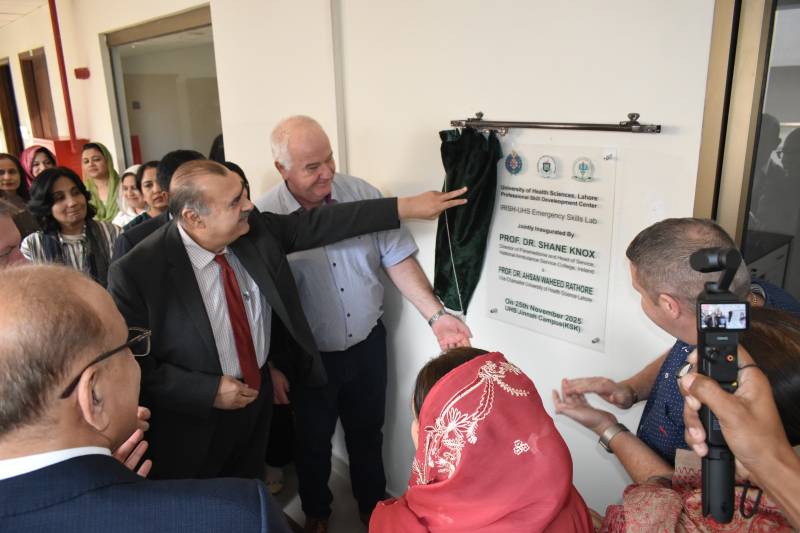
A three-member Irish team from Health Service Executive, National Ambulance Service College, Dublin, inaugurated a state-of-the-art Skill Lab at the University of Health Sciences (UHS) Jinnah Campus, Kala Shah Kaku, on Tuesday.
The facility is equipped with high-fidelity mannequins designed for advanced simulation-based training to prepare trainer faculty from medical colleges across Punjab.
The Irish team includes Prof. Dr. Shane Knox, Director of Paramedicine and Adjunct Clinical Professor at University College Cork, Ireland, Desmond Wade, Regional Education and Competency Assurance Officer (Advanced Paramedic), and Assistant Prof Padraig Glynn, Practice Development Lead – Urgent Care & Community Paramedicine and Assistant Professor at University College Cork.
UHS Vice Chancellor Prof Ahsan Waheed Rathore, senior faculty members, and master trainers from the Professional Skill Development Centre (PSDC) were present at the ceremony.
The VC briefed the delegation on the simulation-based model that UHS has adopted for training, assessment, and standardisation of emergency life-saving skills.
Speaking at the inauguration, Prof Shane Knox said that the Skill Lab reflects international standards of medical simulation.
“The level of fidelity in these mannequins allows students to make real clinical decisions in a safe environment.
This is the future of medical education, where theory and critical response merge in real time.
UHS has demonstrated that it understands how essential this training is for patient safety and quality care,” he said.
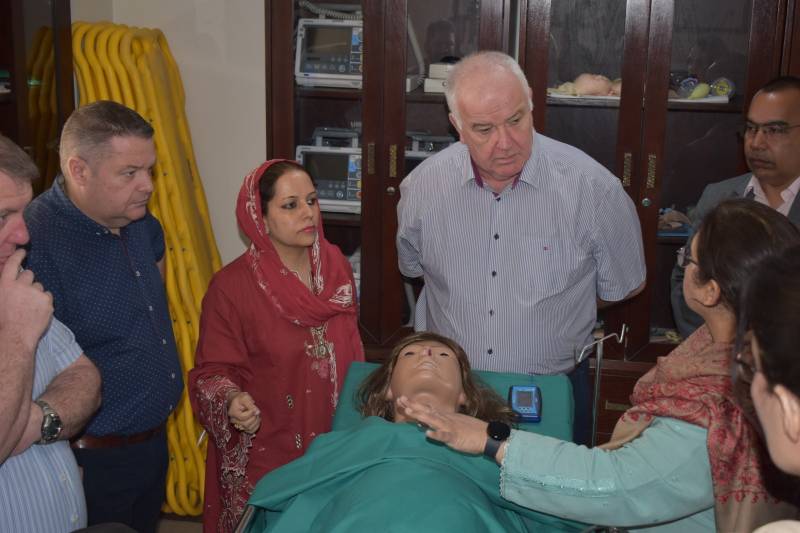
The Skill Lab houses high-fidelity simulators for cardiac arrest management, trauma resuscitation, neonatal emergencies, and obstetric crises.
Trainers have undergone structured competency-based modules, after which they have completed training for final-year students in their medical colleges. The facility also includes digital monitoring systems for performance assessment and debriefing.
Prof. Rathore said that the lab would become a central hub for emergency preparedness across Punjab.
“This centre represents a shift from conventional teaching to hands-on, immersive learning.
We aim to train the trainer across Punjab so that every medical college produces graduates who are confident in handling real emergencies from day one,” the VC stated.
He added that the Bachelor of Science in Paramedicine and short-term certified courses already announced this week will integrate training from this Skill Lab in their curriculum.
“The paramedicine programme will not be limited to theory. Students will be trained on advanced mannequins, assessed objectively, and certified to international standards,” he said.
The Irish delegation visited each simulation station, observed demonstrations, and reviewed the evaluation tools. They appreciated the structured protocols, checklists for competency assessment, and the multi-disciplinary approach where doctors, nurses and paramedics are taught together in team-based emergency scenarios.
Prof. Knox noted that the train-the-trainer approach adopted by UHS was aligned with best global practices.“When faculty is trained properly, the system becomes self-sustaining. What UHS is building here will eventually reshape emergency care delivery in hospitals,” he said.
Mr. Padraig Glynn commented on the accuracy of simulation tools, saying that the equipment used in the lab enables exposure to rare but critical emergencies.
Desmond Wade said that medical students must be trained to respond under pressure and that simulation-based practice helps them make split-second decisions with confidence.
UHS Pro-VC, Prof Nadia Naseem, Director PSDC, Prof Sarah Ghafoor, Director Medical Education, Dr Lamia Yousaf, Registrar Kiran Fatima also spoke.