
From prayers to sacrifice: Pakistan embraces Eid al-Adha traditions
Worshippers gather nationwide for Eid prayers and animal sacrifices. Eid generates billions of rupees in economic activity across Pakistan: Rising livestock prices make sacrifices difficult for lower-class families: President Zardari, PM Shehbaz, Interior Minister Mohsin Naqvi call for unity
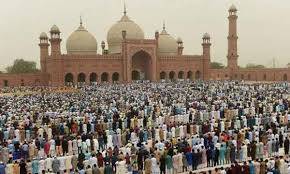

Three days long, Eid al-Adha's traditional celebrations have started, and the first day is being celebrated with great religious devotion, family gatherings, and animal sacrifices across Pakistan on Wednesday.
According to the 24NewsHD TV channel, the day began with special Eid prayers in mosques, Eid grounds and open spaces throughout the country.
Worshippers offered prayers for the unity and well-being of the Muslim Ummah, the progress and prosperity of Pakistan, and peace for people living in conflict-affected regions, including Iran, Palestine and Indian-occupied Jammu and Kashmir.
Large congregations gathered in major cities and towns. In Karachi, worshippers assembled at Sabeel Wali Mosque, while thousands attended prayers at Data Darbar and Minar-e-Pakistan in Lahore. Significant Eid congregations were also held at the Eid Gah Ground in Peshawar and at the iconic Faisal Mosque in Islamabad.
Federal ministers, politicians, parliamentarians, bureacrats, diplomats and other notable figures joined worshippers in the federal capital's main Eid congregation.
During their sermons, religious scholars highlighted the significance of the sacrifice of Prophet Ibrahim (AS) and Prophet Ismail (AS), emphasising the values of obedience, faith and selflessness.
Citizens later carried out the ritual sacrifice of animals in accordance with Islamic tradition, with the meat distributed among family members, friends and those in need.
Authorities implemented strict security measures at mosques, Imambargahs and Eid grounds across major cities, including Islamabad, Lahore, Karachi, Quetta, Peshawar, Rawalpindi, Multan, Faisalabad, Sialkot, Hyderabad, and Gwadar, to ensure the safety of worshippers during the celebrations.
Municipal administrations, particularly in Lahore, Karachi and Islamabad, introduced special cleanliness plans to manage waste generated during the three-day festival.
Waste management teams remained on high alert to collect animal remains and transport them to designated disposal sites outside residential areas.
--Political leadership offers Eid prayers across Pakistan--
President Asif Ali Zardari and Prime Minister Shehbaz Sharif joined millions of Pakistanis in observing Eid-ul-Adha prayers, taking part in religious gatherings held in different parts of the country.
President Zardari offered Eid prayers in Nawabshah, while Prime Minister Shehbaz Sharif performed the prayers at his residence in Lahore.
Chairman Senate Yousaf Raza Gilani offered Eid prayers in Multan. Adviser to the Prime Minister on Political Affairs Rana Sanaullah participated in Eid prayers in Faisalabad.
Punjab Governor Sardar Saleem Haider attended Eid prayers in Attock. Khyber Pakhtunkhwa Governor Faisal Karim Kundi offered prayers in Dera Ismail Khan, while KP Chief Minister Sohail Afridi joined worshippers at Bagh Naran in Peshawar.
In Sindh, Senior Minister Sharjeel Inam Memon offered Eid prayers in Tando Jam, while Karachi Mayor Murtaza Wahab participated in prayers at Polo Ground in Karachi.
Meanwhile, Balochistan Chief Minister Mir Sarfraz Bugti offered Eid-ul-Adha prayers in Quetta, joining citizens in the religious observance.
--Economic aspect of Eid ul Adha--
Beyond its religious significance, Eid al-Adha also represents one of Pakistan's largest annual economic events.
According to local media reports, the three-day festival generates hundreds of billions of rupees in economic activity, benefiting livestock traders, farmers, transport operators, butchers and workers associated with the leather industry.
Industry estimates suggest that approximately 7.4 million animals, including cattle, buffaloes, goats, sheep and camels, are sacrificed across the country during Eid al-Adha.
Analysts estimate that spending on sacrificial animals and related activities in 2025 reached around Rs641 billion, highlighting the scale of the informal economy linked to the religious festival.
However, rising inflation and increasing livestock prices have made participation more difficult for many families.
Higher fuel costs and broader economic pressures have significantly increased the prices of goats, cattle, sheep and camels, placing sacrificial animals beyond the reach of many lower-income and lower-middle-class households.
--Special Eid transmissions on TV channels--
The Eid holiday has also brought special programming to television screens across Pakistan. Broadcasters are airing entertainment shows, drama specials and family-focused content throughout the three-day break, reflecting the continued popularity of television as a source of holiday entertainment.
--Special meals for inmates in prisons--
Meanwhile, prison authorities across Punjab arranged special meals for inmates to ensure they could also take part in the spirit of the festival.
The initiative was aimed at allowing prisoners to share in the celebrations and observe the religious occasion with dignity.