
PM Shehbaz stresses need for building more water storage infrastructure
Prime Minister, Punjab Chief Minister inspect damage caused by catastrophic flooding

Prime Minister Shehbaz Sharif has stressed the urgent need to build more water storage infrastructure to minimize the devastating impact of flash floods and protect lives and livelihoods in the country, reported 24NewsHD TV channel.
Speaking at a high-level meeting to review the country’s flood situation in Narowal on Thursday, PM Shehbaz Sharif highlighted that increasing storage capacity was crucial and stressed to begin work immediately. “Storage capacity is the need of the hour, and without wasting any more time, we should start work in this regard,” he added.
Shehbaz Sharif stressing the importance of generating resources to fund the construction of dams and water reservoirs nationwide, said “we will have to generate the resources by ourselves”. He also called for the speedy completion of ongoing projects including Diamir Bhasha Dam to safeguard against future disasters.
وزیر اعظم محمد شہباز شریف، وفاقی وزراء اور وزیر اعلی پنجاب مریم نواز کو سیلاب زده علاقوں کے دورے کے دوران بریفنگ https://t.co/hp0pZ1qRzX
— PMLN (@pmln_org) August 28, 2025
He noted that the floods initially struck the northern areas but were now wreaking havoc in Punjab’s plains. He offered prayers for those who lost their lives due to floods and torrential rains.
He praised the coordinated efforts of Chief Minister Punjab Maryam Nawaz Sharif, the National Disaster Management Authority (NDMA), Pakistan Army, and other relevant civil departments for their dedicated work during rescue and relief operations. “This sense of cooperation between the Punjab government and relevant departments has helped minimize losses,” he added.
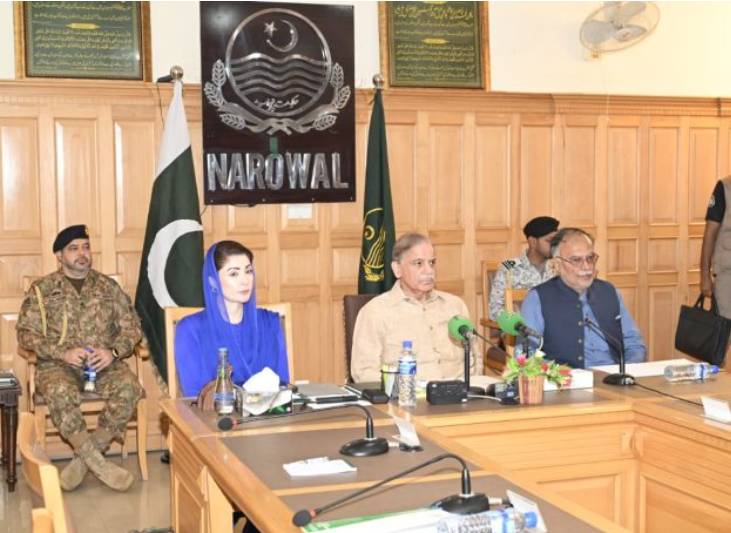
Recalling floods in 2022, that primarily affected Sindh and Balochistan, PM Shehbaz warned that Pakistan remained one of the top ten countries most affected by climate change, making such disasters likely to recur in coming years. He urged all departments to enhance preparedness and adopt short-, medium-, and long-term strategies to confront future challenges through robust decision-making.
Chief Minister Maryam Nawaz Sharif expressed deep sorrow over the loss of lives and damage to crops and infrastructure caused by the floods. She emphasized that no deaths occurred due to negligence or lack of coordination.
Maryam Nawaz praised NDMA, PDMA, police, civil defense, and the Pakistan Army for rescuing over 50,000 people and successfully executing timely evacuations through an effective early warning system. She also noted minimal livestock losses due to swift rescue efforts.
With parts of the Gurdwara completely inundated, the chief minister directed authorities to drain the water as soon as possible. She said she had also ordered to activate field hospitals along with diverting 1,000 mobile clinics to flood-affected areas.
The chief minister also directed to ensure ample stock of vaccines and prioritized vulnerable populations such as women, children, and the elderly, in rescue operations. She also highlighted that around 200 kilometers of roads had been damaged and ordered immediate restoration of temporary routes to maintain connectivity.
لوگوں کو یہ احساس ہونا چاہیے کہ انکا پرائم منسٹر , انکی چیف منسٹر , منسٹرز , ادارے اور انکے ایم این ایز , ایم پی ایز جن کو انہوں نے ووٹ دیا ہے اس مشکل وقت میں انکے ساتھ کھڑے ہیں۔
— PMLN (@pmln_org) August 28, 2025
وزیراعلی پنجاب مریم نواز شریف pic.twitter.com/kNdUydCXPe
Maryam reiterated the necessity of infrastructure to store maximum water and minimize wastage, emphasizing long-term rehabilitation plans.
Federal Minister for Planning Ahsan Iqbal expressed concerns over climate change, stressing it was manageable if gaps in disaster response were identified and addressed. He noted that while Pakistan had suffered significant damage, neighboring India faced comparatively less impact due to stronger infrastructure.
Iqbal highlighted that connectivity of villages had been severely disrupted, and bulldozers and heavy machinery will be needed in the coming days to restore access routes and ensure medical coverage. He emphasized rehabilitation efforts, urging agriculture banks to provide concessional loans to flood-affected farmers to help them rebuild and achieve self-reliance.
Earlier, Chairman NDMA Lt. General Inam Haider presented a detailed briefing about the overall situation of the floods in Punjab.
Aerial inspection
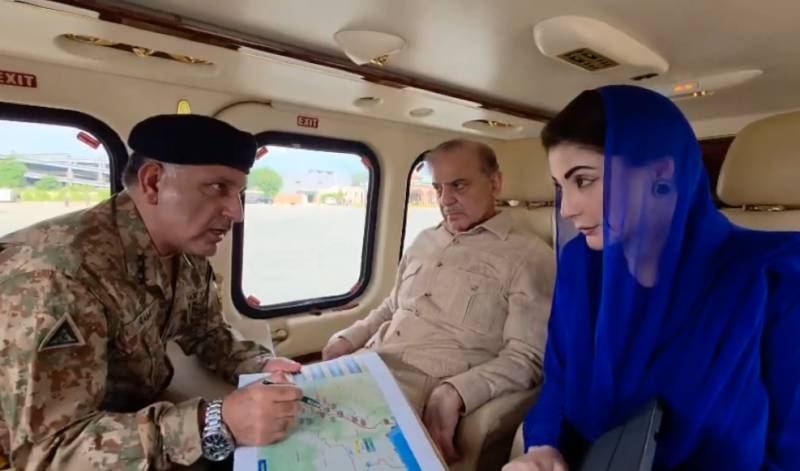
Earlier in the day, Prime Minister Shehbaz Sharif and Punjab Chief Minister Maryam Nawaz inspected the damage caused by the catastrophic flooding across the provinces as they took an aerial of the flood-hit areas.
Prior to their departure and during the aerial view, Chairman NDMA Lieutenant General Inam Haider gave a detailed briefing to the prime minister and the chief minister on the overall flood situation in the country.
https://x.com/pmln_org/statu/1960945964216201465
Shehbaz Sharif was briefed in detail on the flooding in Punjab's rivers and the ongoing rescue and relief operations in submerged areas.
Taking an aerial view of the flood-affected areas of Narowal and Kartarpur, Prime Minister Shehbaz Sharif issued instructions to take all necessary measures for flood prevention and relief operations.
"وزیراعظم محمد شہباز شریف لاہور پہنچ گئے ۔ وزیراعلی مریم نواز شریف نے خیر مقدم کیا"
— PMLN (@pmln_org) August 28, 2025
🔹وزیراعظم محمد شہباز شریف اور وزیر اعلیٰ پنجاب مریم نواز پنجاب کے سیلاب متاثرہ علاقوں کا دورہ کریں گے
🔹وزیراعظم محمد شہباز شریف اور وزیر اعلیٰ پنجاب مریم نواز شاہدرہ میں دریا راوی کادورہ کریں… pic.twitter.com/aq9I3aQkpM