
Iran, Oman mull ways to run Strait of Hormuz as attacks halt
US and Iran agree to pause attacks, resume talks: American official says technical parleys on all issues under MoU will continue in Qatar on Tuesday: Iran issues serious warning to Bahrain
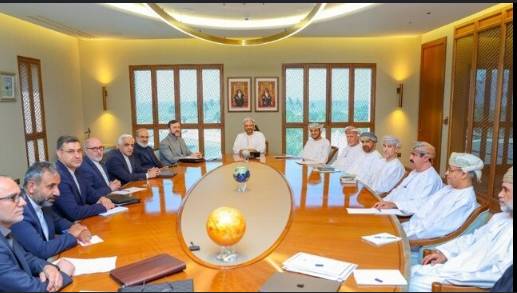

Iran said Monday it had held its first meeting with Oman on managing the Strait of Hormuz since it signed a preliminary deal to end the Middle East war with the United States.
The announcement followed the US saying it had agreed with Iran to halt attacks after an exchange of strikes strained their deal, with the two sides planning to renew talks to end the conflict.
A series of exchanges of fire has underscored the fragility of the Pakistan-brokered agreement to stop the war, which sowed havoc across the Middle East and snarled the flow of oil and gas shipments through the vital Hormuz strait.
Iran and Oman border the strait, through which a fifth of the world's oil and liquefied natural gas passed prior to the conflict. Tehran blockaded Hormuz to gain leverage over its foes, and it remains a key sticking point in the negotiations with the US.
"During a trip to Muscat, the first meeting of the Joint Hormuz Committee was held," said Iranian Deputy Foreign Minister Kazem Gharibabadi on X. "While reviewing the current issues related to the strait, we exchanged views on the future management."
The announcement came hours after a US official told AFP that technical talks with Iran would continue.
"Both sides will stand down for now and vessels can move freely" in and around the strait, the official said in an email.
Iran did not immediately comment on the US statement, and the US official did not confirm a US media report that talks would resume Tuesday in Qatar.
Iran had on Sunday warned that any attempt by ships to bypass its preferred route through Hormuz would "increase tensions" in the Middle East.
The strait comprises Omani and Iranian territorial waters, but under customary international law the two cannot generally block passage or charge tolls.
Tehran's continued exercise of control over the strait has sparked repeated flare-ups, the latest of which came early Sunday, when US Central Command said it had attacked 10 Iranian military targets over "continued Iranian aggression against commercial shipping".
Iran said it retaliated with strikes against US bases in Kuwait and Bahrain. Both Kuwait and Bahrain denounced the Iranian attacks.
- 'Hegemonic dreams' -
Iran insists ships transiting the strait pass through a corridor near its own shores, though this week dozens of vessels have travelled along the opposite side of the waterway, hugging the Omani coast.
"Any attempt to adopt new or separate arrangements compared to what is underway by the Islamic Republic of Iran, will only lead to more complicated situations and delays in the reopening of the Strait of Hormuz, and will increase the tensions," Iranian Foreign Minister Abbas Araghchi said.
The published text of the memorandum of understanding says Iran will define the future administration of the strait in dialogue with Oman and the other Gulf States, but "in line" with international law.
Iran's Revolutionary Guards said they were taking measures to control traffic in the strait and that vessels violating those measures would be dealt with more firmly than before.
Mohammad Mokhber, adviser to Iran's supreme leader, wrote on X that as long as Iran managed the strait, Washington's "hegemonic dreams in the region will not be realised".
Experts said there would likely be more Hormuz incidents.
For Iran, "a drawn-out negotiation accompanied by controlled pressure in the strait can work to its advantage", said HA Hellyer of the Royal United Services Institute, a London think tank.
While the exchanges have largely been without reported casualties, Qatar's interior ministry said one of its citizens was killed aboard a boat by shrapnel from "military operations in the area".
US, iran agree to halt attacks
The United States and Iran have agreed to stop attacking each other and plan to meet and resume talks aimed at ending the Middle East war, a US official said late Sunday.
US and Iranian forces traded strikes in recent days despite a fragile June 17 memorandum of understanding (MOU) that seeks a comprehensive end of the conflict that began in late February and disrupted shipping through the vital Strait of Hormuz.
Under that agreement, Tehran committed to allow safe passage of commercial vessels through the strait while Washington agreed to lift its blockade of Iranian ports.
"Technical talks are slated to continue on all areas of the MOU," a US official told AFP in an email. "Both sides will stand down for now and vessels can move freely."
The official did not provide details on what day or where the talks would take place, but two US officials and a third source with knowledge of the matter told American media outlet Axios that discussions would resume Tuesday in Qatar.
CNN reported similar comments citing a Trump administration official, saying the two sides will "stand down for now" and that they have agreed to meet in Doha on Tuesday for further talks.
US President Donald Trump repeated past threats of military action if the Iranian strikes continue, saying on Saturday that Iran would "no longer exist" if the US is "forced" to resume the war.
In the days since the signing of a Pakistan-brokered agreement aimed at ending the war, the United States and Iran have engaged in tit-for-tat attacks blaming each other for violating their ceasefire.
The latest flareup came early Sunday, when the US military said it had attacked 10 Iranian military targets over "continued Iranian aggression against commercial shipping."
Iran issues serious warning to Bahrain
An adviser to Iran’s supreme leader has warned Bahrain that Tehran would strike the country with greater force if provoked, Al Jazeera reported.
“A serious warning is being given to the Bahrainis to know their limits and not play such games with their own fate, and not force Iran to adopt harsh decisions,” Ali Akbar Velayati was quoted as saying by the semi-official Tasnim News.
The IRGC earlier said its forces have destroyed eight US military sites in Kuwait and Bahrain. The statement said ballistic missiles and drones were used in the strikes, which it described as retaliation for recent US attacks on Iranian facilities in Sirik and Qeshm.
Iran warns ships
Iran's top diplomat warned that any attempt by ships to bypass its preferred route through the Strait of Hormuz would "increase tensions" in the Middle East.
The attacks both sides traded early Sunday underscored the fragility of a Pakistan-brokered agreement aimed at ending the war launched by the United States and Israel in February that disrupted shipping through the strait and rattled global energy markets.
Although a ceasefire took effect in April, sporadic violence has continued in the Gulf region, with ships passing through the Strait of Hormuz often the spark.
Tehran was angered this week by Oman's announcement of an alternative route through the strait that hugged the Omani shoreline, which Muscat said was in conjunction with the International Maritime Organization.
Iran has continued to insist on controlling passage through the vital strait, through which a fifth of the world's oil and liquefied natural gas travel in normal times. It did not enjoy such control before the war.
The strait comprises Omani and Iranian territorial waters, but under customary international law the two cannot generally block passage or charge tolls.
Nevertheless, Iran prevented most ships from using the narrow waterway during the war, granting it enormous economic leverage which it appears reluctant to give up.
Tehran's enforcement of its control has sparked repeated flare-ups with Washington, the latest of which came early Sunday, when US Central Command said it had attacked 10 Iranian military targets over "continued Iranian aggression against commercial shipping".
Iran said it retaliated with strikes against US bases in Kuwait and Bahrain. Both Kuwait and Bahrain denounced the Iranian attacks.
- 'Hegemonic dreams' -
Iran presently insists ships transiting the strait pass through a corridor near its own shores, though this week dozens of vessels have travelled along the opposite side of the waterway, hugging the Omani coast.
"Any attempt to adopt new or separate arrangements compared to what is underway by the Islamic Republic of Iran, will only lead to more complicated situations and delays in the reopening of the Strait of Hormuz, and will increase the tensions," Iranian Foreign Minister Abbas Araghchi said.
The published text of the memorandum says Iran will define the future administration of the strait in dialogue with Oman and the other Gulf States, but "in line" with international law.
Meanwhile, Iran's Revolutionary Guards said they were taking measures to control traffic in the strait and that vessels violating those measures would be dealt with more firmly than before.
Mohammad Mokhber, adviser to Iran's supreme leader, wrote on X that as long as Iran managed the strait, Washington's "hegemonic dreams in the region will not be realised".
Experts said there would likely be more Hormuz incidents.
For Iran, "a drawn-out negotiation accompanied by controlled pressure in the strait can work to its advantage", said HA Hellyer of Royal United Services Institute, a London think tank.
While the tit-for-tat exchanges have largely been without reported casualties, Qatar's interior ministry said one of its citizens was killed aboard a boat by shrapnel from "military operations in the area", without providing further details.
The deceased was found Sunday after his boat failed to return to port on Saturday as expected.