
From security to governance, Mohsin Speed sets new benchmarks in 2025
Interior Minister's reforms redefine his ministry’s annual performance: Sweeping security, legal, and administrative reforms place Interior Ministry at forefront of federal governance: From counterterrorism to urban development, Mohsin Naqvi’s initiatives reshape Pakistan’s internal security landscape
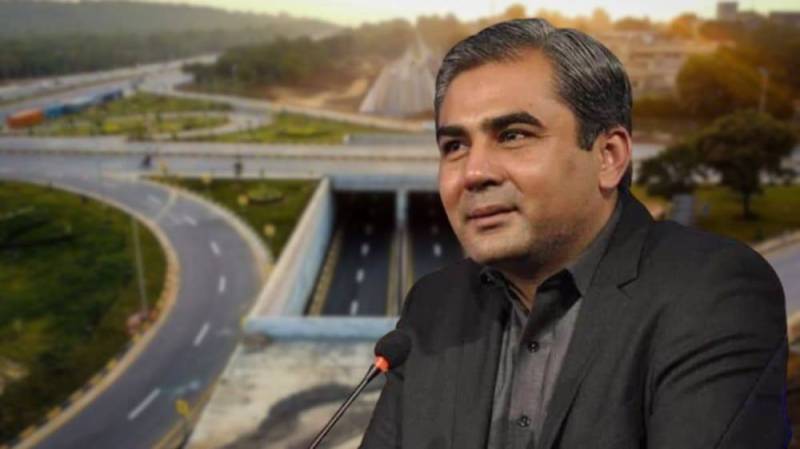

Interior Minister Mohsin Naqvi has emerged as a central figure in the federal government’s performance narrative for 2025, with officials and observers pointing to a series of institutional reforms, security initiatives, and administrative overhauls undertaken under his leadership.
According to 24NewsHD, the Ministry of Interior remained at the forefront of governance activity throughout the year, with what has been described as “Mohsin Speed” becoming a defining feature of the ministry’s operations. The scope of reforms ranged from internal security and counterterrorism to border management, cybercrime prevention, and international cooperation.
—Package for civil armed forces' martyrs—
One of the most notable developments was the revision of the compensation package for martyrs of the civil armed forces, which was increased by up to 233 percent, a move described by officials as unprecedented in the ministry’s history. The initiative was framed as recognition of the sacrifices made by personnel fighting terrorism and protecting Pakistan’s borders alongside the armed forces.
—Reshaping of FC and activating of NCCIA—
The restructuring of the Frontier Constabulary into the Federal Constabulary marked another major reform, replacing a colonial-era framework with a modern force representing all provinces and equipped to meet contemporary security challenges. Parallel to this, the National Cyber Crime Investigation Agency (NCCIA) was fully activated, funded, and staffed to address digital-era crimes and protect citizens from financial and online fraud.
—Appointment of FPG and establishment of NIFTAC—
Long-standing weaknesses in prosecution were also addressed through the appointment of Pakistan’s first Federal Prosecutor General (FPG) under the Ministry of Interior, aimed at strengthening the prosecution of cases investigated by police, the FIA, and other agencies.
Progress on the National Action Plan was highlighted through the establishment of the National Intelligence Fusion and Threat Assessment Centre (NIFTAC) within NACTA, bringing together intelligence agencies, home departments, and security forces to ensure real-time intelligence sharing.
—Dismantle terror financing networks—
Crackdowns on illegal activities intensified nationwide, with action taken against more than 13,000 illegal petrol pumps and oil agencies as part of efforts to dismantle crime and terror financing networks. The creation of the Pakistan Land Port Authority introduced a one-window system at land borders, aimed at improving trade facilitation, passenger movement, and security.
—Efforts for Islamabad as Safe Smart City—
In Islamabad, several long-pending projects were revived, including the jail project, which is now more than 75 percent complete. The Safe Smart City initiative expanded surveillance coverage from 35 percent to nearly 80 percent of the capital, incorporating facial recognition technology and a preventive security model, alongside new policing units and security recruitments.
—Foreign nationals' advance monitoring—
The ministry also introduced advanced monitoring mechanisms for foreign nationals, particularly Chinese citizens, through an upgraded Foreign National Security Dashboard. The establishment of an international-standard National Forensic Agency in Islamabad further strengthened investigative capacity with modern facilities and trained experts.
—Implement on Field Marshal's "hardened state" vision—
Under the One Document Regime policy, implemented in line with Field Marshal Asim Munir’s “hardened state” vision, more than 1.1 million illegally residing Afghans were repatriated within a year, reflecting a significant 142 percent increase over previous figures. Digitisation of NADRA and passport services, along with improved facilities for overseas Pakistanis, formed another key pillar of the reform agenda.
—Credit of extradition treaties and MLAs—
Internationally, officials credit the ministry with enhancing Pakistan’s standing through progress on extradition treaties, mutual legal assistance (MLA) frameworks, and intergovernmental cooperation. A dedicated wing for international cooperation consolidated extradition, MLAs, and red warrant processes, significantly reducing delays and costs in cross-border legal cases.
—Naqvi's aim to modernise capital—
Urban development in Islamabad also featured prominently, with landscaping projects, new underpasses, overhead bridges, removal of encroachments, and the development of new sectors and facilities, including hotels and a cricket stadium. The interior minister has stated that these initiatives are part of a broader vision to transform Islamabad into a more modern, secure, and aesthetically advanced capital within the next two years.