
US and Iran trade airstrikes as negotiations stall
Tehran rules out any talks on nuclear issue: Insists ceasefire in Lebanon is essential condition for any peace deal: Kuwait intercepts missile, drone attacks as Iran, US continue message exchanges: Pentagon says struck Iran radar and drone control sites
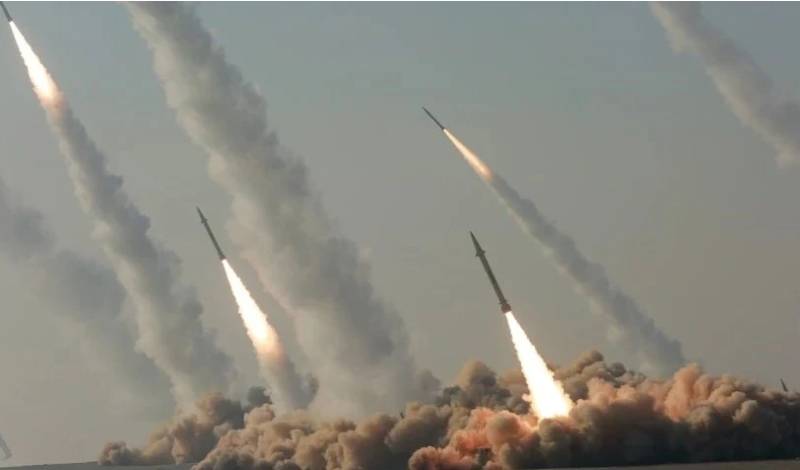

The United States and Iran traded strikes Monday as negotiations between the two sides stalled and Tehran again insisted any peace deal must also cover Israel's escalating offensive into Lebanon.
Weeks of indirect talks marked by stark threats and several waves of air strikes have so far failed to agree an end to the war or the reopening of the Strait of Hormuz, the key shipping channel for Gulf oil and gas.
The latest exchange of fire coincided with Israel expanding its offensive into Lebanon, with Prime Minister Netanyahu vowing to push deeper into the country and instructing the military to strike "terror targets" in a southern district of Beirut.
The United States has backed its ally's operations in Lebanon against the Iran-backed group Hezbollah, while still trying to come to an agreement with Iran to end the war it launched in late February with strikes on Tehran, reopen Hormuz and impose controls on Iran's nuclear programme.
But Iran again said Monday it had not yet reopened any nuclear negotiations and insisted that Israel must halt its offensive in Lebanon before any wider deal to end the war can be agreed.
The US naval blockade on Iran's ports and the escalation in Lebanon were "clear evidence of US non-compliance with the ceasefire", Iran's chief negotiator Mohammad Bagher Ghalibaf posted on X.
- 'Essential conditions' -
"We know when it is necessary to act on nuclear matters," foreign ministry spokesman Esmaeil Baqaei told a weekly news briefing.
"No negotiations have taken place on the details of the nuclear file. At this stage, our priority is ending the war."
"We insist that a ceasefire in Lebanon is an essential condition for any deal aimed at ending the war," Baqaei said, adding: "The United States is also violating the ceasefire, including this morning."
The US military said it had carried out "self-defence strikes" on Iranian radar and drone control sites over the weekend -- its third such wave in just over a week -- this time in response to the downing of a US MQ-1 drone.
Shortly afterwards, Iran's Revolutionary Guards told state media they had targeted an airbase used by the US military from which the attack originated.
The Guards did not identify the country said to be hosting the base, but the Kuwaiti military said its air defence had intercepted "hostile missile and drone attacks".
- Sticking points -
Iran was already in talks with the United States about the fate of its nuclear programme in February, when the US and Israel launched air and missile strikes that wiped out much of the Islamic republic's senior leadership and plunged the Middle East into war.
While Tehran has long insisted that its nuclear programme is for purely civilian ends, the United States and its Western allies suspect it aims to develop am atomic weapon.
Late Sunday, Trump posted on social media that the deal under discussion "states, very clearly, that Iran will not have a Nuclear Weapon".
Iran has said it needs the release of $12 billion in frozen assets before engaging in substantive talks on its nuclear programme, and dismissed earlier Trump comments suggesting that its stockpile of enriched uranium would be destroyed.
- Lebanon front -
A truce in Lebanon between Israel and Hezbollah formally began on April 17 but it has never been observed, with both sides accusing each other of violating it.
Israel has pursued a ground offensive into southern Lebanon, raising its flag over a medieval castle that served as a base during its two-decade occupation of the country in the 1980s and 1990s.
Netanyahu called the retaking of the Beaufort stronghold "a dramatic shift" and vowed to continue the fight against Hezbollah, with strikes and incursions ever deeper into Lebanon.
The UN Security Council will hold an emergency meeting Monday on the widening Israeli offensive, diplomatic sources told AFP.
Kuwait intercepts missile, drone attacks
Kuwaiti air defences intercepted "hostile missile and drone attacks", the military said Monday, as air raid sirens howled across the country, as the US and Iran continued to exchange messages on how to end the war.
"The General Staff of the Army wishes to advise that any sounds of explosions heard are the result of air defence systems intercepting these hostile attacks," the Kuwait Army said in a post on its official X account.
KUNA, the state news agency, reported that air raid sirens rang across the Gulf nation, despite a US-Iran ceasefire in place.
Iran's Revolutionary Guards said they had targeted a base used by the United States military to strike Iranian territory.
The base's location was not specified in the Guards' statement, broadcast by IRIB and other state media.
US says struck Iranian radar and drone control sites
The United States struck Iranian radar and drone control sites over the weekend, its military said on Sunday.
"U.S. Central Command (CENTCOM) conducted self-defense strikes on Iranian radar and command and control sites for drones in Goruk, Iran and Qeshm Island this weekend," CENTCOM said in a post on X.
The strikes were in response to the shootdown of a US MQ-1 drone, it added.
Iran, US 'continue' message exchanges
Iranian Foreign Minister Seyed Abbas Araghchi, pointing to the continuation of the process of talks and the exchange of messages between Iran and the United States to terminate the war through Pakistani mediation, emphasized that until this process reaches a specific result, it cannot be judged, and the speculations raised in this regard lack importance.
Araghchi, in an interview with the IRIB News Agency regarding the process of the latest negotiations between Iran and the United States, said: "Talks and the exchange of messages are still ongoing, and until they reach a specific result, one cannot judge them."
He added: "Everything currently being raised about the negotiations in the media is in the form of speculation, and in my opinion, no importance should be given to these speculations until the matters reach a stage of certainty."
US proposes Lebanon de-escalation plan
The US has put forward a proposal aimed at de-escalating hostilities in Lebanon, a US official told Al Jazeera, adding that Secretary of State Marco Rubio has held separate talks with Lebanese President Joseph Aoun and Israeli Prime Minister Benjamin Netanyahu.
Under the “roadmap”, Hezbollah would halt all attacks on Israel in exchange for Israel refraining from further escalation in the Lebanese capital, Beirut, the official said.
The US proposal aims to create a conducive environment for a gradual de-escalation and a complete and comprehensive cessation of all hostilities, the official added.