
War or Skirmishes
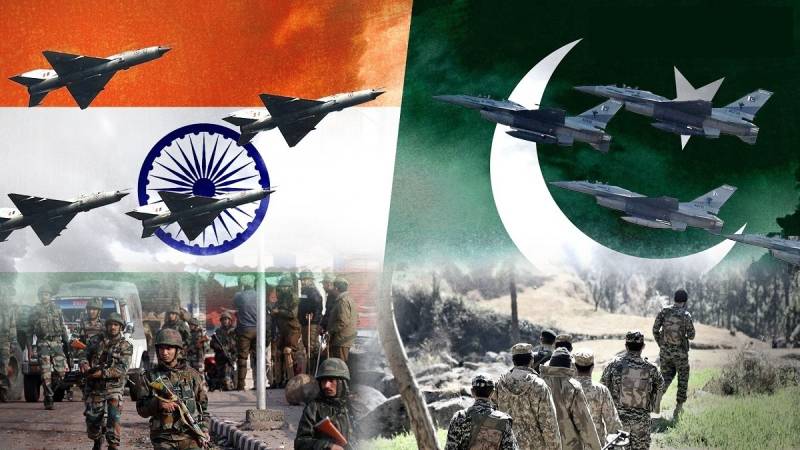

Everyone wants to know whether there will be a war, border skirmishes, or if things will return to normal after some heated rhetoric. The way the Indian government made a hue and cry after the attack on tourists in Pahalgam—and managed to register an FIR within just ten minutes of the incident—clearly shows that this was a false flag operation. Pakistani officials have long been warning the world that India is preparing such false flag operations to frame Pakistan. It’s now evident that India tried to carry out an incident itself and blame Pakistan to isolate it on the global stage—but that plan has clearly failed.
Setting everything else aside, just consider Russia’s stance. Russia has clearly stated that war would be unjustified and both countries should resolve issues through dialogue. Now the United States has also become active. Trump’s administration’s Secretary of State, Marco Rubio, has called Prime Minister Shehbaz Sharif and India’s Foreign Minister, urging both sides to avoid military conflict and to focus on negotiations. Pakistan has already offered to allow a neutral and transparent investigation into the Pahalgam incident. The U.S. has advised both countries to move forward on this proposal.
Meanwhile, reports are coming in that the Indian government has closed several tourist sites in occupied Kashmir. Residents near the Line of Control (LoC) have been instructed to harvest their crops immediately. The Pakistani government and its armed forces, who are constantly monitoring the situation, are fully alert.
It doesn’t seem likely that India will easily heed the advice of the international community. So, will there be a large-scale attack? Modi may be the butcher of Gujarat, but he knows very well that any targeting of civilian areas or military installations in Pakistan will receive a swift and overwhelming response. If such a situation arises, Pakistan will have no option but to unleash a barrage of missiles. That’s why ISPR Director General Lieutenant General Ahmed Sharif Chaudhry made it explicitly clear that if India chooses the path of military conflict, then that’s their choice—what follows next will be Pakistan’s decision.
If we consider the ground realities, India’s true intentions become evident. The suspension of the Indus Waters Treaty reveals that India is targeting Pakistan’s economy. Estimates by local and international organizations suggest that 2025 will be a year of economic recovery for Pakistan, as it has largely overcome the risk of default. Pakistan is already strong in defense and well on its way to self-reliance. If the economy also stabilizes, then there will be no threat left on the horizon. That is what India truly fears.
At most, India may deploy troops along the eastern borders, heat up the LoC, or shell Pakistani positions—but it will receive a response. If India flies fighter jets near the LoC or within occupied Kashmir, Pakistani jets will also take to the skies. All of this comes at a massive cost.
Whatever lies ahead, we must stand united as a nation with our armed forces. Rather than giving peace-at-any-cost advice or engaging in excuses and criticism, we need to show that the common Pakistani is ready at every moment and for every test. Along with our military capabilities, our national resolve will make it impossible for Modi’s government to sustain the momentum of conflict. Voices from within India itself will continue to rise against this path, and Modi will be trapped in the web he spun himself.
The people of Pakistan must firmly decide—not only will we defend ourselves, but we will also defeat the cowardly and underhanded tactics of India once and for all.
ہم امن چاہتے ہیں مگر ظلم کے خلاف گر جنگ لازمی ہے تو پھر جنگ ہی سہی
Now, a few words on the recent tragedy within the country: The Supreme Court has dismissed the case related to the Audio Leaks Inquiry Commission, declaring it ineffective. A five-member constitutional bench, headed by Justice Aminuddin Khan, heard the case. The court stated that the commission had become ineffective as its chairman, Justice Qazi Faez Isa, has retired, and the other two members have been appointed to the Supreme Court.
It should be remembered that PTI had challenged the judicial commission formed to investigate the audio leaks—indicating that it wanted to avoid scrutiny. The commission, headed by Justice Qazi Faez Isa, was created by Prime Minister Shehbaz Sharif’s government, which showed great enthusiasm for the issue during its initial short tenure. But after the 2024 general elections, the matter was pushed into cold storage—even though, after the 26th Constitutional Amendment, progress on such matters had become much easier.
Some of the audio leaks are still fresh in the public’s memory—such as “Hai Rafiah, what will happen now?”—and how the mother-in-law of Justice Bandial was influencing judges, the conversation of Fawad Chaudhry and his brother about arranging meetings between Bandial and Ameer Bhatti, and how they were “delivering trucks” to judges. There was also the scandal of Saqib Nisar’s son selling PTI tickets.
A valid question is: if former ISI chief General Faiz can be arrested, then why not retired judges, their relatives, and their tout lawyers? The general perception is that Faiz was arrested because he kept crossing the line despite repeated warnings—he was finally caught for trying to be too clever. Otherwise, he too would be enjoying life like other retired judges and generals.
Whether people like it or not, the fact remains: until there is strict accountability of judges and generals, Pakistan will neither achieve genuine stability—militarily or economically—nor will the lives of its millions of citizens truly improve.
اک اور دریا کا سامنا تھا منیر مجھ کو
میں ایک دریا کے پار اترا تو میں نے دیکھا