
China’s Victory Day: From 1945 to 2025
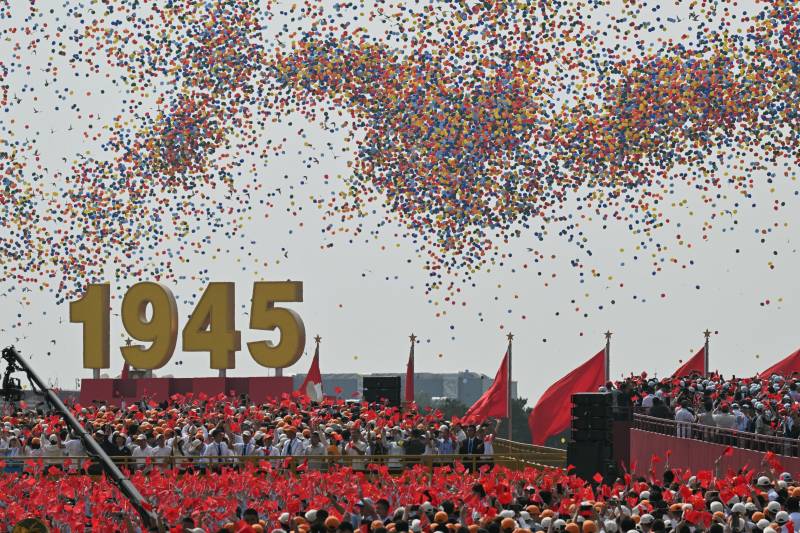

On September 3, 1945, Japan announced its unconditional surrender in World War II, marking the end of China’s long and bloody war of resistance. This day is remembered as Victory Day, symbolising not only a historic milestone but also national survival and freedom for the Chinese people. Initially observed as a memorial event, over time it grew into a marker of national identity. In 2014, it was officially declared a national holiday, and in 2015, the first large-scale military parade was held, transforming it into a national and international message.
At Beijing’s Tiananmen Square, a massive crowd gathered to witness this grand parade. Among them were children, women, and the elderly, all cheering and applauding the military formations and displays. The square turned into a sea of people, full of patriotic fervour.
The ceremony also honoured war heroes and veterans who had fought against Japanese forces during World War II. Their presence gave the event a deeply historic and emotional dimension. This moment became even more significant when President Xi Jinping of China, along with the leaders of Russia, North Korea, and Pakistan, shook hands with these veterans and paid tribute to them. The scene touched the hearts of those present and millions watching on television, underlining that China will never forget those who sacrificed their lives for the nation. These veterans remain living symbols of sacrifice, resilience, and patriotism, receiving a rousing welcome from the crowd.
The event was covered extensively not only within China but also by international media, allowing millions of viewers around the world to watch it live. Global outlets described it as a showcase of China’s strength and its evolving global strategy.
Thousands of troops from the People’s Liberation Army marched with perfect discipline and synchronised steps, demonstrating the training and resolve of China’s armed forces. The participation of female soldiers added another powerful dimension. Wearing uniforms and marching confidently in step with their male counterparts, they highlighted the fact that women play an equally vital role in national defence and the military. This display reflected China’s determination that both men and women stand side by side in the country’s progress and security.
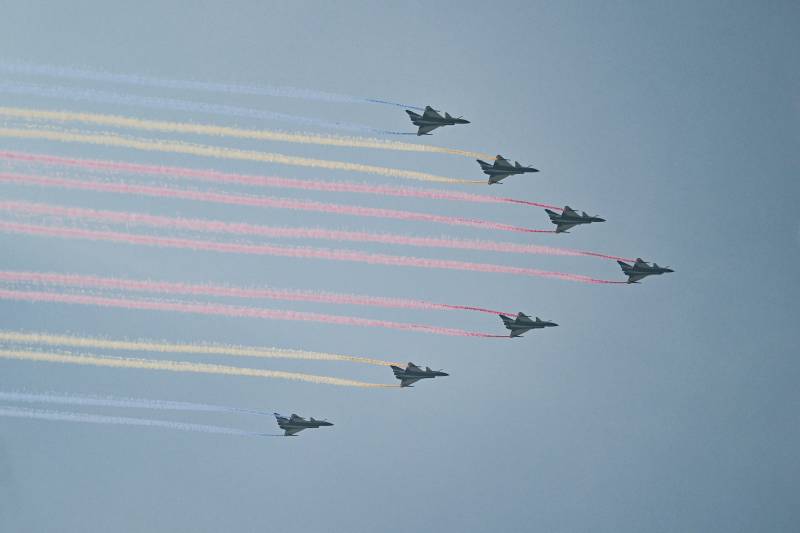
China’s modern fighter jets and helicopters also put on a spectacular show in the skies. Flying not only as demonstrations of speed and power, they passed over Beijing’s historic landmarks, blending cultural symbolism with military strength. One striking moment came as helicopters formed the number “80” in the sky, symbolising the 80th anniversary of Japan’s surrender (1945–2025).
The aerial performance reflected China’s progress in military modernisation and self-reliance in technology. From stealth fighters to advanced aviation systems, the display sent a clear message that China commands formidable power not only on land but also in the skies.
Among the parade’s most prominent sights were rows of Dongfeng DF-5C intercontinental ballistic missiles, showcasing China’s nuclear deterrence capability and its commitment to full independence in defence.

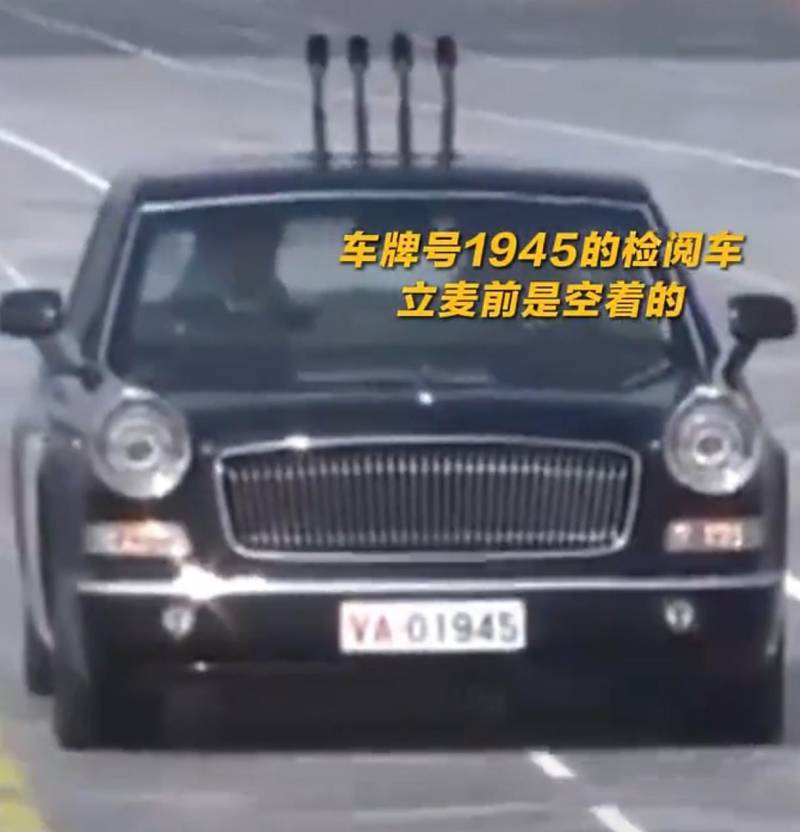
Another symbolic and emotional highlight came when two cars passed through the parade was One bore the plate number 1945 and drove empty, representing the fallen heroes. Chinese media emphasised that it was “not empty, but filled with the spirit of martyrs. The second carried the plate number 2025, symbolising the present and the future, with leadership inside affirming that the legacy of sacrifice continues as China looks ahead with confidence.
In his address, President Xi Jinping declared, The Chinese nation is a great people, fearless in the face of brutality and founded on self-reliance. In those days, when justice and injustice, light and darkness, progress and regression were locked in a struggle of life and death, the Chinese people united to safeguard the survival of the nation, revive the spirit of our people, and fight for human justice.”
He stressed that today the world once again stands at a crossroads between peace and war, dialogue and confrontation. China, he said, stands firmly on the right side of history and is committed to working with all nations to build a shared future for humanity. Xi described the People’s Liberation Army as a “heroic force filled with loyalty” and called for faster efforts to transform it into a world-class military, able to defend sovereignty and territorial integrity while contributing to global peace and development. He linked China’s present strength to a long ideological tradition, from Marxism, Leninism, and Mao Zedong Thought to Deng Xiaoping Theory, the “Three Represents,” the Scientific Outlook on Development, and now the vision of socialism with Chinese characteristics in the new era. Together, he said, these ideas form the guarantee of national rejuvenation.
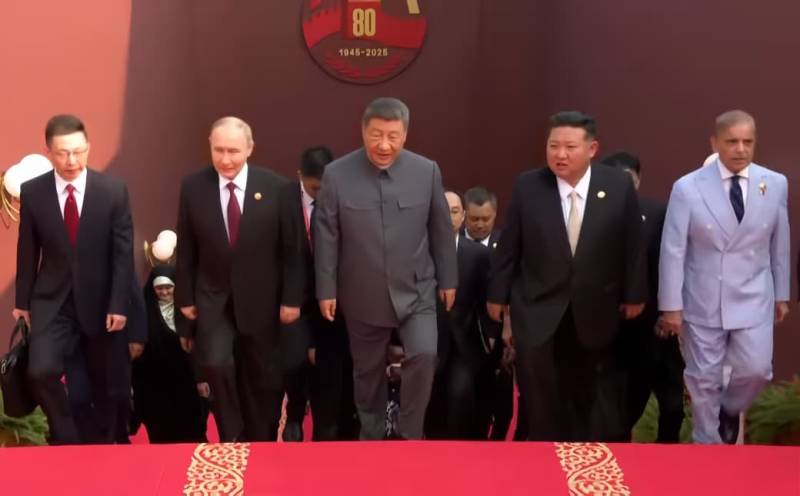
One of the most symbolic moments of the parade came when the heads of state of China, Russia, North Korea, and Pakistan stood together. Vladimir Putin, President of Russia, Kim Jong, leader of North Korea, and Prime Minister Shehbaz Sharif of Pakistan joined President Xi Jinping, reflecting a new alignment. This image signalled that China is moving toward building an alternative global partnership beyond Western dominance.
The Victory Day Parade in Beijing was more than a military display; it was a fusion of military power, historical memory, and diplomatic messaging. The soldiers and missiles underscored China’s modern defence strength. The veterans and symbolic cars reminded the world of past sacrifices. The leaders’ presence highlighted a new global alignment.
China’s Victory Day, from 1945 to 2025, is not only a remembrance of history but also a political and military statement. Through President Xi’s speech, advanced weapon displays, symbolic gestures, and the participation of global leaders, China delivered a message: "It is no longer a spectator of history, but a maker of history"..This year’s parade declared to the world that China is steadily advancing toward its great rejuvenation and is determined to contribute to the creation of a new order for global peace and development.